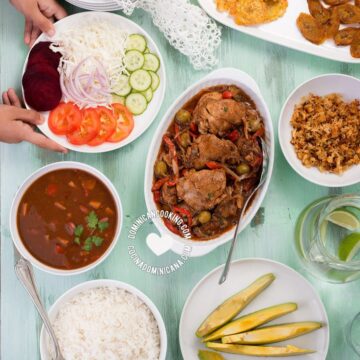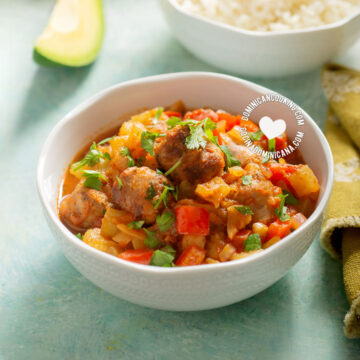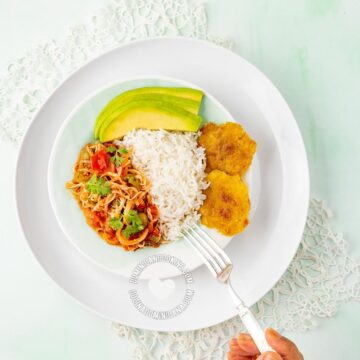

Our blog would not be complete without at least an attempt to explain different Dominican words and terms for our foods and ingredients. This is our always-expanding Glossary of Dominican foods, and it is perfect if you want to navigate and learn more about our cuisine.
By - Reviewed: . Original: Sep 27, 2008
Originally, Irish playwright George Bernard Shaw was referring to the confusion caused by English in Great Britain and the United States. We extend the saying to "Twenty one nations* divided by a common language" when it comes to Spanish food names.
We find this sort of thing fascinating, and with our dynamic and ever-expanding glossary, we try to steer you through some of the pleasures and pitfalls caused by this linguistic mosaic.
Whether you are an English speaker who has learned some Spanish, a Dominican Spanish speaker abroad, or a native of another part of the Spanish-speaking world, this English-to-Dominican Spanish short dictionary is dedicated to you.
Vegetables, fruits, and herbs
Blame the conquistadors: in the case of several fruits and vegetables --as well as many flowers and birds of the Americas-- when the Spaniards arrived in the New World, they often would not think up new names for the things they came across but would give them the name of the nearest thing they thought it resembled.
In many cases, however, the indigenous name (or names) prevailed and are used to this day in standard Spanish and sometimes even in other languages.
Aguacate
The standard Spanish - and Dominican Spanish - word aguacate for avocado originates in Mexico and is derived from the Aztec ahucatl.
Ahucatl actually means "testicle," and suggests that the Aztecs may have had a rather vivid imagination - or strange-looking gonads.
In the Andean region, we come across palta for avocado.
Ají
What's called pimiento in most of the Hispanic world in Dominican Spanish isl ají. Dominicans use the word pimiento specifically for bell peppers, also called pimiento morrón or pimiento dulce.
This means pepper, also sometimes called chile in other countries, although this usually refers to the spicier varieties.
Ajonjolí
What is called sésamo in most Spanish-speaking countries (sesame in English), is called ajonjolí by Dominicans.
Auyama
Auyama is the name in the Dominican Republic for various locally-grown pumpkins and squashes.
Batata
In the Andes, we find camote, better known as boniato or batata, and sweet potato in English. The actual Dominican batata is known as Oriental yam in English.
Brócoli
Although most Spanish speakers stick to the Spanish spelling of the Italian "broccoli" - brócoli, some call it brécol.
Cereza
In Spain, it is the word for cherry. What the Dominicans call cereza is not really a cherry: it is paler in color and not as even in texture. In English, it is called acerola cherry (Malpighia emarginata). What we know as cherries in English are called simply "cherries" (said with a Dominican accent) in the DR.
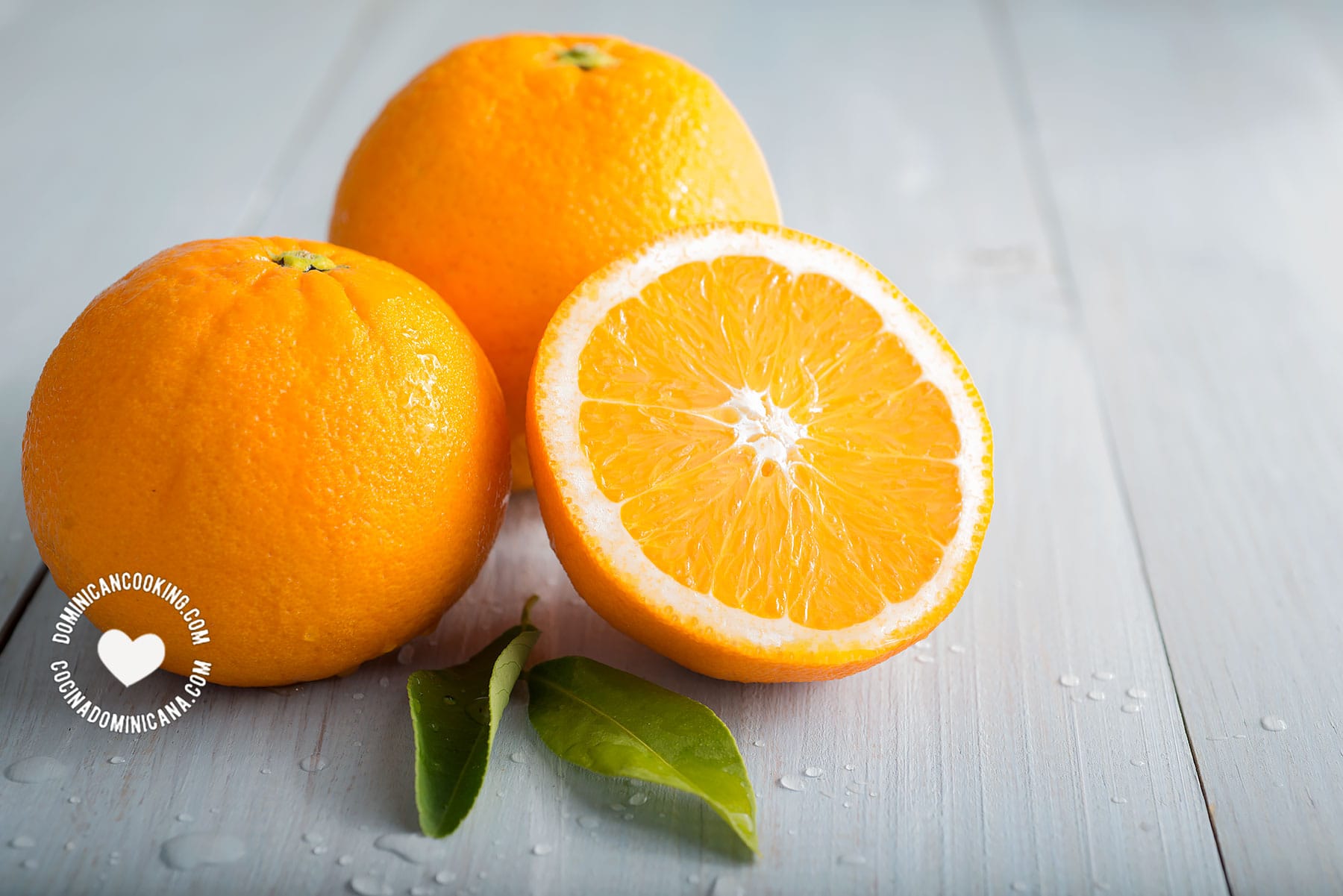
Chinas
Some oranges are called chinas in parts of the DR, so the Dominican jugo de china would sound like gibberish to anyone not in the know. In some regions of the Dominican Republic, oranges are called naranjas dulces (sweet oranges) to differentiate them from naranjas agrias (see below).
Chinola
Chinola is the Spanish word for passionfruit in the Dominican Republic. It is also known as parcha or parchita in several Hispanic countries.
Cilantro / cilantrico
This is used in the DR to mean fresh cilantro (US) or coriander (UK). It is also known as cilantrico to differentiate it from cilantro ancho. Another name Dominicans use is verdurita.
Cilantro ancho
It is the stronger-tasting plant with broad leaves (sawtooth coriander or culantro) that has a taste similar to cilantro.
Guineos
If you are seeking plantains and you ask for a plátano in Spain, you get a banana. If you ask for a guineo, well, you're likely to get a baffled look.
Plátano is what in the Dominican Republic we call what they know as plátano macho, and plantain in English. The Venezuelan word for banana is the unusual cambur. Unripe bananas are called guineos verdes in the DR.
Guanábana
Guanábana, a prickly-looking large fruit native to the Caribbean, is known as soursop in English.
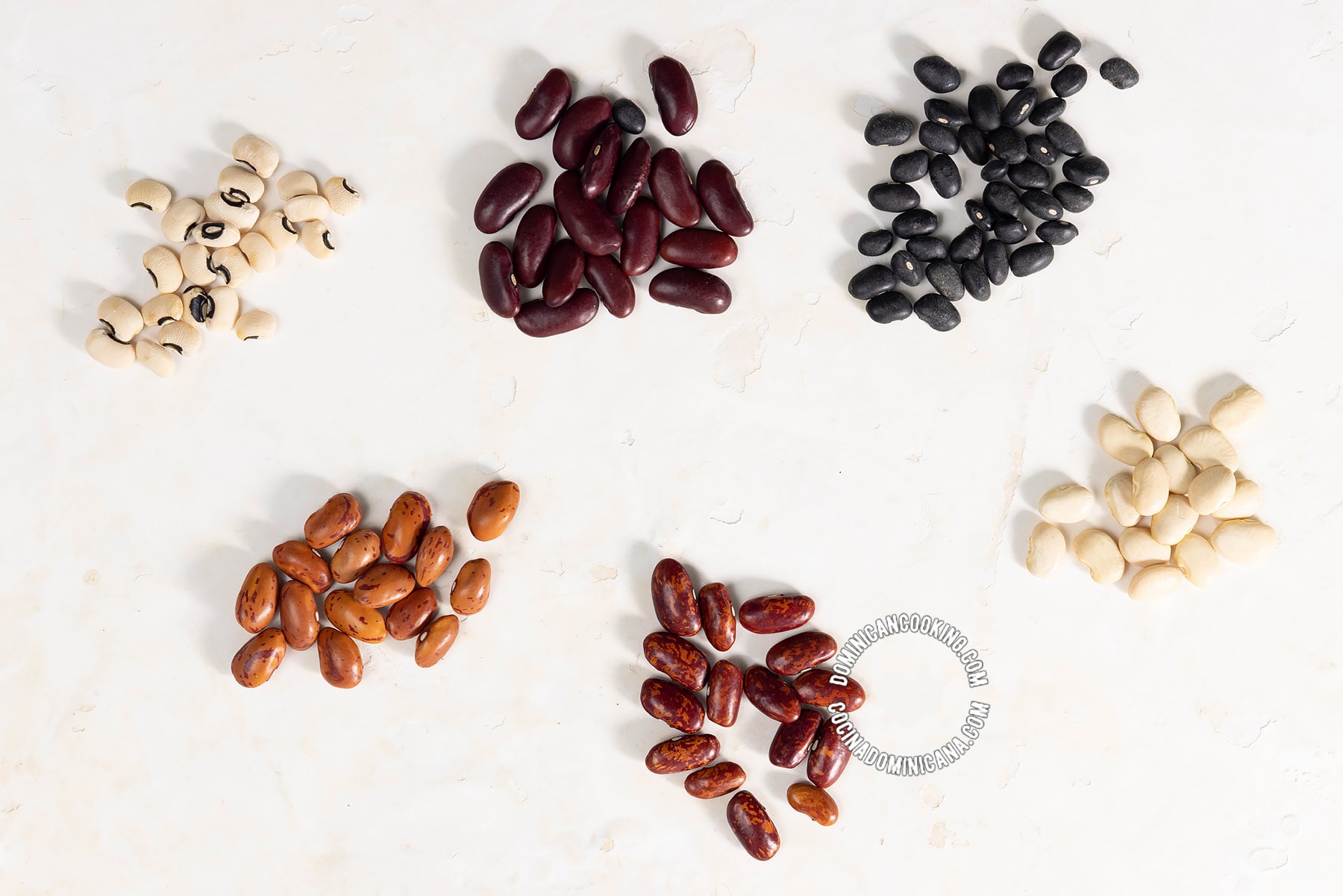
Habichuelas
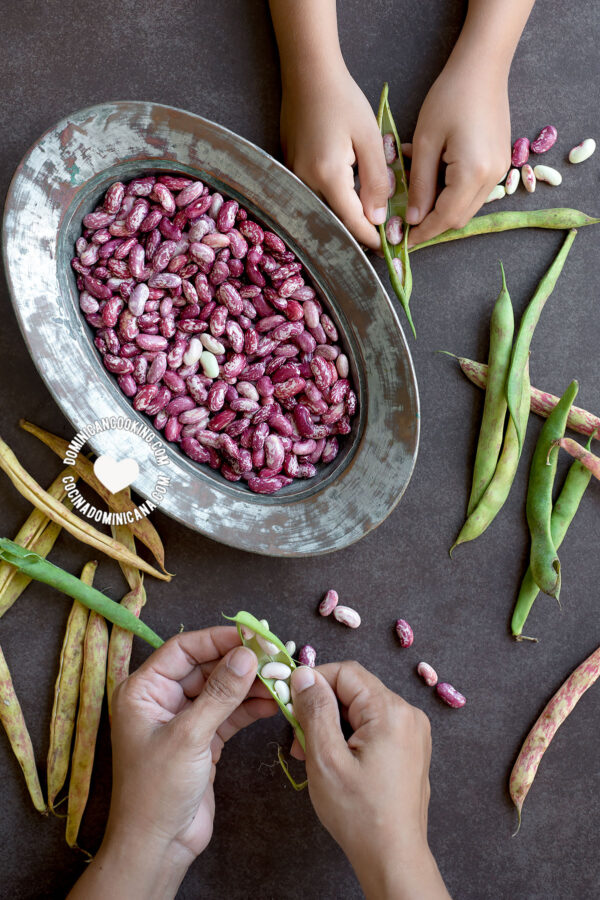
Habichuelas are beans in Dominican Spanish.
In Spain, habichuelas are green beans. In the Dominican Republic, green beans are vainitas. In Spain, kidney beans and other similar beans like white beans are given the strange name judias. They are called frijoles in Mexico and Central America and caraotas in Venezuela. In other parts of the Spanish-speaking world, the term alubias is also used to mean these sorts of beans. Habas in the DR is white beans or Faba beans. In Spain, they are broad beans.
Maíz
That quintessential Latin American crop, corn, has many different names across the Spanish-speaking world: maíz - as in maize - being the most common. Sweet corn is maíz tierno or maíz dulce. In Mexico, corn on the cob is called elote; in South America, choclo, except for Venezuela, where it is called jojoto. Central Americans call it chilote.
Molondrón
In Cuba, okra is not molondrón as it is called in the DR, but quimbombó - both names appear to have African roots.
Melocotón
Peach is durazno in some places and melocotón in others.
Naranja agria
Naranja agria is known as bitter oranges or Valencia oranges in English and is translated (or mistranslated?) as sour oranges sometimes. It's a sour and bitter orange with tough skin that is used in Dominican seasonings and marinades, and the main ingredients in agrio de naranja.
Níspero
The Dominican nispero (sapodilla) does not look very much like the Spanish yellow fruit of the same name, known in English as loquat, which is unknown in the DR.
In Gibraltar we call it - for some reason - fruta americana or American fruit.
Papas
The most common way of saying potatoes in Spain is patatas, except for in the southern region of Andalusia where they are called papas, as in most of Latin America.
Pitipuá (petit pois)
Peas are elegantly known by their French name petits pois in the DR, and sometimes they are called arbejas. In Spain, they are guisantes, and in Mexico, chicharos.
Repollo
Repollo, or cabbage is col in Spain and many other Spanish-speaking countries.
Sandía
Watermelon, usually called sandía, is patilla in Venezuela and many Dominicans also use this same name.
Tayota
Called christophine in english (tayota in DR, chayote in Central America and Mexico) also known as alligator pear or mirilton.
Toronja
Toronja in English is grapefruit. But toronja is not the only Dominican Spanish name we use: grapefruit is commonly called grei-frú as well as toronja.
Grapefruit is called pomelo in Spain and toronja elsewhere.
Verdura / verdurita
Verdura means vegetable in Spain but is used to mean flat-leafed parsley in the DR; the diminutive verdurita is used for cilantro. The Dominican word for vegetables is not verduras but vegetales.
Other ingredients
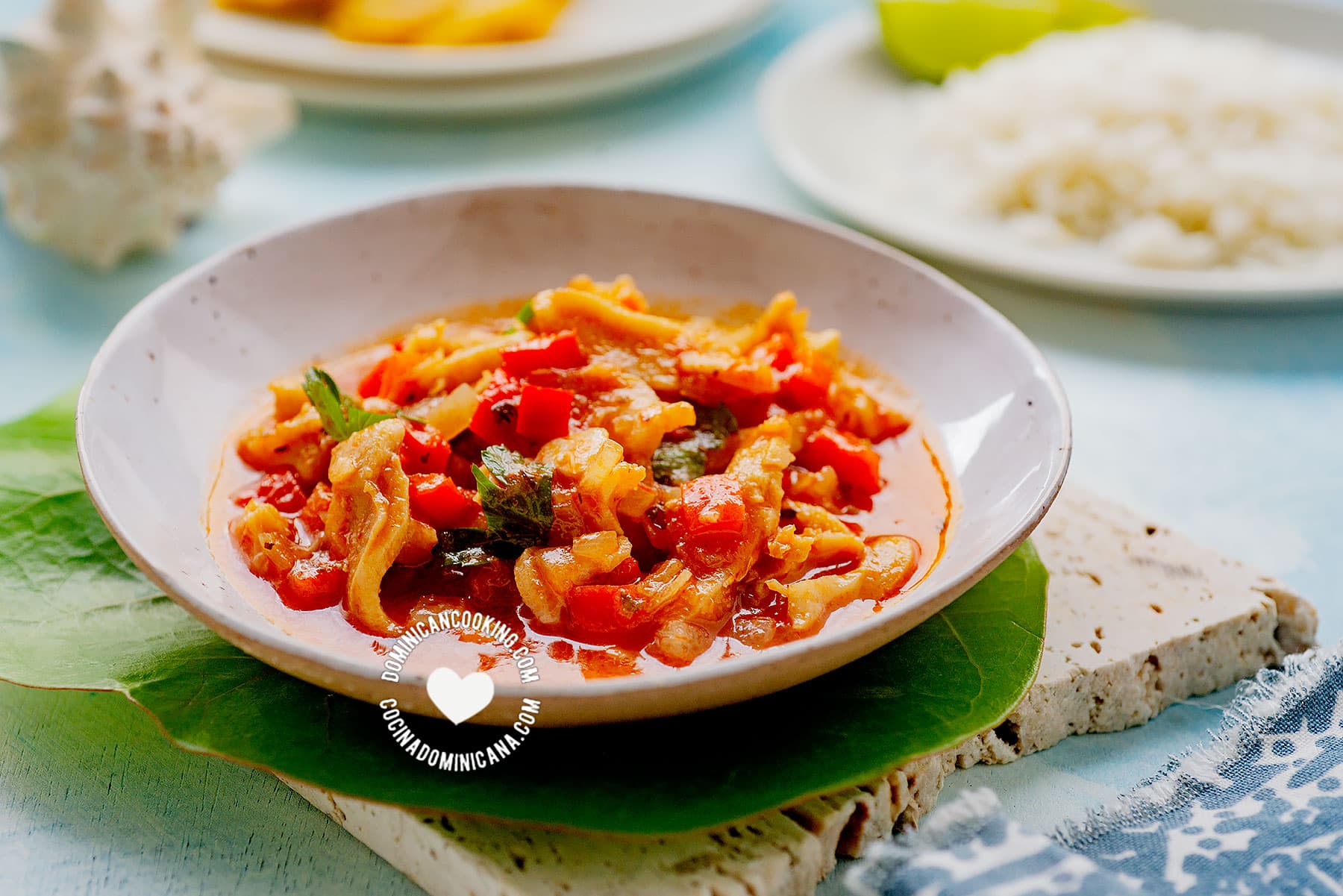
This variety of names are a feature of the Spanish speaking world, where different countries in Latin America and the Caribbean were settled at different points in history, with people from diverse parts of Spain and many other countries beyond, who put their particular stamps on the vocabularies of their new nations, often combining it with indigenous terms, all contributing to a rich diversity of language.
Camarones
Shrimp are gambas in some Hispanic countries, and camarones in the Dominican Republic.
Cangrejo
Cangrejo is the usual name for crab, but many Latin Americans, including Dominicans and Colombians also know it as jaiba. In the DR, at least, jaiba tends to mean freshwater crab, and cangrejo refers to the marine variety.
Crema para batir
Whipping cream is nata de montar in many Hispanic countries.
Lambí
Conch (queen conch - Strombus gigas) which in the DR and Haiti is known as lambí, in Honduras it's a caracol.
Mantequilla
Mantequilla is the Dominican Spanish word for butter.
In some parts of Latin America --like Argentina-- butter is called manteca instead of the correct mantequilla. In the Dominican Republic --and most of the Hispanic world-- manteca means lard.
Queso crema / cremita
Cream cheese (the sort you spread on a bagel) is also commonly known by its English name, although pronunciations and spellings may vary. The final 'z' sound in "cheese" is more often than not omitted.
The real Dominican queso crema o cremita is a local cheese, which although white is not at all creamy in texture, more like firm cottage cheese. Be extra careful to pick the right one for your preparation. Our recipes use cream cheese for the American-style one, and queso cremita for the Dominican one.
Read more:
Dishes and preparations
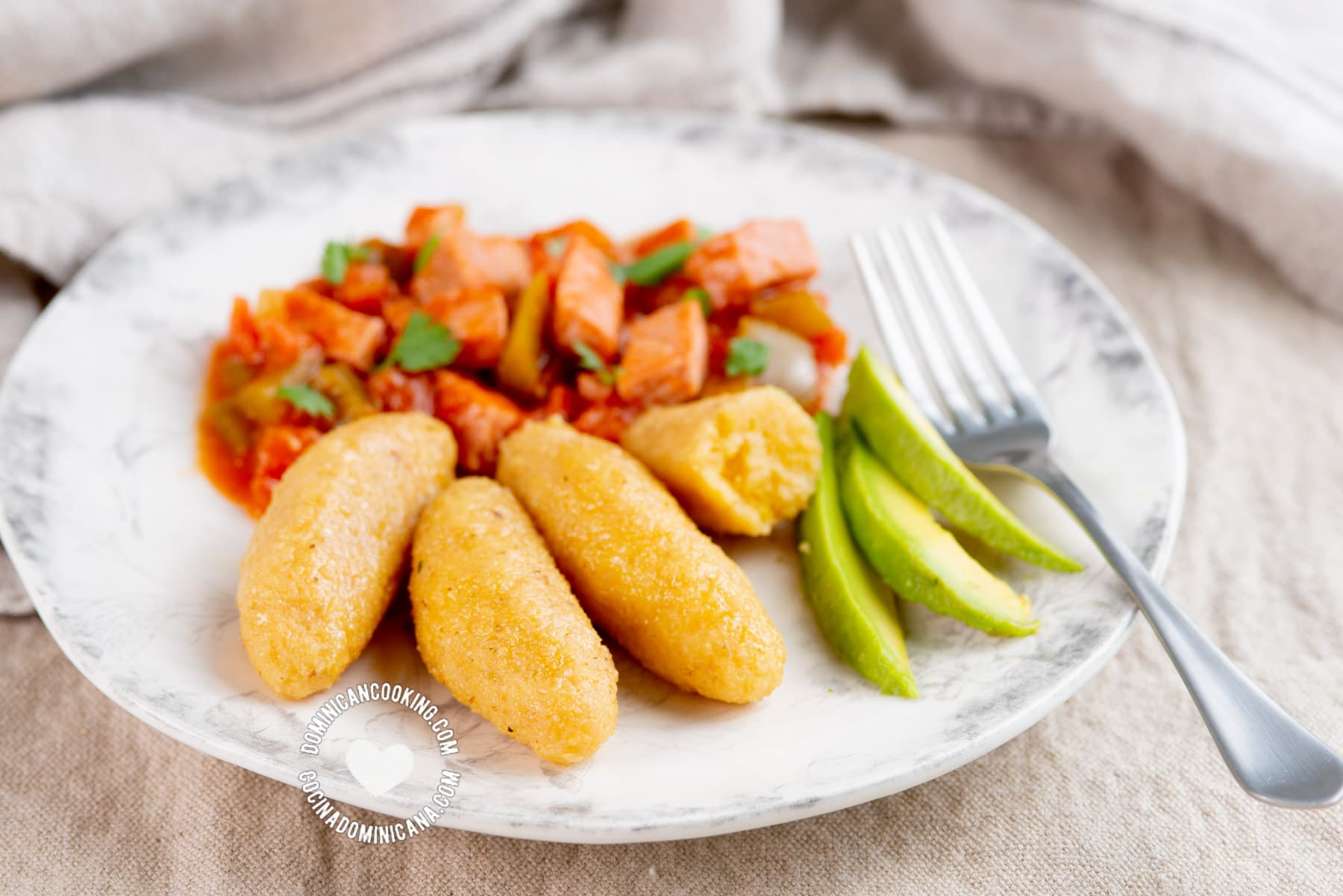
When writing about Dominican cooking to an international audience, such as yourselves - we know from the response that we have an impressive range of nationalities and international locations amongst our esteemed membership - we often come across food and dishes names that mean one thing in one place and are meaningless elsewhere because they are known by a totally different monicker, or because they don't exist.
Let's try to unravel some of those.
Arepa
The Dominican arepa is a spiced baked pudding made with cornmeal and coconut. Apart from its basic ingredient, there is not much resemblance between it and its South American namesake, the fried savory cornmeal patties that accompany almost every Venezuelan and Colombian meal.
Bizcocho
All over the English-speaking world, a bizcocho is a cake.
In the Spanish speaking world, it can be a bizcocho (DR), torta (Venezuela), pastel or tarta (Spain), cake (Puerto Rico and Latinos in the US), or the hispanicized queque which is used by the English speaking communities that live on the Caribbean coast of Central America. In my native Gibraltar, where there is a comparable linguistic and cultural mix, we say quequi.
Bollo / bollito
Bollo or bollito in Spain means a bread roll, while in the Dominican Republic it refers to a type of croquette or to a type of dumpling.
In the DR if you want a bread roll, you say pancito.
Jugo
Spaniards say zumo, and Latin Americans say jugo for juice.
Moro
The Dominican moro (rice and beans) is congrí or moros y cristianos in Cuba and gallo pinto in Central America.
Pan de agua
Pan de agua is the quintessential Dominican breakfast bread, similar in texture to French baguette.
Pan Sobao
Pan sobao is a type Dominican bread roll with soft crumb and crust, typically served for breakfast or dinner.
Pasteles en hoja
Another food name that could cause of confusion is pasteles en hoja. In Spain, they might think you mean the popular sweet pastry mil hojas (commonly known in English by its French name mil feuilles.
Pasteles en hoja are very similar to what are known as tamales in Central America and Mexico.
Tortilla
Tortilla is an omelet in Spain, called tortilla española in the rest of the world. In the rest of the Spanish-speaking world, you'll have to specify tortilla de huevos if you want an omelet. In Mexico and Central America, a tortilla is a flour or maize flatbread which the rest of Spanish speakers call tortilla Mexicana.
In the Dominican Republic, a Dominican tortilla is a different kind of omelet.
I will end with this adaptation of a classic song:
You say batata, and I say boniato,
You say guineo, and I say plátano,
batata, boniato, guineo, plátano!
Let's call the whole thing off!
(With apologies to Ira and Israel Gershwin).
Is there any word you'd like us to include, or a different name for these that you'd like to contribute: Please leave them in the comments, and we'll come back to expand this article regularly.

* Mexico, Guatemala, Honduras, El Salvador, Nicaragua, Costa Rica, Panama, Colombia, Venezuela, Ecuador, Peru, Bolivia, Paraguay, Uruguay, Chile, Argentina, Dominican Republic, Puerto Rico, Cuba, Equatorial Guinea (former Spanish colony in West Africa) and Spain.

- Learn more about me and the humans behind this blog.
- Share your questions and comments about this post.
- Subscribe to receive our recipes and articles by email.
- Please stay in touch! Follow us on: