
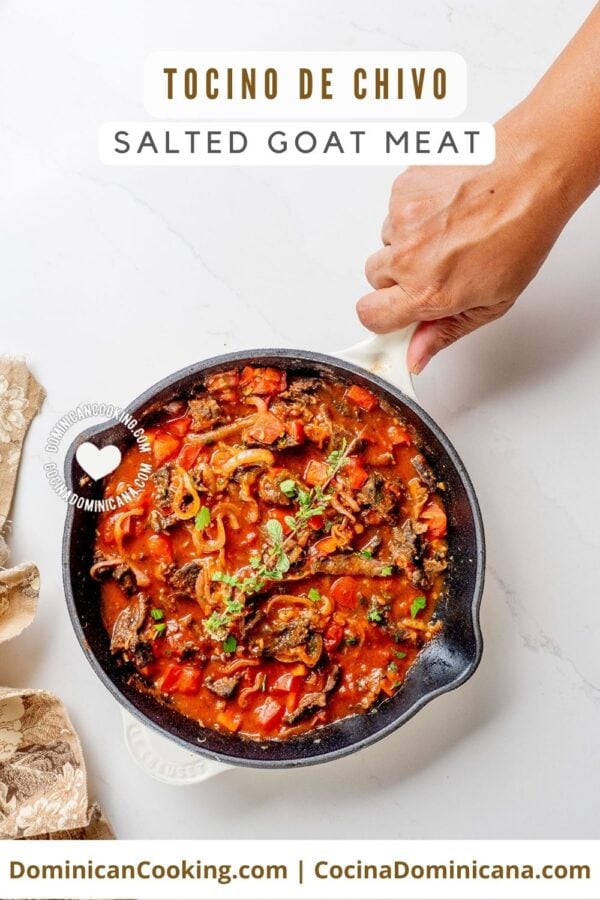
Carne salada, tocino, or cecina - a Dominican salted meat and food preservation process -- popular in the pre-refrigeration days -- adds lots of flavor to pork beef, or goat meat. Learn with me just how easy it is to make it at home, how to store, desalt, and serve it "guisada."
By - Reviewed: . Original: Jan 14, 2013
Why we ❤️ it
Salting meat is one of the oldest preservation methods humans developed. Salting is inexpensive, safe, and easy to do if salt is available. Dominicans have made dried salted meat for centuries, and we typically added spices and seasoning to enhance its flavor.
The result is meat that would last for longs periods of time, and a dish with its own unique flavors and texture. Even after refrigeration came along, people kept doing this. Nowadays, salted meat is bought and served mostly at roadside food stands.
What's carne salada?
Dominican salt-cured meats (salted meat, bacon, or jerky) traditionally use salt, spices, and sun drying to stop microbial growth.
In the absence of water and in the presence of large amounts of salt, it becomes a hostile environment for bacteria, making it one of the safest methods of curing meat.
Another advantage of this method is that it does not require the use of sodium nitrate, potassium nitrate, or other chemicals used commercially to preserve meat.
Traditionally, the preferred meats for bacon are beef, pork, and goat. In my family, goat was typical, but any inexpensive, low-fat cut of meat would do.
Salted and dried pork belly was called "pitisalé." Small pieces of salted pork were used as a seasoning in beans and broths before bouillon cubes became ubiquitous.
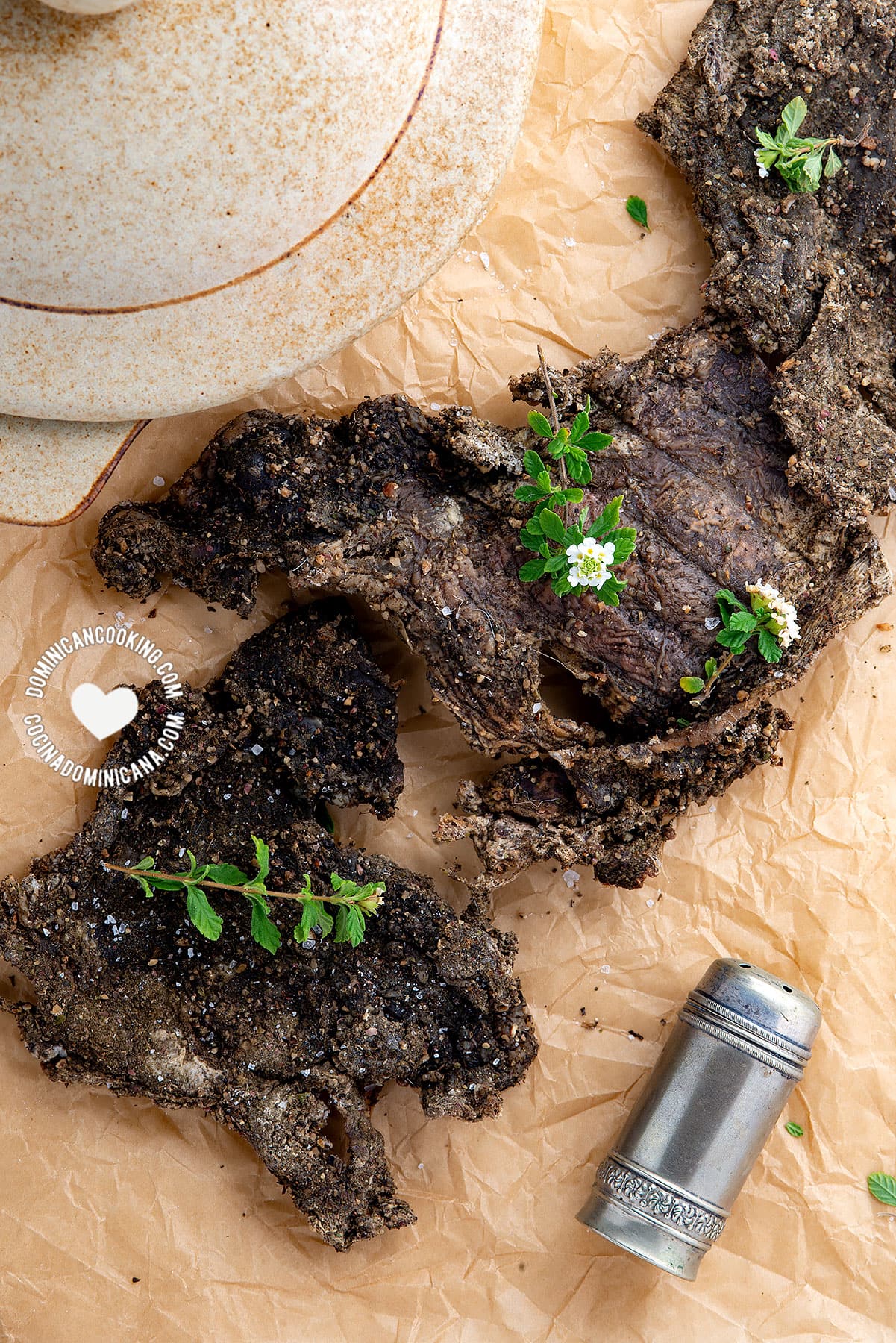
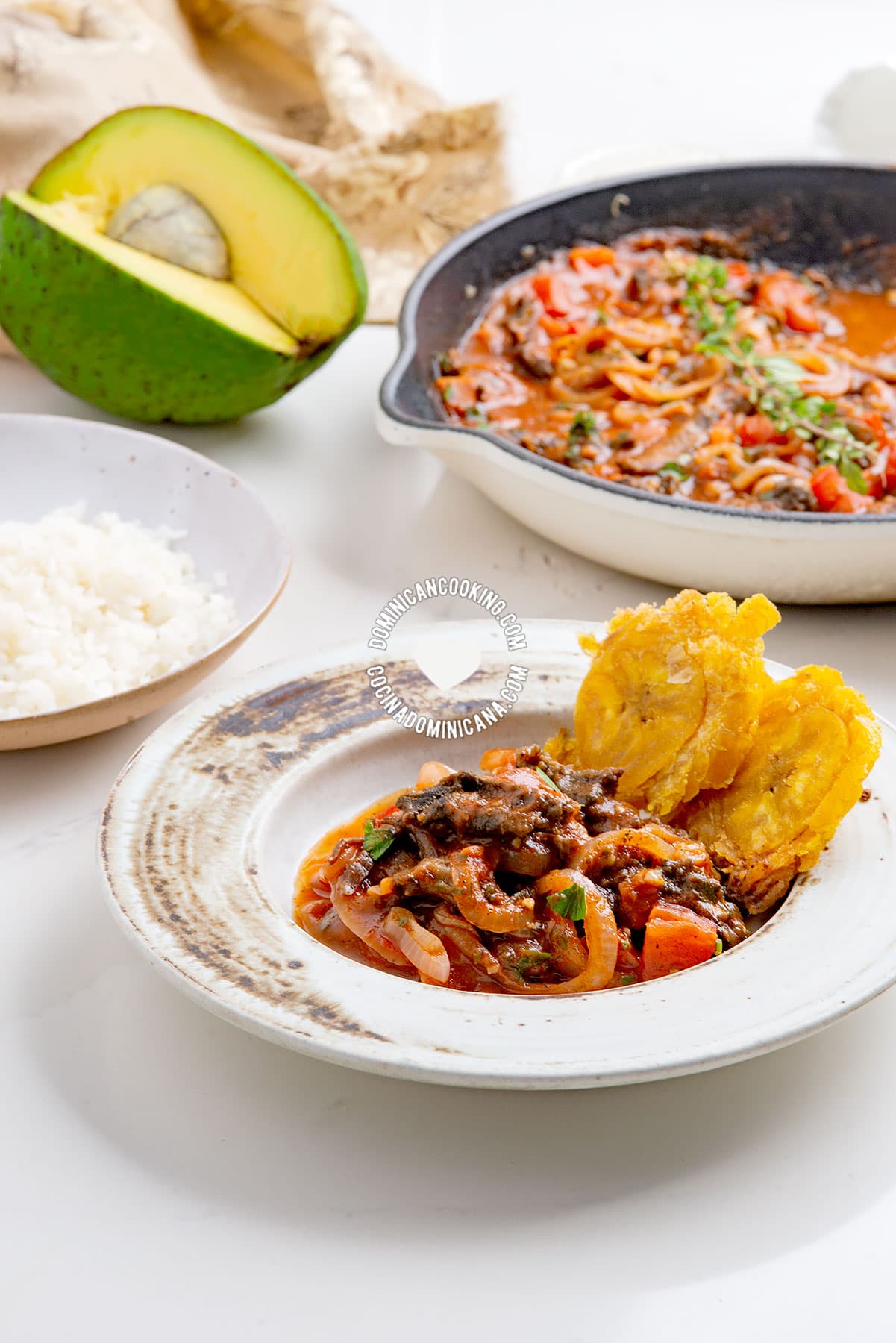
Tocino de chivo (salted goat meat).
Serving suggestions
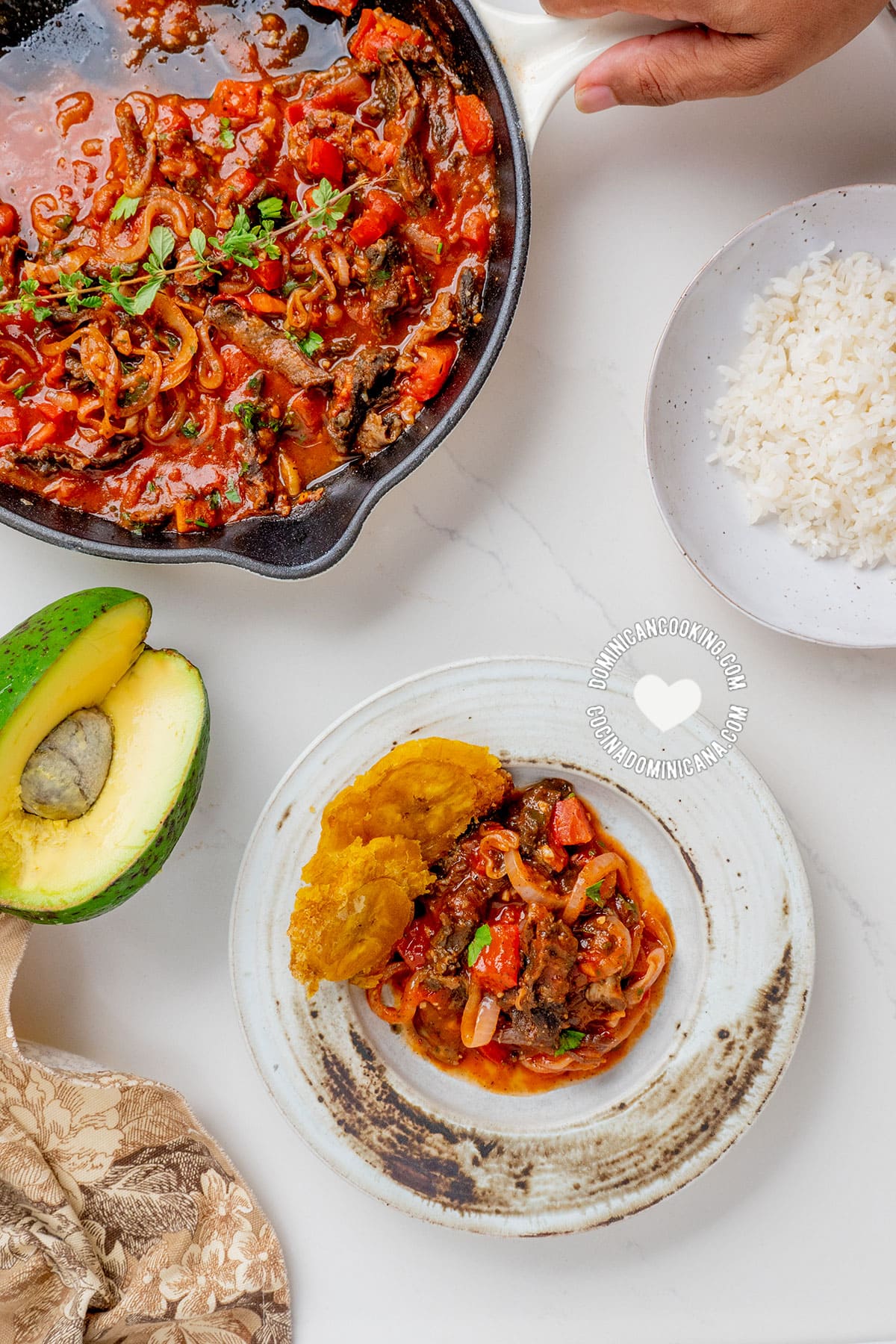
Arroz blanco (white rice), avocado, and tostones are my favorite side dish with this tasty stewed meat.
Carne salada guisada also goes great with any of our moro rice recipes, but moro de guandules or moro de habichuelas negras are my preferred ones.
Top tips
- Type of meat: You can use pork, beef, or goat, depending on your preference.
- Type of salt: To salt the meat, the best salt to use is coarse-grained sea salt without additives. Regular salt usually has iodine added for its health benefits, but Kosher salt or ground sea salt is perfect for this.
- Preparation time: As this is a time-consuming process, I suggest you double or triple the quantities to make more than you will need for a stew, and save the rest of the salted meat for another occasion.
- Storage: Keep leftover salted meat in an airtight container in the refrigerator. Although it traditionally did not require refrigeration, I like the added security of keeping it refrigerated.
- Shelf life: Salted meat can last for months, but its shelf life will depend on the curing method used. Salted and dried meat can last up to a month when stored in an airtight container.
About this recipe
This tocino de chivo (salted goat meat) is a recipe passed in my family from generation to generation, so I followed most of the steps from my mom's method.
The only change I made was to use a dehydrator to dry it. My mother and grandmother used to dry it in the sun (covered with a mosquito net to keep insects out). After a whole day in the sun, most of the moisture had been removed from the meat, but they repeated the same process for another day or two until the meat was completely dry.
If you like, you can use this method, but it must be on a day with long hours of bright sunshine (which is not a problem in Montecristi 😀).
Dry meat, once rehydrated, has a different texture from meat that was just brined and dried. If you do not want to dry it, you can refrigerate it for up to 48 hours or store it in the freezer for up to a month.

Video
Recipe
This awesome free recipe contains Amazon affiliate links, we receive a small commission from any purchase you make at no extra cost to you. Thanks for your support!
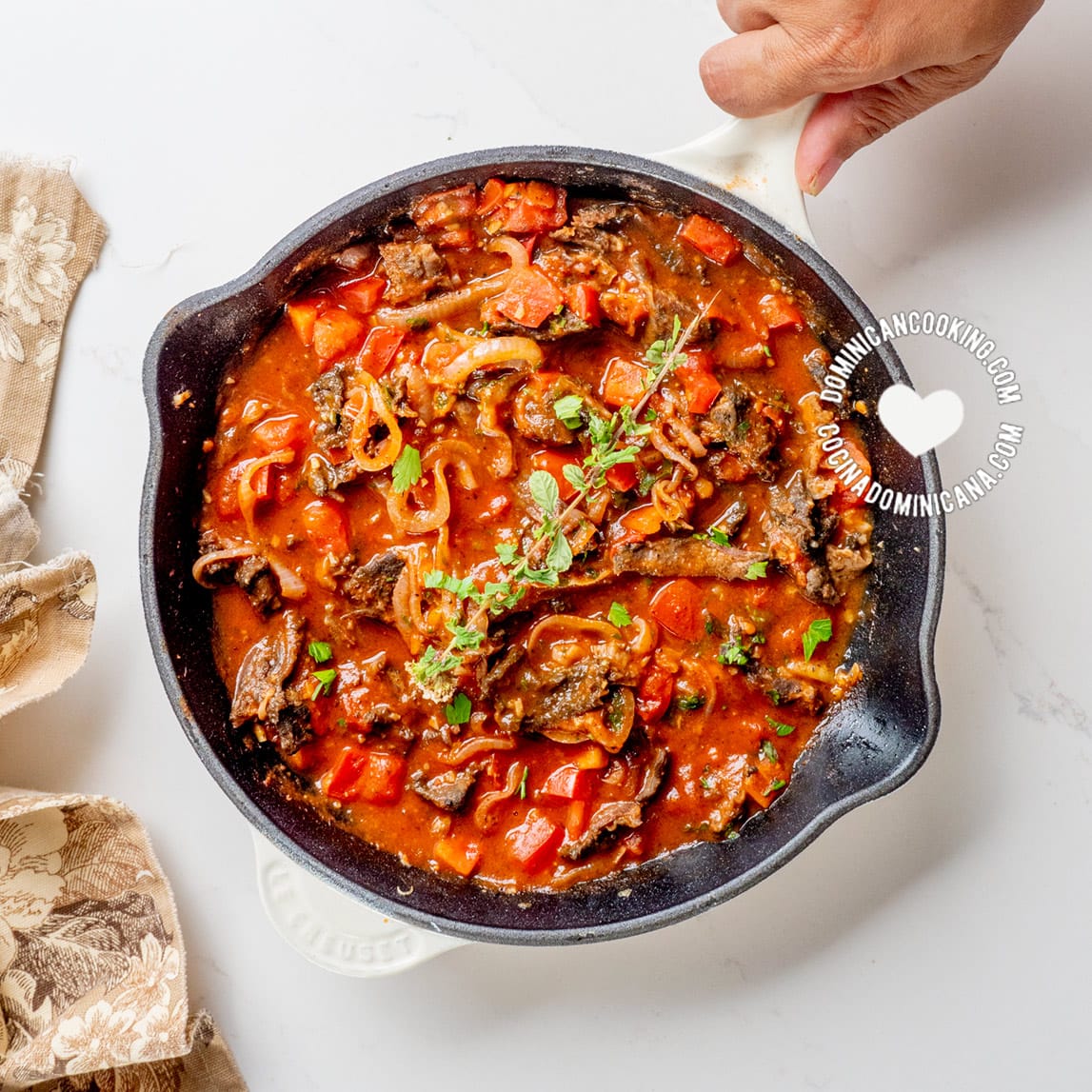
Salted Meat [Video+Recipe] Carne Salada, Cecina or Tocino
Ingredients
To preserve meat
- 2½ pound meat, pork, beef or goat [1.13 kg]
- ½ cup coarse sea salt
- 3 tablespoons oregano , (dry leaves), crushed
- 1 tablespoon pepper , (freshly-cracked, or ground)
- 2 tablespoons mashed garlic, (optional)
For meat stew
- 3 tablespoons olive oil
- 1 large red onion, sliced
- 4 large tomato, chopped
- 4 cloves garlic, crushed
- ½ teaspoon oregano , (dry, ground)
- 1 cup tomato sauce
- 1 tablespoon cilantro, chopped
- 1 teaspoon salt, (or more, to taste)
- 1½ cups liquid from boiling meat
Instructions
1. To season the meat
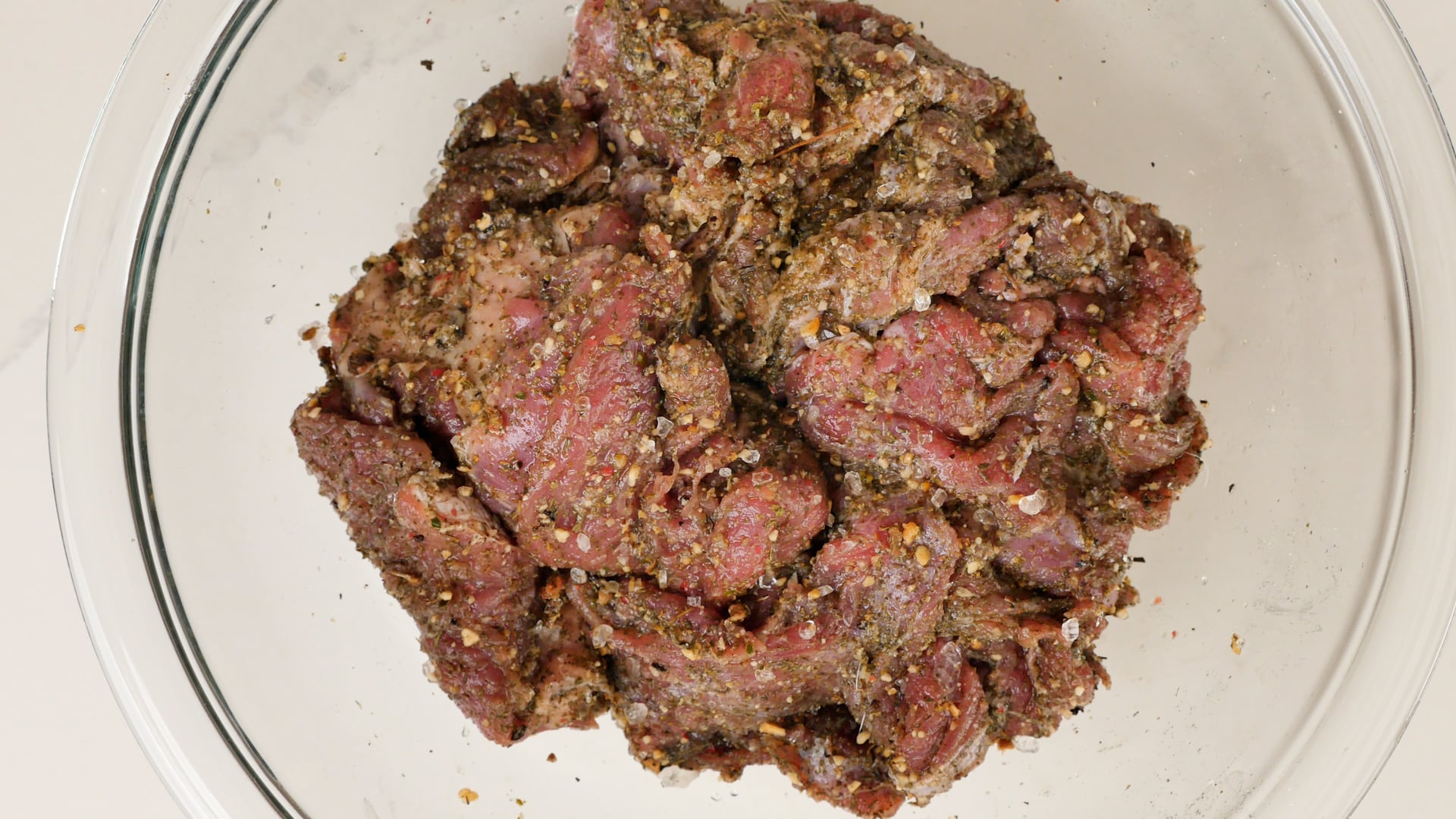
 Slice the meat as thinly as possible and discard any connective tissue, bone and cartilage.Season the meat with salt, pepper, and oregano, coating it well, and let it rest overnight in the fridge.
2. Dry the meat
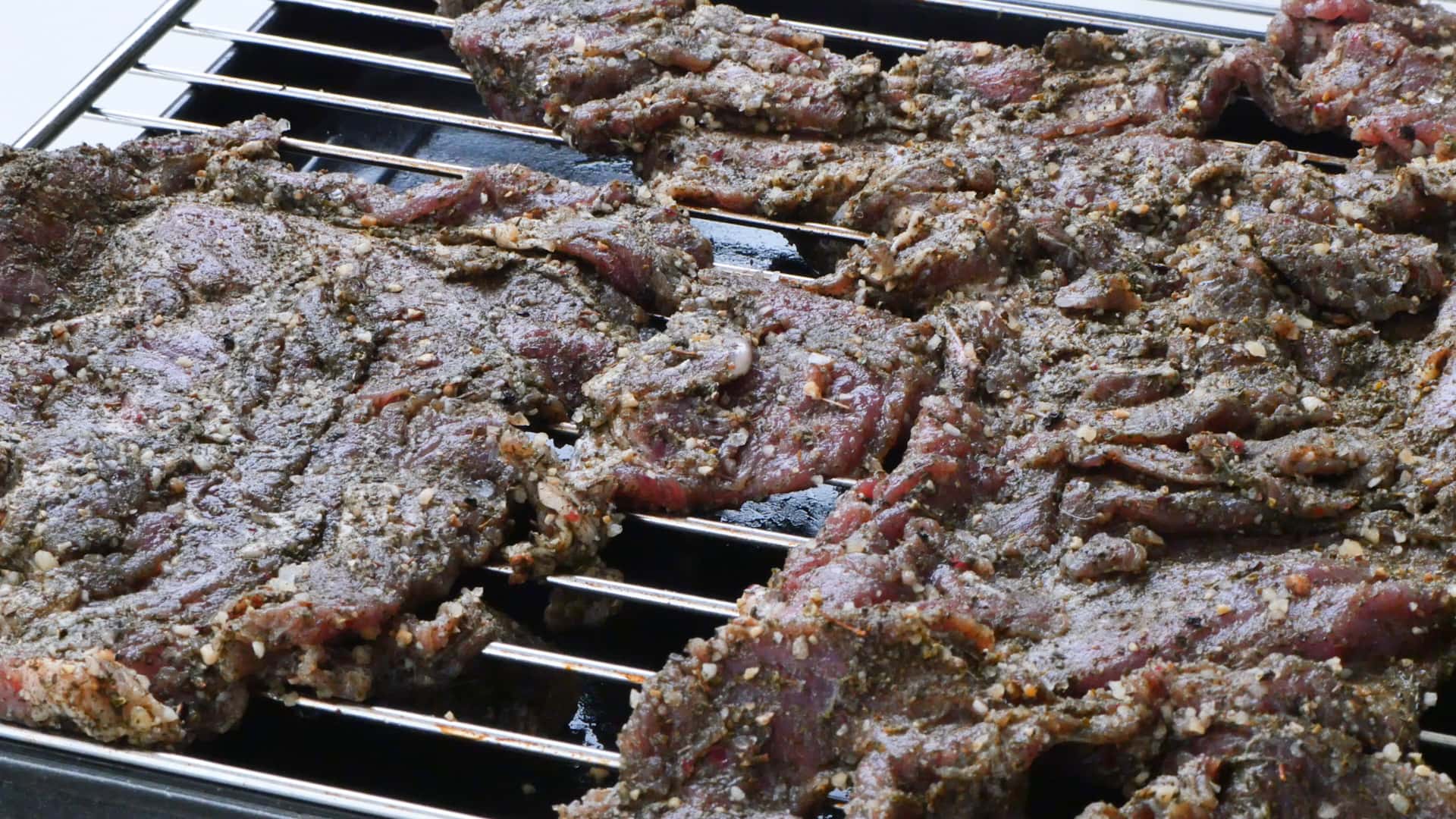
- Remove the meat from the liquid that would have seeped out overnight. Pat dry with a paper towel.Place the meat on a wire rack and dry in a dehydrator until it is completely dry and stiff. It took me about 8 hours. You can dry it in the oven over 200 ºF [93 ºC] until the meat is quite stiff and dry to the touch (it took me about 3 hours).
3. Storing
- Cool meat to room temperature and store in a sealed bag in the refrigerator for up to a month.
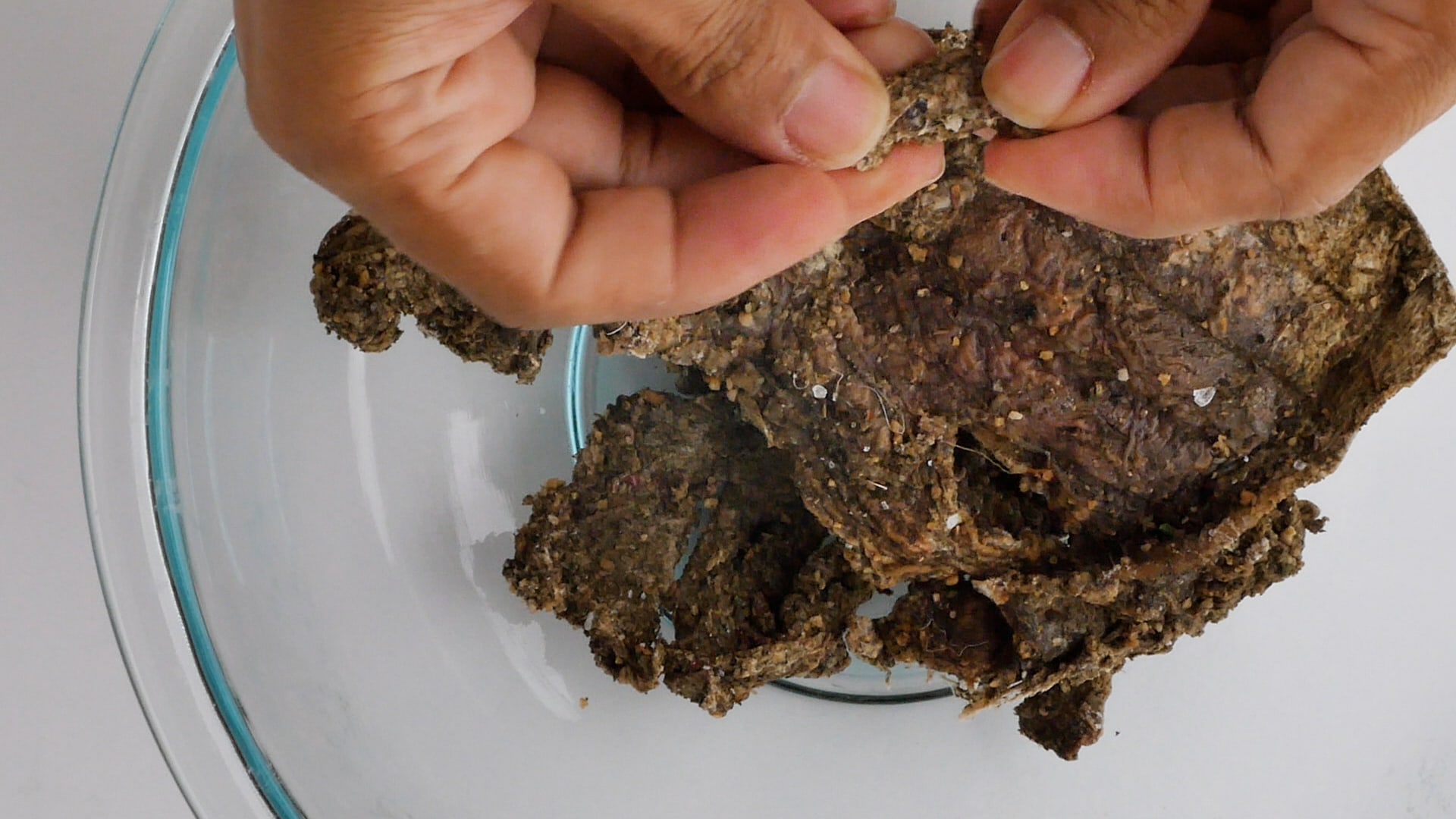
4. To de-salt meat
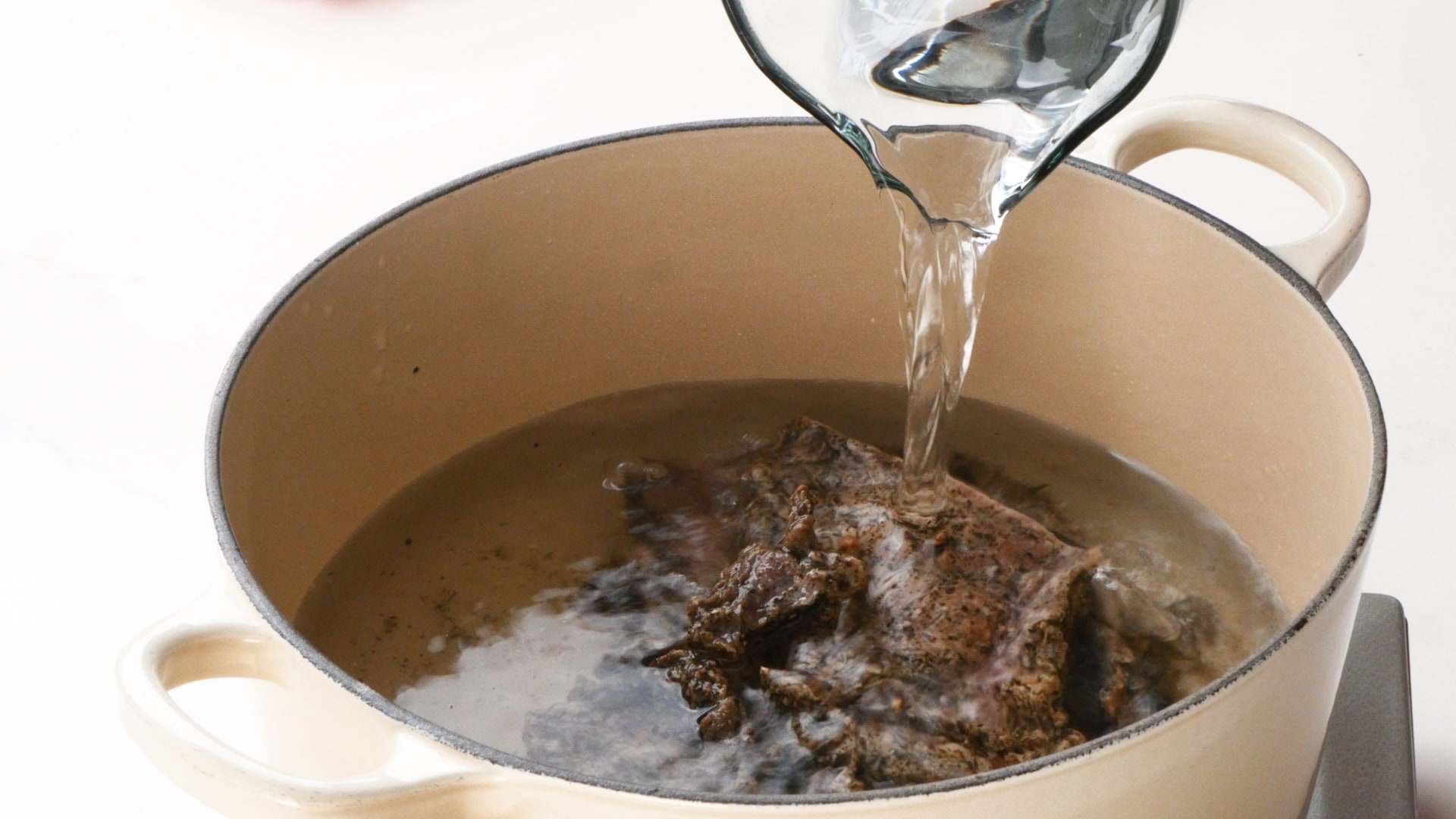
- Rinse meat in running water. Soak overnight in abundant water (about a gallon [3.8 lt]) in the refrigerator.Boil in the same water it soaked overnight until the meat is very tender. If you cook it in a pressure cooker it should take 20 minutes. In a conventional pot it should take about an hour, add water if it becomes necessary to maintain the same water level. Save the liquid to use later on.
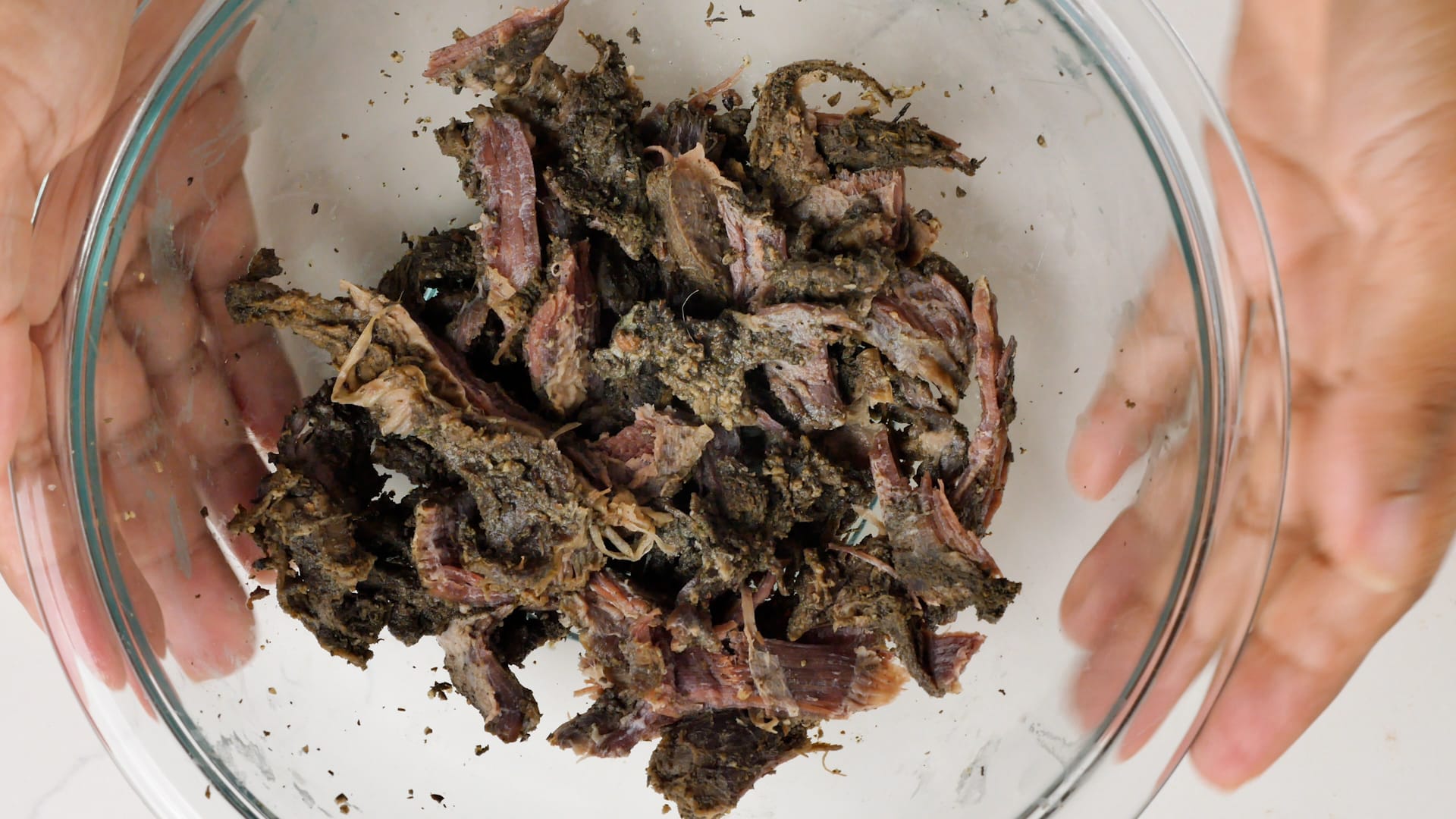
5. Shred meat
- Cool the boiled meat to room temperature and shred it.
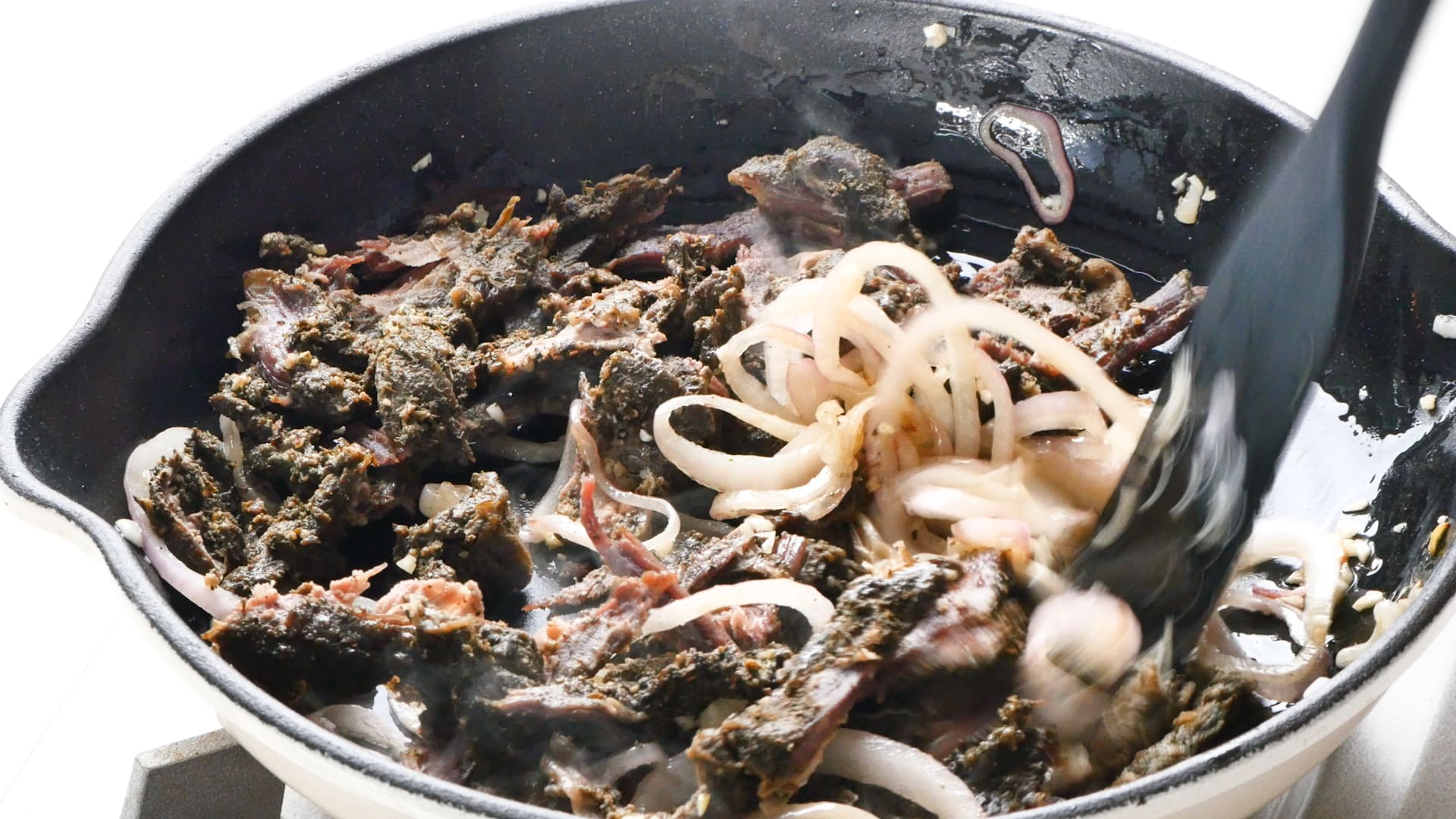
6. Sautee
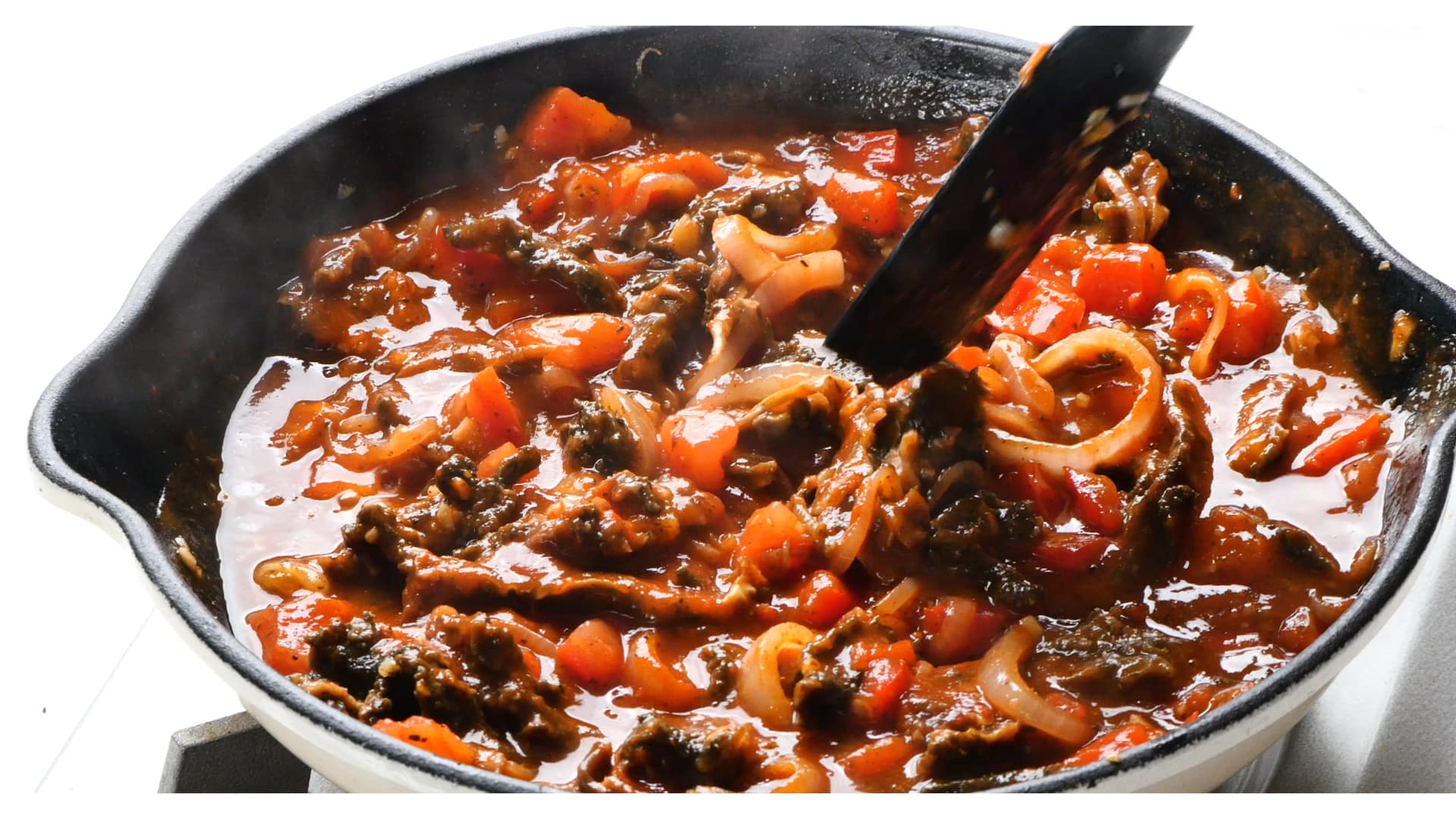
- Heat oil in a 2 quart pot [2 lt] over low heat. Add onions, cook and stir until onions become translucent. Add garlic and cook stirring until the garlic releases its aroma (about a minute).Stir in the meat and cook until it has heated through.
7. Make sauce
- Mix in tomatoes and oregano and stir. Add tomato sauce and 1½ cup of water from boiling the meat (check that it's not too salty before adding it).Cover and simmer over low heat for ten minutes. Taste and add salt to taste if you find it necessary (I did not).
Nutrition
Nutritional information is calculated automatically based on ingredients listed. Please consult your doctor if you need precise nutrition information.
Want to save this recipe?
Enter your email & I'll send it to your inbox. ❤️ Plus, get great weekly recipes from me!
More beef recipes
Beef recipes are some of the most popular meat recipes on our blog. The most popular is undoubtedly Carne guisada, one of the favorite meats in the Bandera Dominicana, our national lunch dish.
Other recipes you shouldn't miss are ground beef with vegetables, shredded beef, beef roll, liver with onions, and Dominican meatballs.

- Learn more about me and the humans behind this blog.
- Share your questions and comments about this post.
- Subscribe to receive our recipes and articles by email.
- Please stay in touch! Follow us on: