
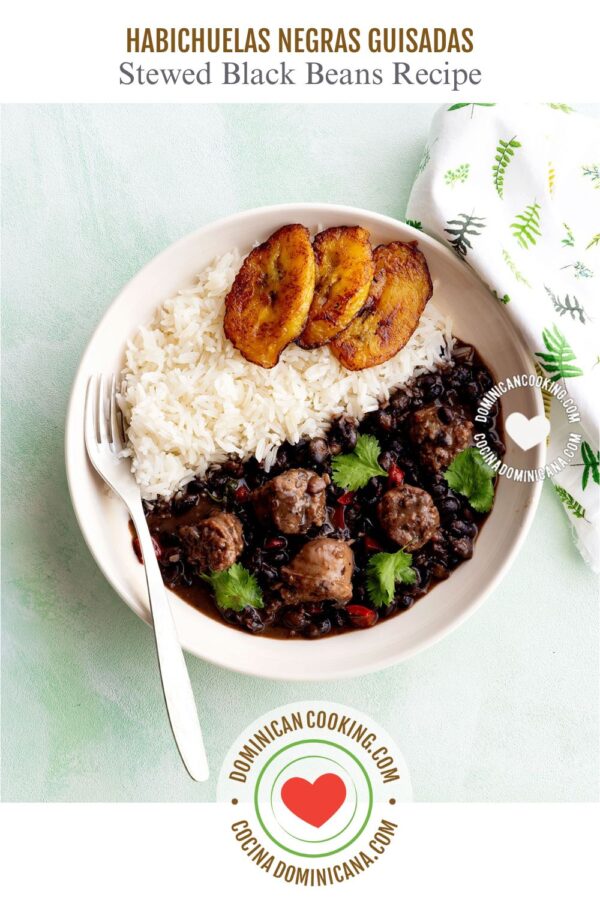

Habichuelas negras, or frijoles negros, while not as popular as other types of beans on our table, it is one of my favorites for its attractive presentation and strong flavors. It can also very easily be turned into a vegan dish. Don't hesitate. I promise it will be worth your while!
By - Reviewed: . Original: Dec 31, 2012
Why we ❤️ it
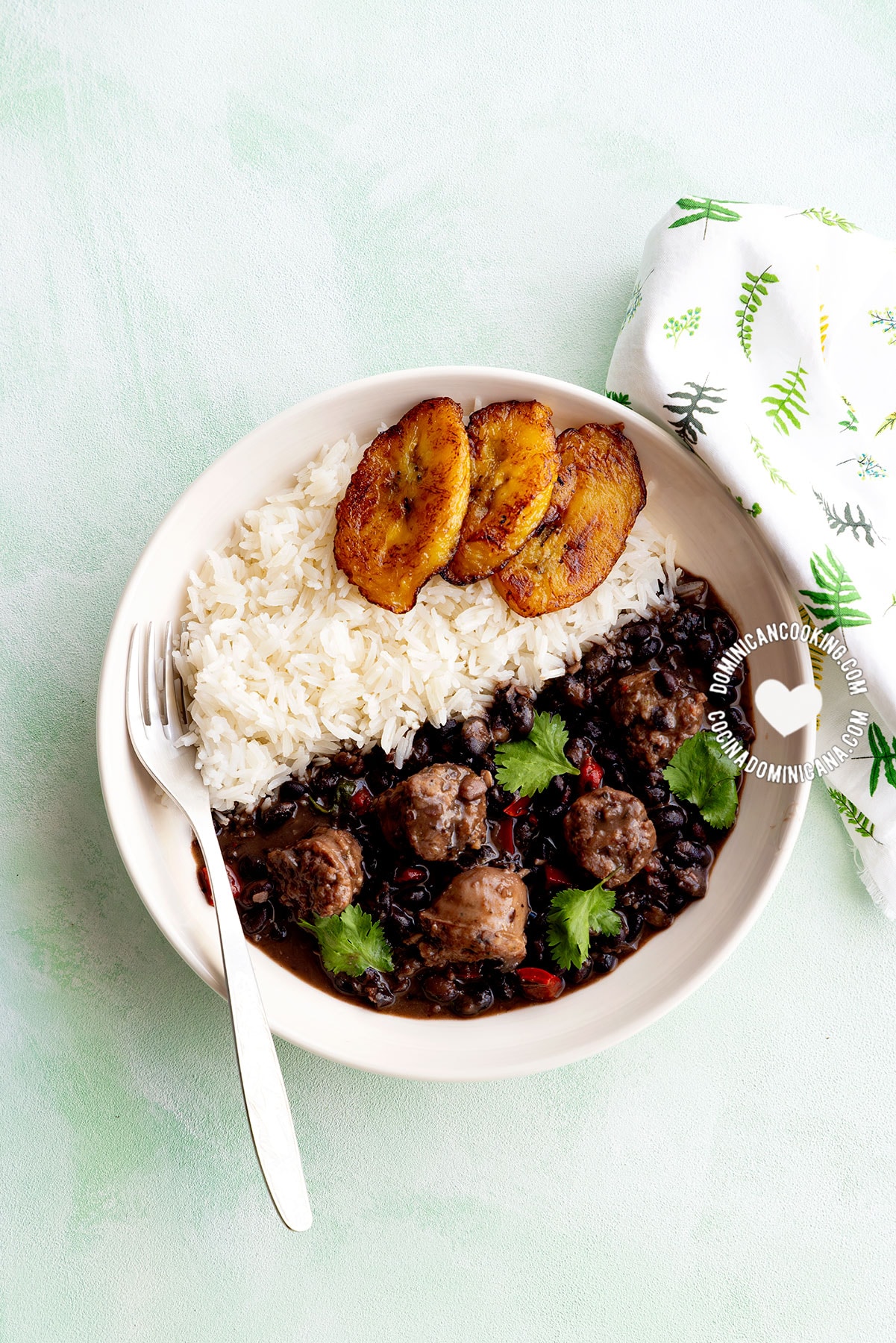
When it comes to habichuelas (frijoles), we Dominicans prefer the red varieties (pinto, cranberry, pink and red kidney beans), but nobody is going to turn down a steamy plate of habichuelas negras guisadas next to a snow-white plate of arroz blanco (white rice).
I have taken my mom's habichuelas negras just a step further with some of my favorite ingredients and flavors. I am sure she'd be proud.
Variations
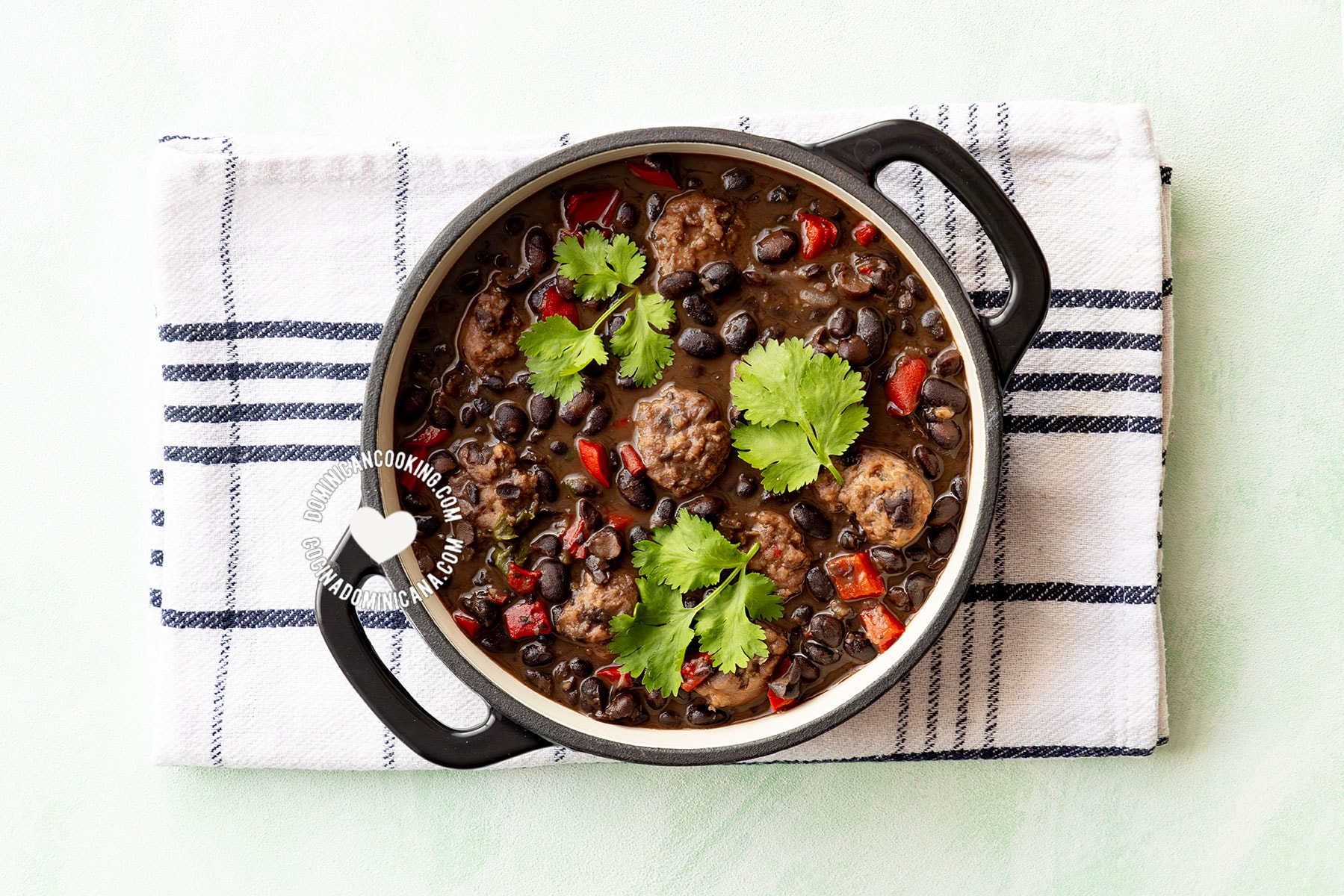
As you can see from the photo, I've added some longaniza to the habichuelas, but this is not strictly necessary, so for a meatless or vegan dish just leave it out.
But if you eat meat, and have some longaniza at hand, why not just skip cooking a meat dish altogether and save some time, and make this dish just extra extra? A bit of longaniza, and it goes from a side dish to a fantastic main dish.
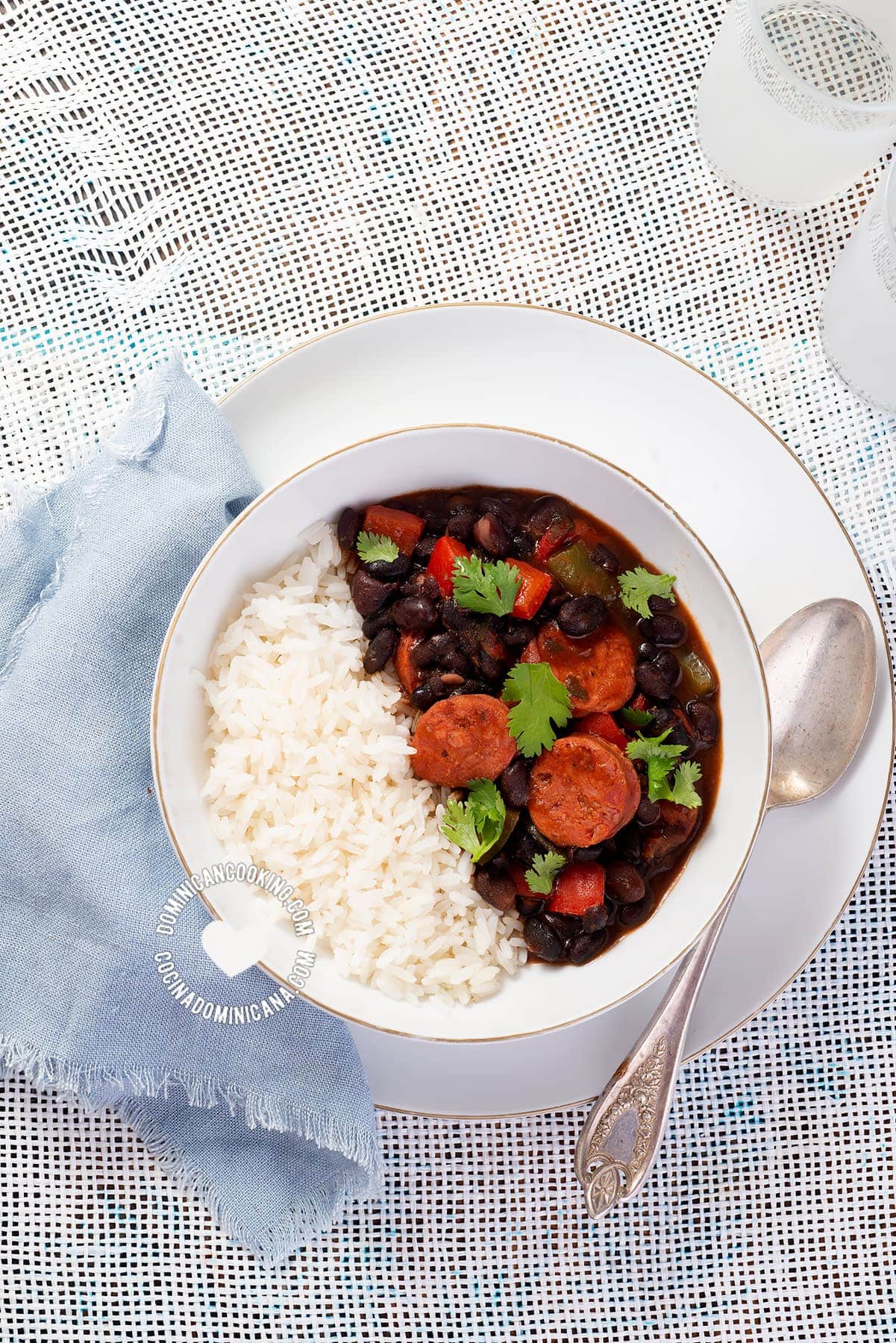
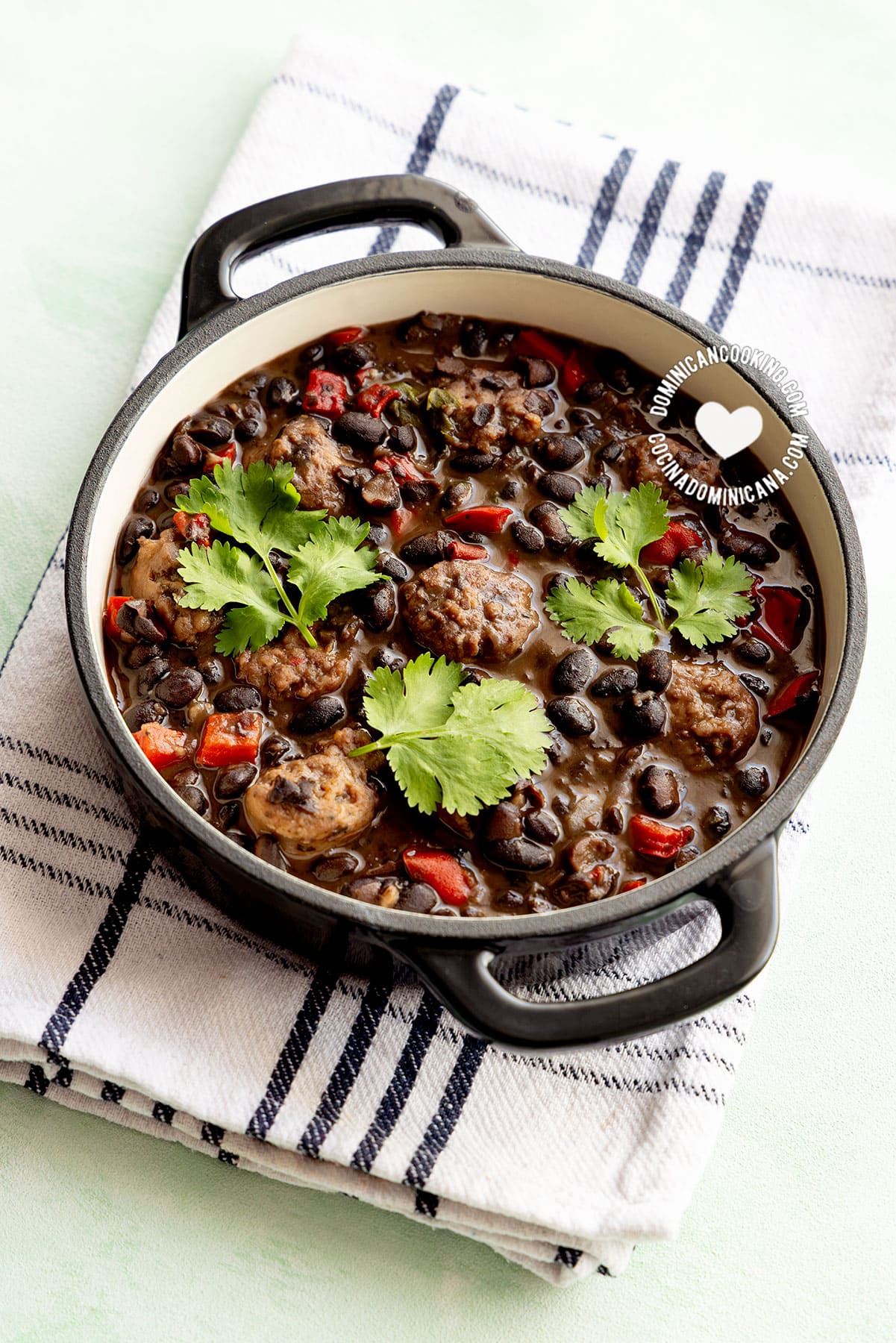
Stewed black beans (habichuelas negras).
Serving suggestions
Unless you're new here (if you are, welcome!), you know the drill: serve a bowl of beeans with arroz blanco (with concón, of course).
Put some avocado on the table, or any of your favorite salads maybe some fritos maduros (fried ripe plantains) or tostones (fried green plantains), and see those dishes sparkling clean in no time. If you are feeling really inspired and want to leave some Dominicans speechless, cornmeal fritters (arepitas de maíz) will do the job.
Top tips
- Adding longaniza: I've added some longaniza to the beans to give them more flavor and for the lazy cooks among us (myself included) who can serve it with rice without cooking anything else.
You can see in the photos that I've used raw longaniza sometimes and pre-cooked longaniza other times. You can choose whichever you prefer. - No vinegar: I have seen recipes that add vinegar to habichuelas, but this was an absolute no-no for my mom and the rest of the home cooks in my family. "Las habichuelas se abomban", they would say (the beans would ferment). So, true or not, I dislike vinegar in my beans.
- Peppers: Instead of the traditional cubanelle pepper, I have used both red and green bell peppers, but you can use either. It just looks prettier with both.
- Qty. of beans: We start this recipe with 4 cups of boiled black beans. You can boil 2 cups dry beans beforehand, or you can use canned black beans. I always prefer to boil it from scratch (and Instant Pot or pressure cooker are great for it), but canned beans will also be fine.
- Substituing beans: You can use pinto beans or pink beans in place of black beans.
- Overboiling: The beans make foam as they boil, so make sure to boil it in a big pot and check on it from time to time in case it starts to overboil.
- Leftovers: You can save the leftovers in an airtight container and refrigerate or freeze them. Then reheat on the stove or microwave.
- Boiling time: It's hard to estimate how long it will take to boil. It will depend on how fresh they were and how long you soaked them. But set aside at least 1½ hours beforehand.
To cut down on cooking time, you can boil them in a pressure cooker per the manufacturer's instructions.
About this recipe
I based this recipe on the habichuelas guisadas recipe we know and love, with a few changes. You can also try our best black bean recipes: moro de habichuelas negras, and moro-locrio con cerdo.
This recipe yields 6 servings of about 1½ cups each.
Bun provecho!

Video
Recipe
This awesome free recipe contains Amazon affiliate links, we receive a small commission from any purchase you make at no extra cost to you. Thanks for your support!
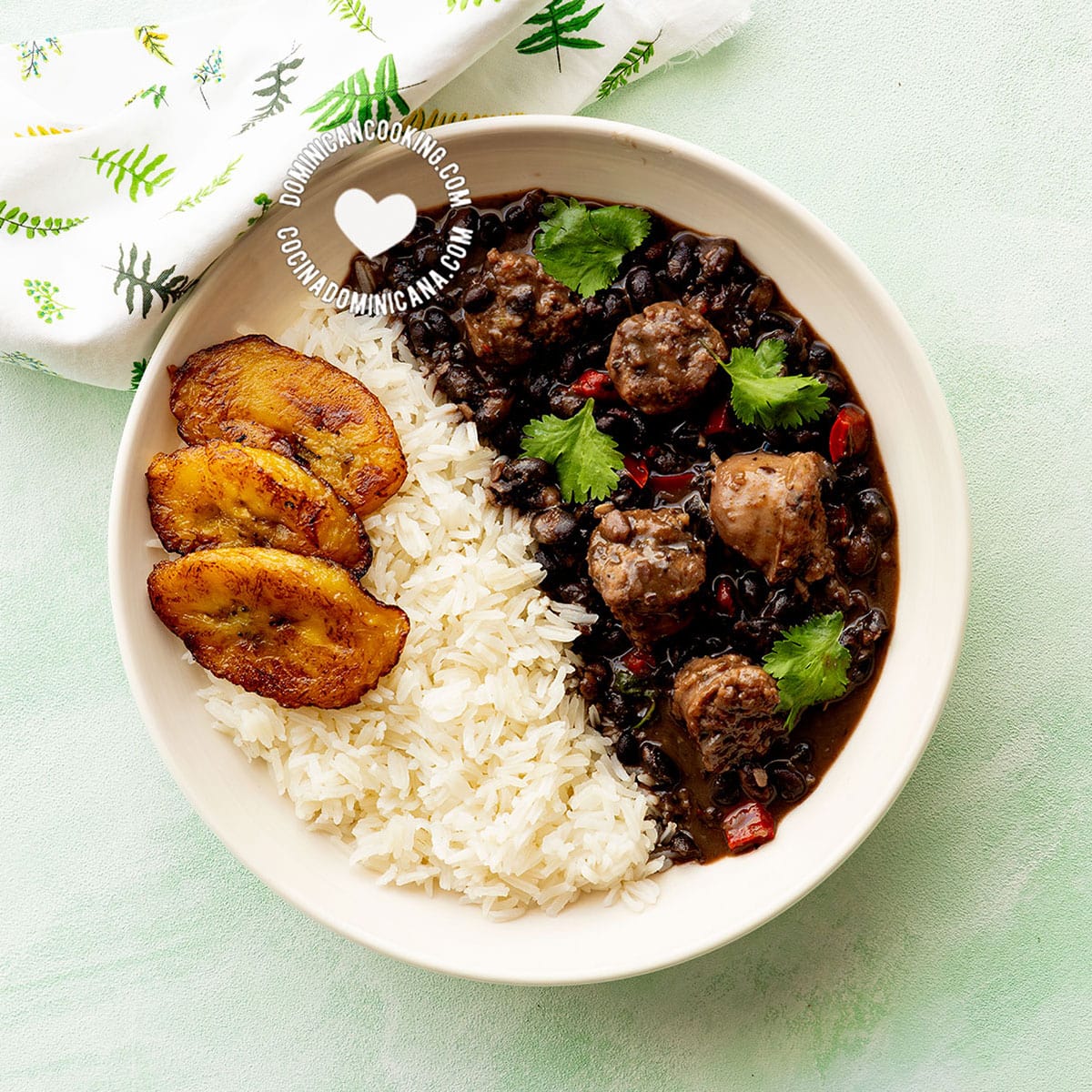
Habichuelas Negras Guisadas [Video+Recipe] Stewed Black Beans
Ingredients
- 4 cups boiled black beans, (see notes)
- 1 tablespoon vegetable oil, I prefer olive oil
- 1 lb longaniza, (Dominican sausage) sliced (optional)
- 1 small white onion, cut into halves, or half a large white onion
- ½ teaspoon oregano , (dry, ground)
- 4 sprigs of thyme, or 1 teaspoon of dry thyme (optional)
- ½ teaspoon pepper , (freshly-cracked, or ground)
- 1 teaspoon salt, (or more, to taste)
- 2 cloves garlic, crushed
- 1 bell pepper, red or green, chopped
- A few sprigs of fresh cilantro
Instructions
1. Boiling dry beans
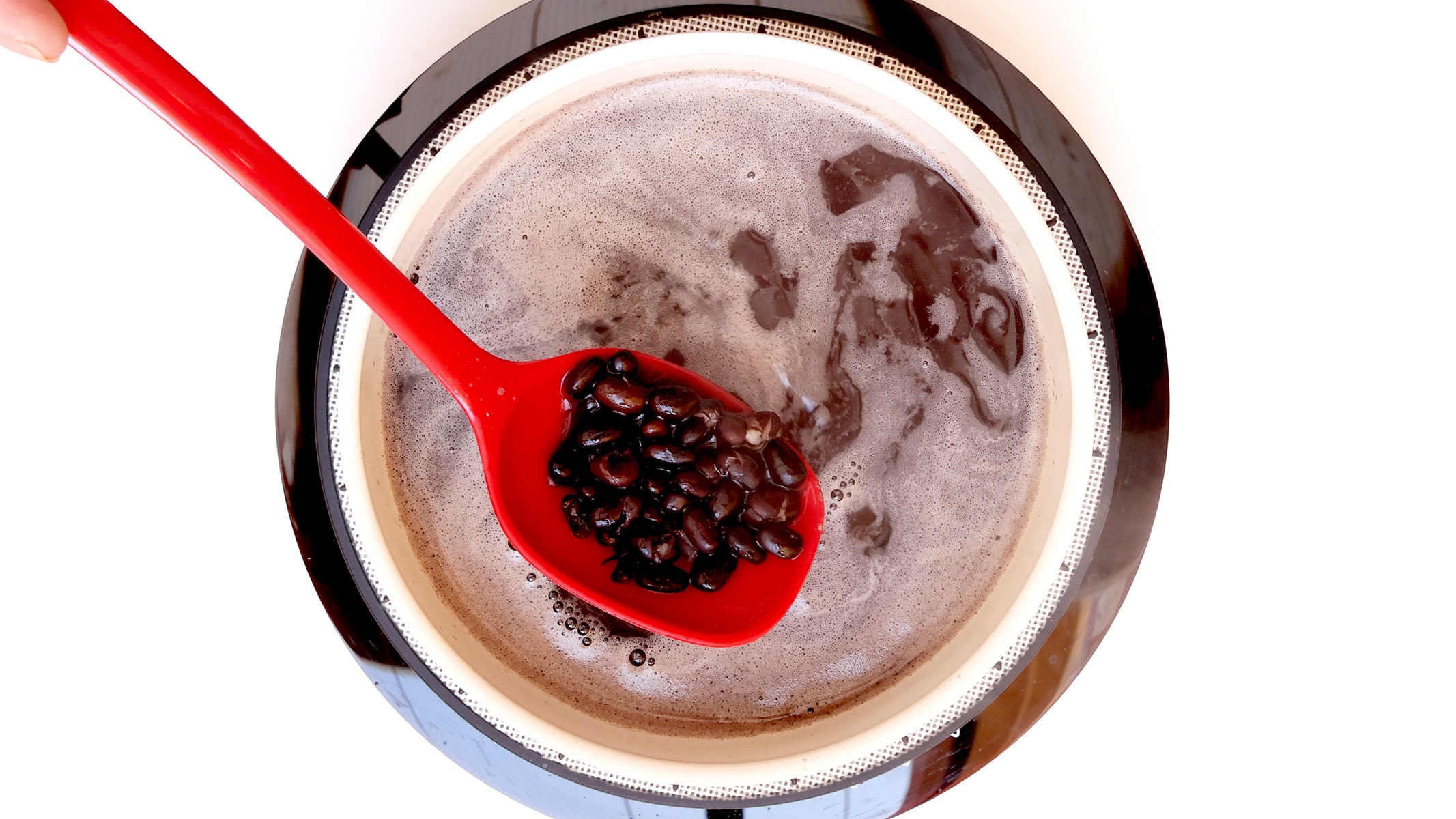
 Soak beans overnight, or for a couple of hours at least (this will reduce the time it takes to boil them). Once soaked, remove them from the water. Place in a large pot, and add half a gallon of water [2 liters] and a bay leaf (this is optional). Boil over medium-low heat until the beans are tender enough that they turn to mush if pressed between your thumb and finger. ⚠️ Add water if it becomes necessary to prevent it from drying out or burning.
2. Draining beans
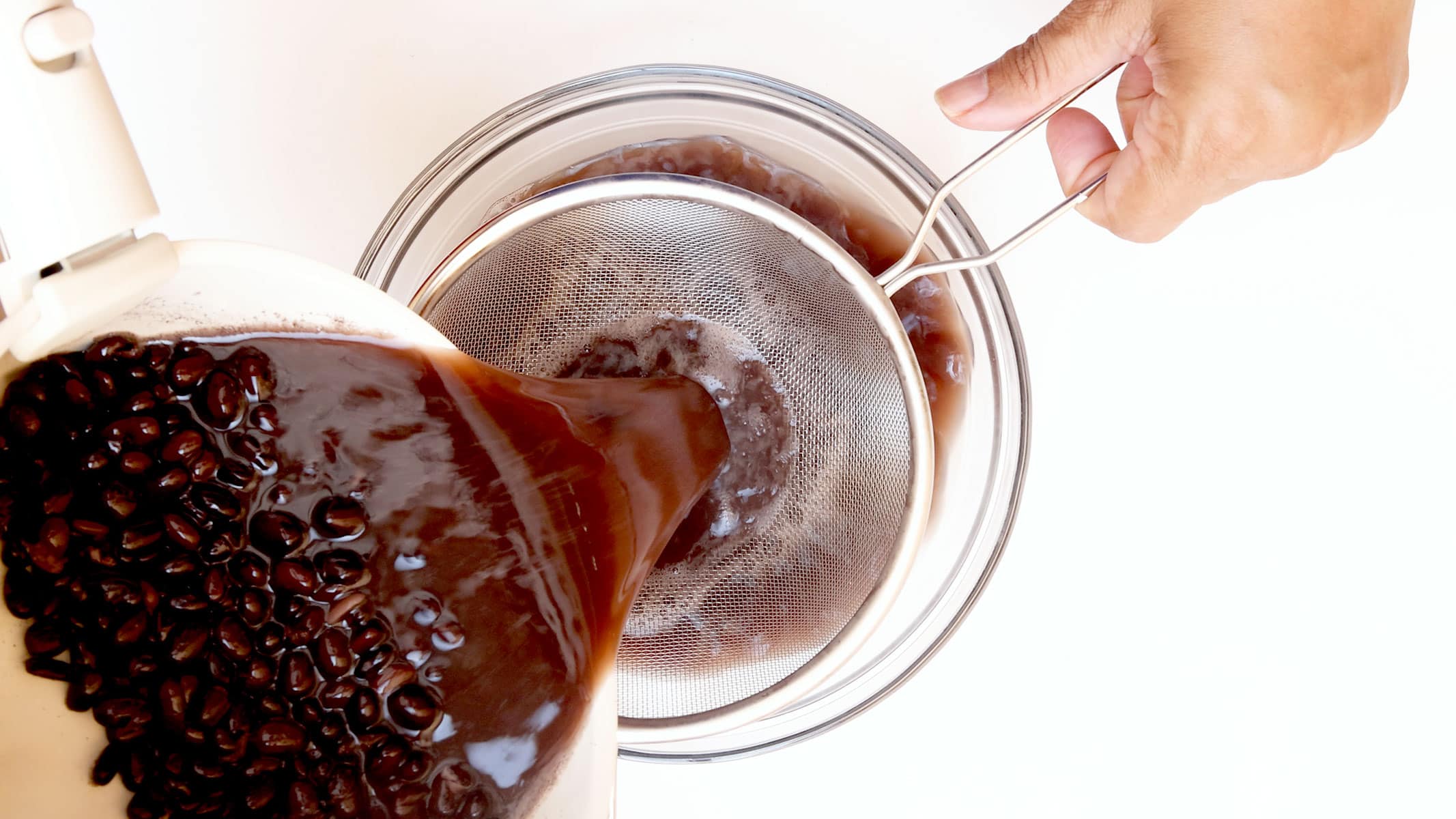
- Separate the cooked beans from the water they were boiled in (using a strainer) if you boiled them at home. We will need 6 cups of water, so top up with tap water if you don't have enough.💡 If you are using canned beans and are watching your sodium intake, you can choose to discard the water from the can and use tap water when the recipe calls for water later on.Set aside the beans and water.
3. Sauteeing
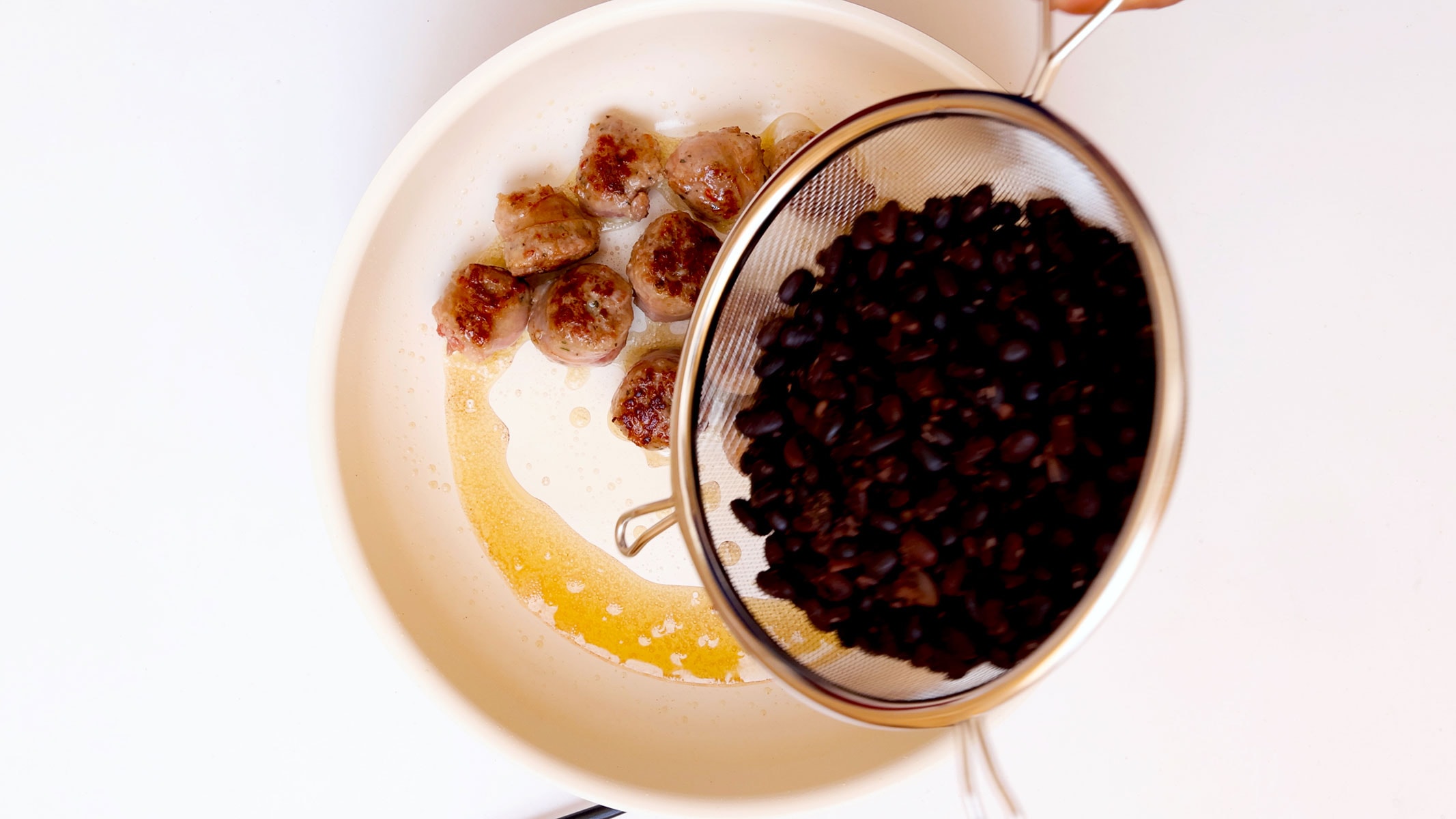
- Heat the oil in a pot over medium-high heat. Add the longaniza slices and cook, stirring, until browned. If they release more fat than you would like in the dish, remove some at this point.Add the onion, oregano, thyme, pepper, a teaspoon of salt, and garlic. Cook, stirring, for half a minute. Add the beans and cook, covered, stirring for a couple of minutes.Add a little of the liquid in which they were boiled to prevent them from burning.
4. Stewing
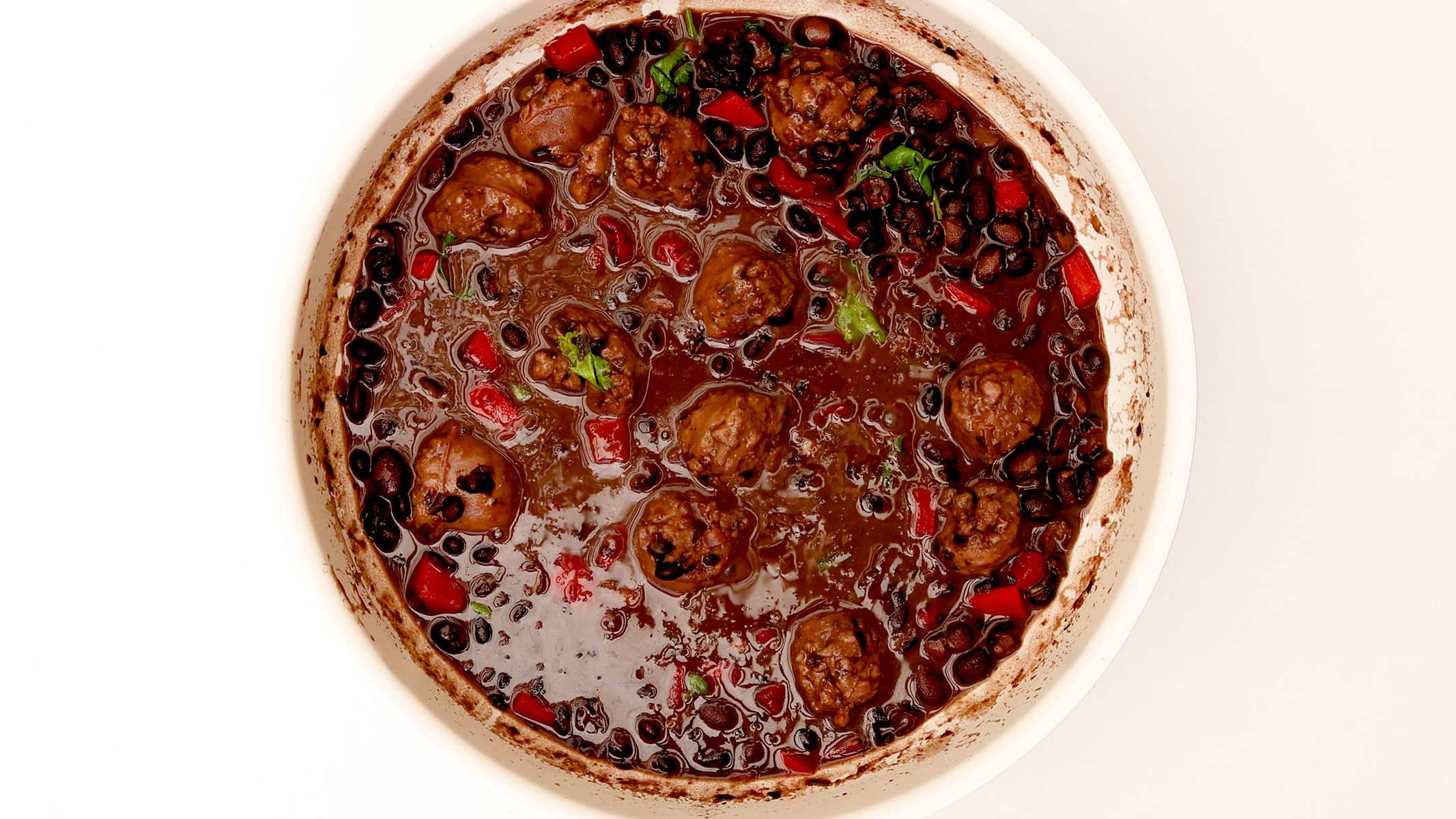
- Pour 6 cups of liquid into the pot. Reduce the heat to medium-low and cook until reduced and the beans are very soft.Simmer until it acquires a creamy consistency. Season with pepper and salt to taste if necessary.💡 If they are not soft and creamy, lightly mash the beans with a potato masher to remove some of the skin and make them creamier. Don't overdo it, we still want whole beans at the end.
5. Serving
 Remove from the heat and serve per suggestions above the recipe.
Nutrition
Nutritional information is calculated automatically based on ingredients listed. Please consult your doctor if you need precise nutrition information.
Want to save this recipe?
Enter your email & I'll send it to your inbox. ❤️ Plus, get great weekly recipes from me!
More bean recipes
Beans are an essential part of our cuisine, and are served nearly every day on our tables as part of Moro dishes (rice and beans cooked together), or served alongside rice like Habichuelas guisadas, Habichuelas blancas guisadas, and even as dessert in Habichuelas con dulce.
Check our our extensive collection of legumes and beans recipes.

- Learn more about me and the humans behind this blog.
- Share your questions and comments about this post.
- Subscribe to receive our recipes and articles by email.
- Please stay in touch! Follow us on: