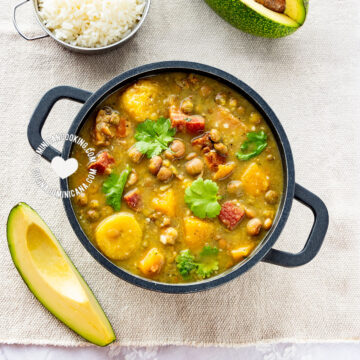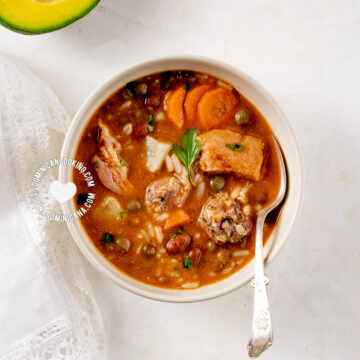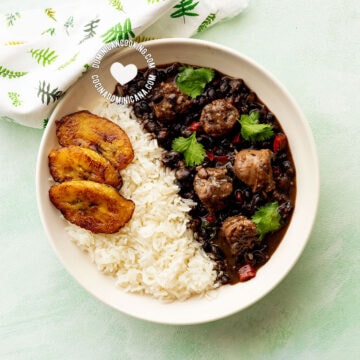

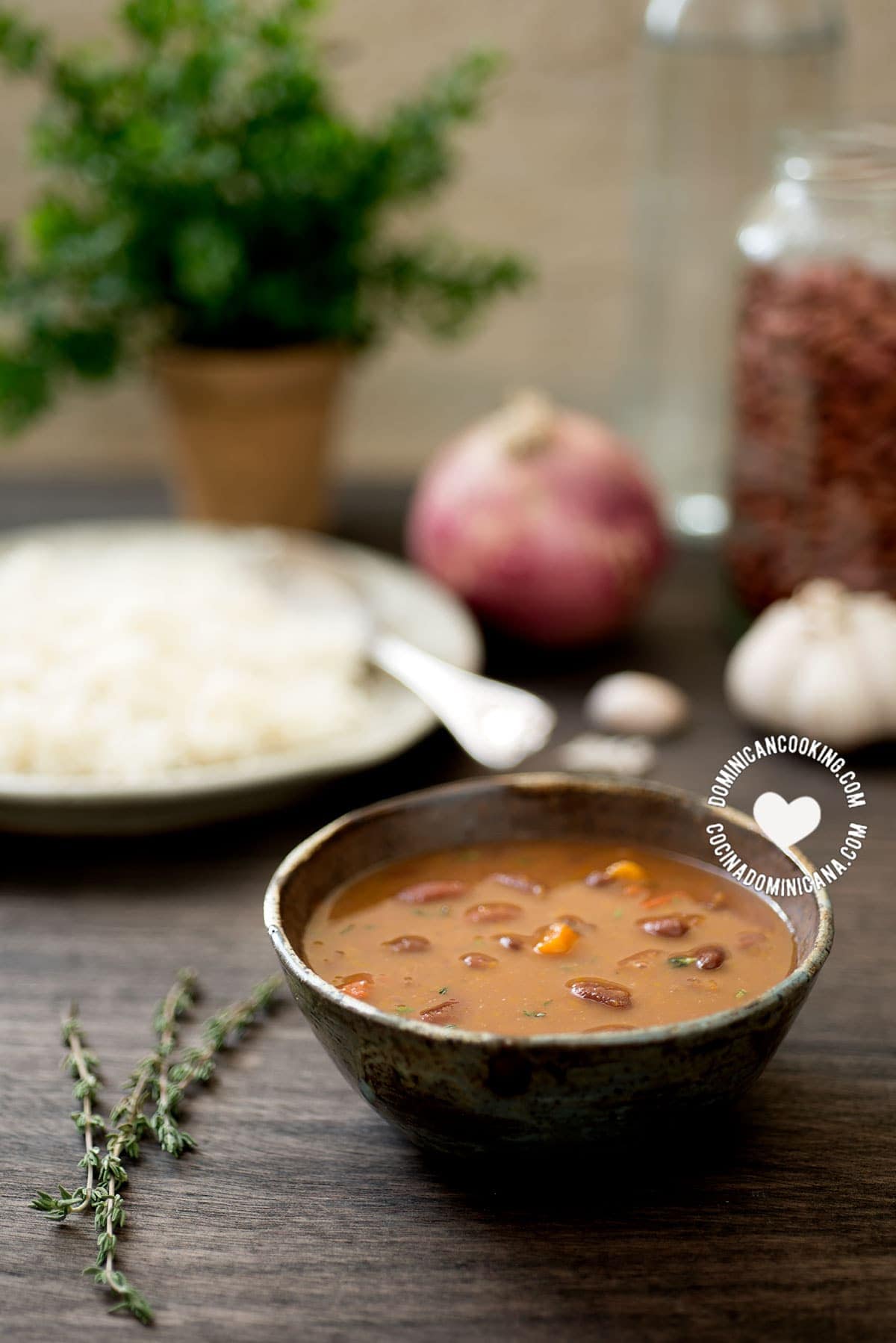
Habichuelas guisadas is one of the dishes that appear almost daily at the lunch table and is one of the tests of the competent Dominican home cook. A tasty creamy stew-like bean dish seasoned with spices and herbs, it's served over white rice or drizzled on crispy concón.
By - Reviewed: . Original: Aug 15, 2001
Why we ❤️ it
Dominican Habichuelas Guisadas is one of the components of the "Dominican flag" (our traditional lunch of rice, chicken or beef, beans and salad) and appears almost every day at the table at "la comida" (lunch) time.
"Dominican cuisine is more than just rice and beans" could be the motto of our blog, and probably would be if it were a little more flashy. Rice with stewed beans is one of the most common combinations on the Dominican table, and this recipe will give you the traditional authentic Dominican sazón (flavors).
What's habichuelas?
If you're a Dominican, you already know the answer; for those who do not know it:
Habichuelas is what Dominicans call beans. Classified as habichuelas, we have cranberry (or pink beans), pinto, white, red kidney, navy, and black beans. Other types of beans and pulses have their specific names: habas (butter beans), guandules (pigeon peas), judías (green peas), lentejas (lentils), frijoles partidos (split peas), etc.
Habichuelas are typically bought dry, soaked, and then boiled (see how to do in a pressure cooker). Freshly shelled beans are called Habichuelas verdes, and are cooked using a different method.
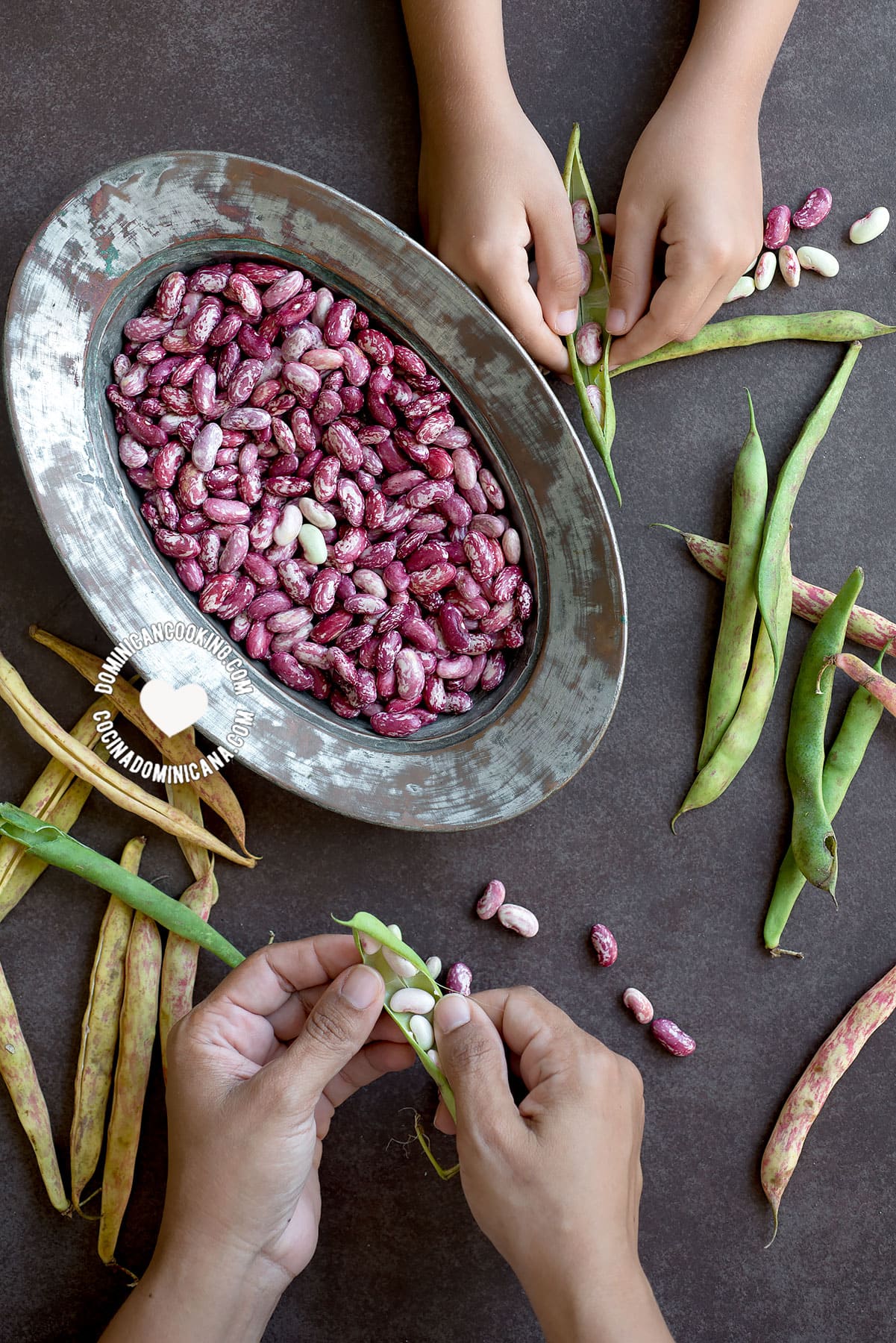
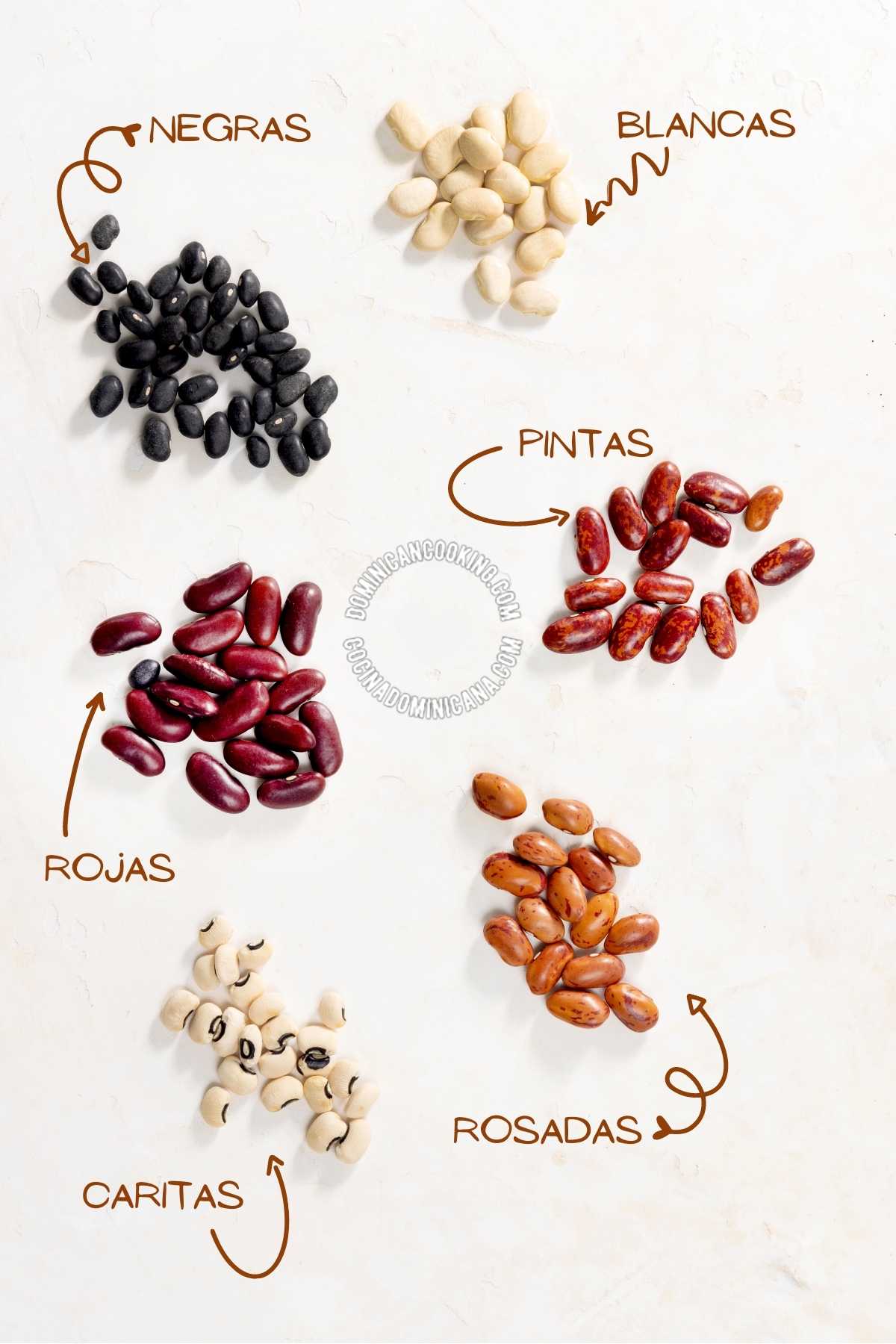
Green beans and types of habichuelas.
Habichuelas guisadas recipes
When we say habichuelas guisadas, in general, we refer to stewed red beans or cranberry and pinto (the recipe further down). For the others, it will be necessary to be more specific: "Habichuelas negras guisadas", "Habichuelas blancas guisadas", for example. In general, the recipe can be the same for all habichuelas.
Puerto Rico also has its own Puerto Rican habichuelas, but they are not identical, and that's a subject for a blog about Puerto Rican cuisine.
Top tips
- My mom only used ajíes gustosos (a non-spicy version of Scotch bonnet peppers), and some homes use cubanelas (cubanelle peppers). The first are harder to find nowadays, and I don't like the taste of cubanelle in my habichuelas, so I use pimientos dulces (bell peppers).
- Each Dominican home cook will have their own preference when it comes to what to add to habichuelas. For some, "verduras" - a combination of recaito (cilantro or coriander leaves) and recao (flat parsley) - are a must.
- Oregano is almost universally used; and in my region of the country, ditén (thyme, tomillo) is never left out.
- If you can find cilantro ancho (recao in Puerto Rico, sawtooth herb in English), use one leaf; it's like a boosted cilantro flavor but not offensive to people who dislike cilantro.
- Most homes do not add auyama to their beans. I cannot think of not adding them to mine. My mom would have disapproved if I didn't.
- The final color of your beans will depend on the type you use. The darker ones are red kidney beans, the ones that have a less intense color are either pinto, pink, or cranberry beans.
- Typically, we use dry beans, which we soak and boil at home, which is a more environmentally friendly, low-sodium, more inexpensive option. See our instructions to boil beans at home, but you can use canned beans if you so choose.
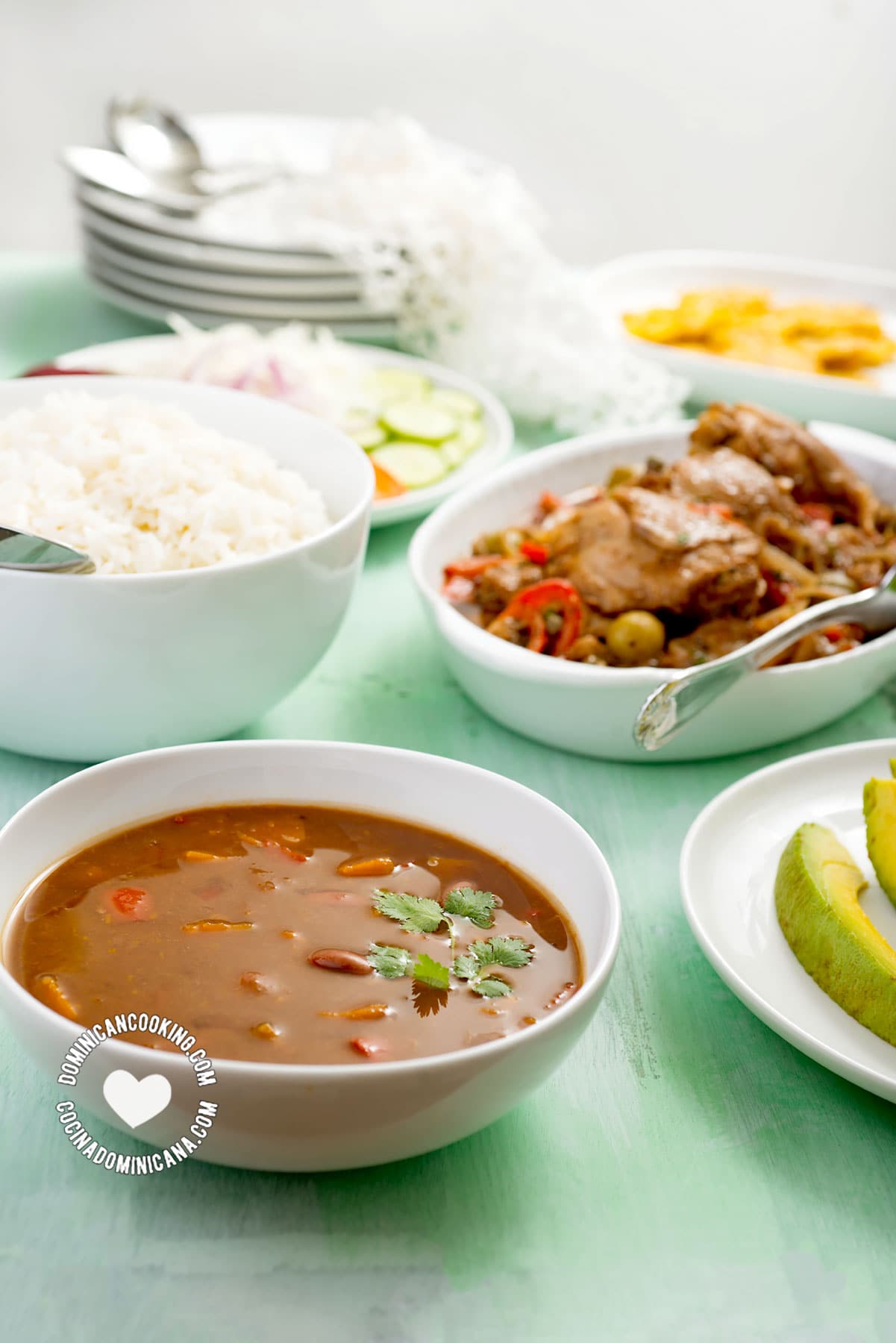
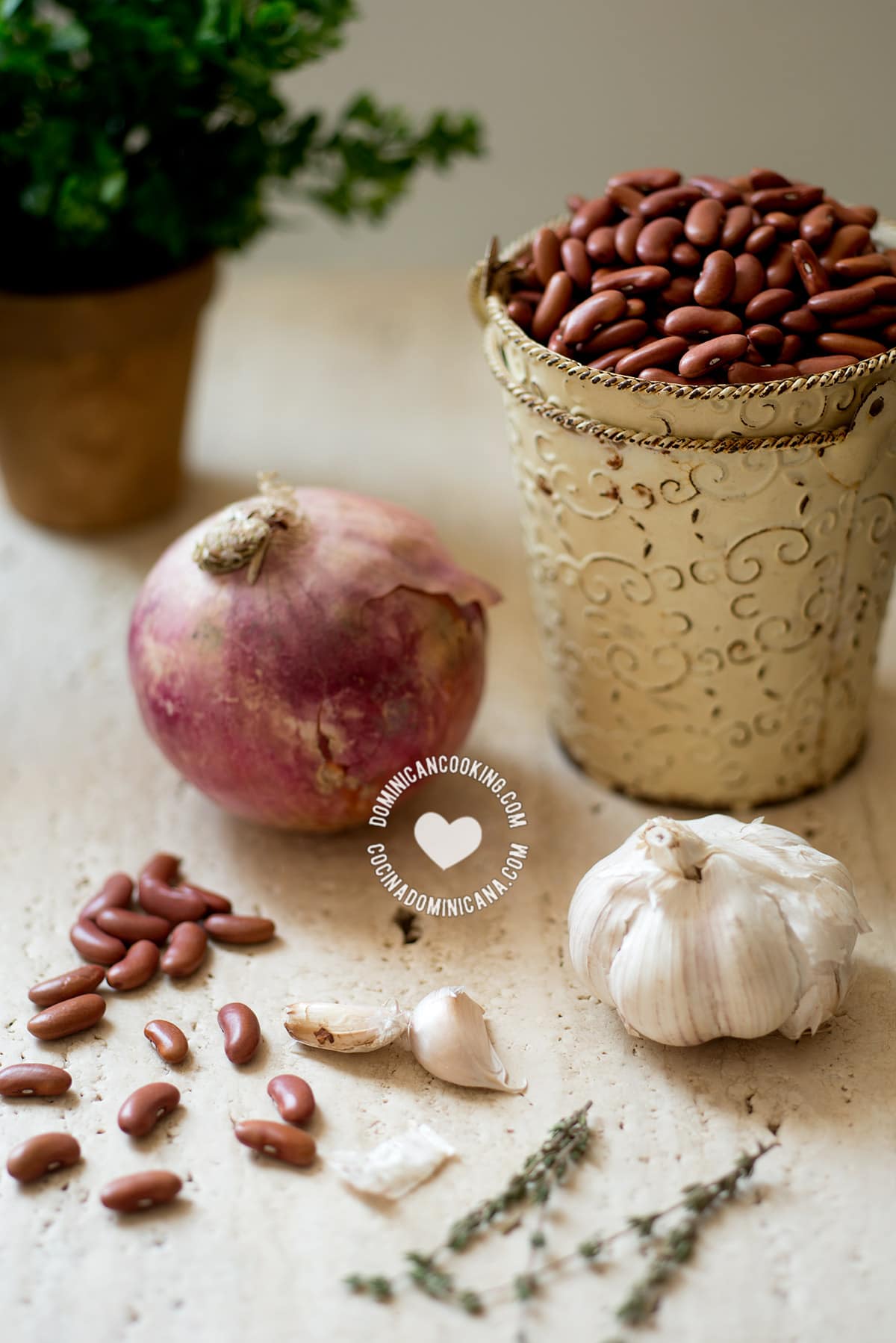
Dominican lunch and ingredients for habichuelas.
Serving suggestions
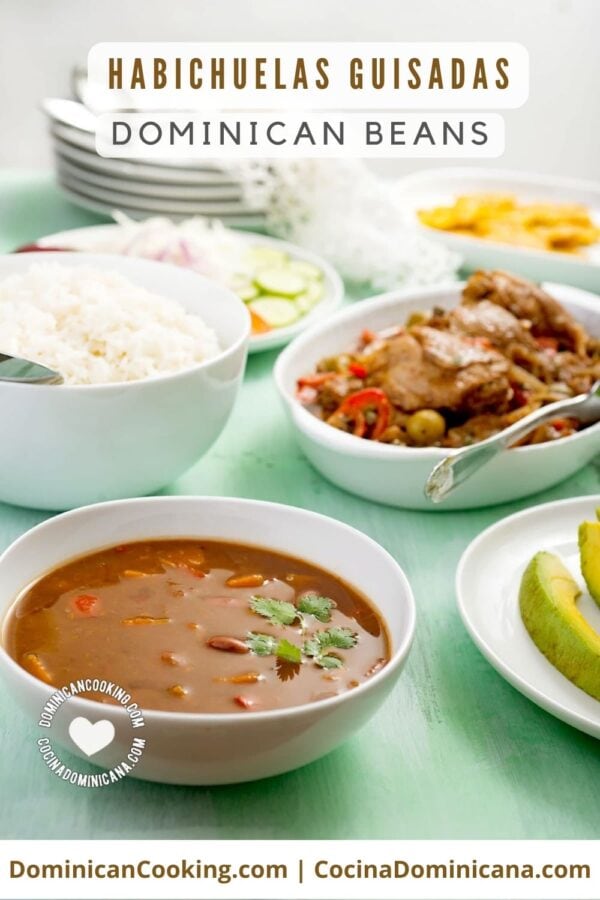
Habichuelas is typically served as one of the components of La Bandera Dominicana. Some people (about half, according to our casual polls) like habichuelas with their locrio dishes (rice with meat or seafood).
About our recipe
We have to emphasize, as we often do, that "cada cocinero tiene su librito" (each cook has their own little cookbook). There are no two homes where these stewed beans recipes are identical.
Moreover, there are differences between regions; for example, this is how they were cooked in my parental home. My family is from La Línea and part of Cibao, where ditén (thyme) is an essential part of "las habichuelas". And yeah, you can shorten it like that, and your host/waiter will know what you're talking about.
This recipe has been independently tested and reviewed by Sagrario Matos. We have incorporated her tips and ideas into this recipe.
If you are familiar with other versions, go ahead give your beans your personal / family / regional touch. And I'll love it if you leave in the comments what makes yours special.

Video
Recipe
This awesome free recipe contains Amazon affiliate links, we receive a small commission from any purchase you make at no extra cost to you. Thanks for your support!
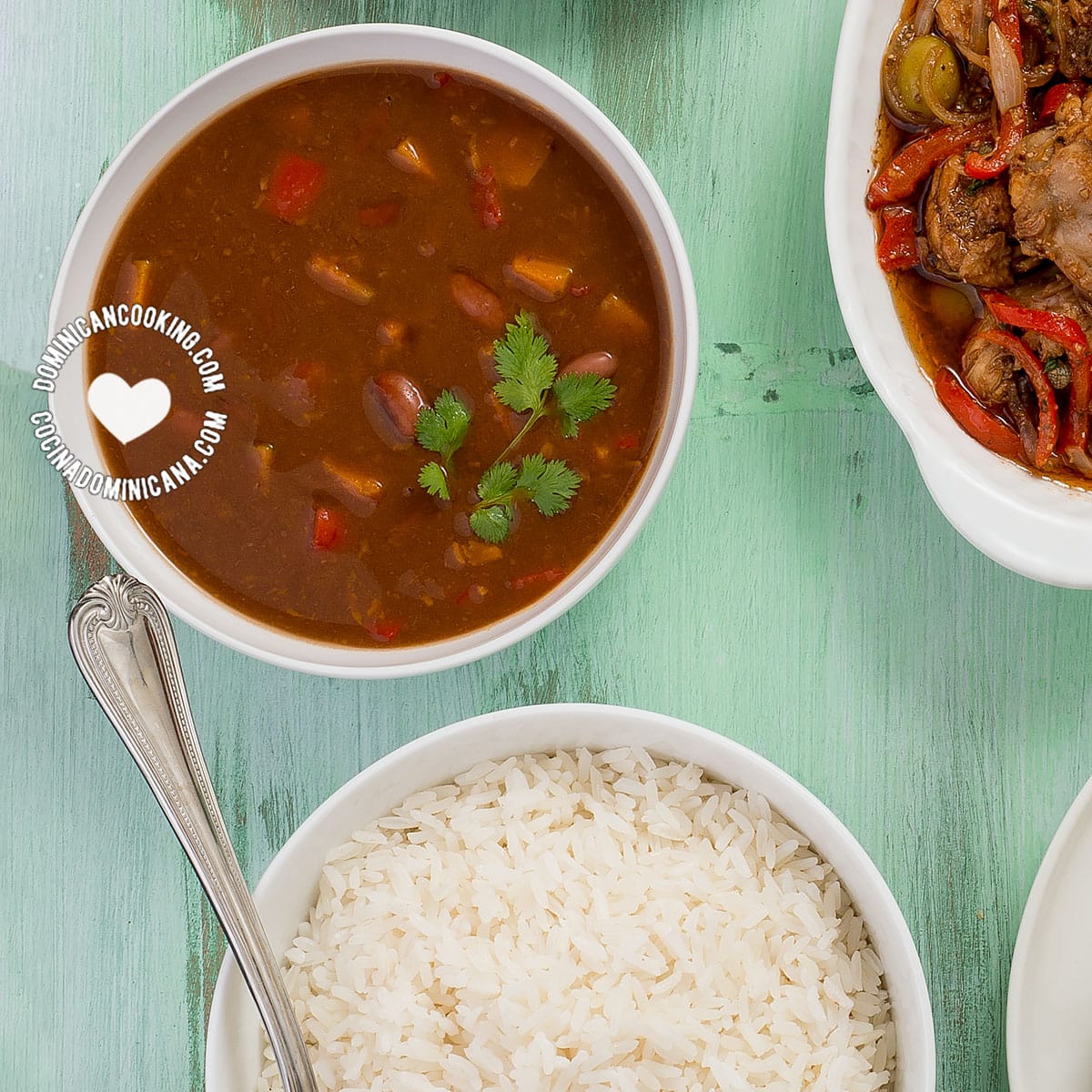
Habichuelas Guisadas [Video+Recipe] Dominican Beans
Ingredients
- 2 cups dry pinto beans, (or cranberry, or red kidney)
- 1 tablespoon olive oil
- ½ teaspoon oregano (dry, ground)
- 1 bell pepper, chopped
- 1 small red onion, cut into four quarters
- 2 cloves garlic, crushed
- 1 cup diced auyama (kabocha squash)
- 1 cup tomato sauce
- leaves from a celery stalk, chopped (optional)
- 4 sprigs fresh thyme, or 1 teaspoon of dry thyme (optional)
- ½ teaspoon chopped fresh cilantro, or cilantro and parsley
- 1½ teaspoon salt, (or more, to taste)
Instructions
If you are using dry beans
 Soak the beans overnight.Remove the beans from the soaking water and boil in fresh water until they are very soft (may take up to an hour, or about 20 minutes in a pressure cooker.
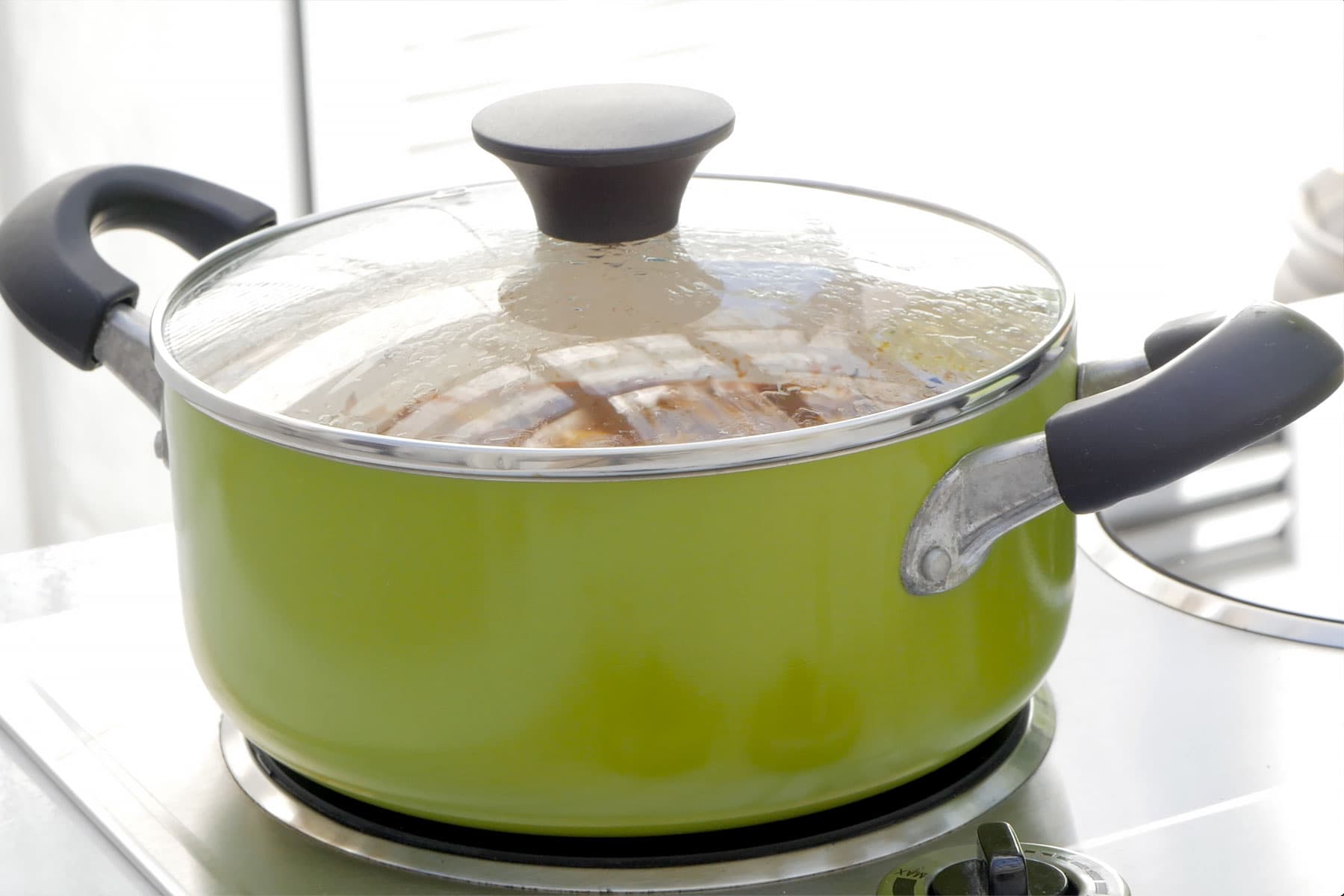
How to make habichuelas guisadas
1. Separate
- Separate the beans from the boiling water. Set both aside.
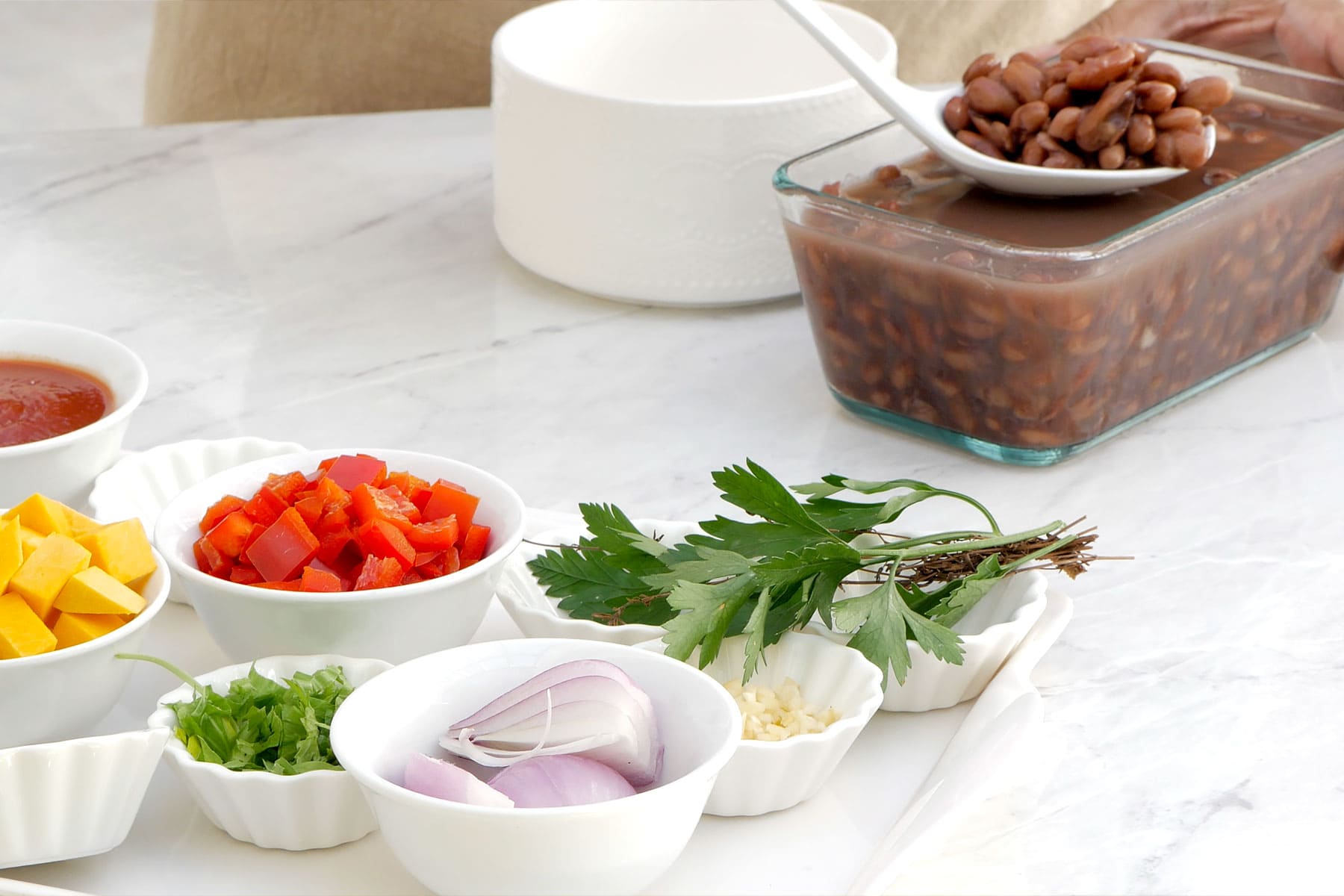
2. Saute
- In a sauce, pot, or caldero, heat the oil over medium-high heat. Add oregano, bell pepper, onion, garlic, auyama, tomato sauce, celery, thyme and cilantro. Cook and stir for half a minute. Add the beans and simmer for two minutes.
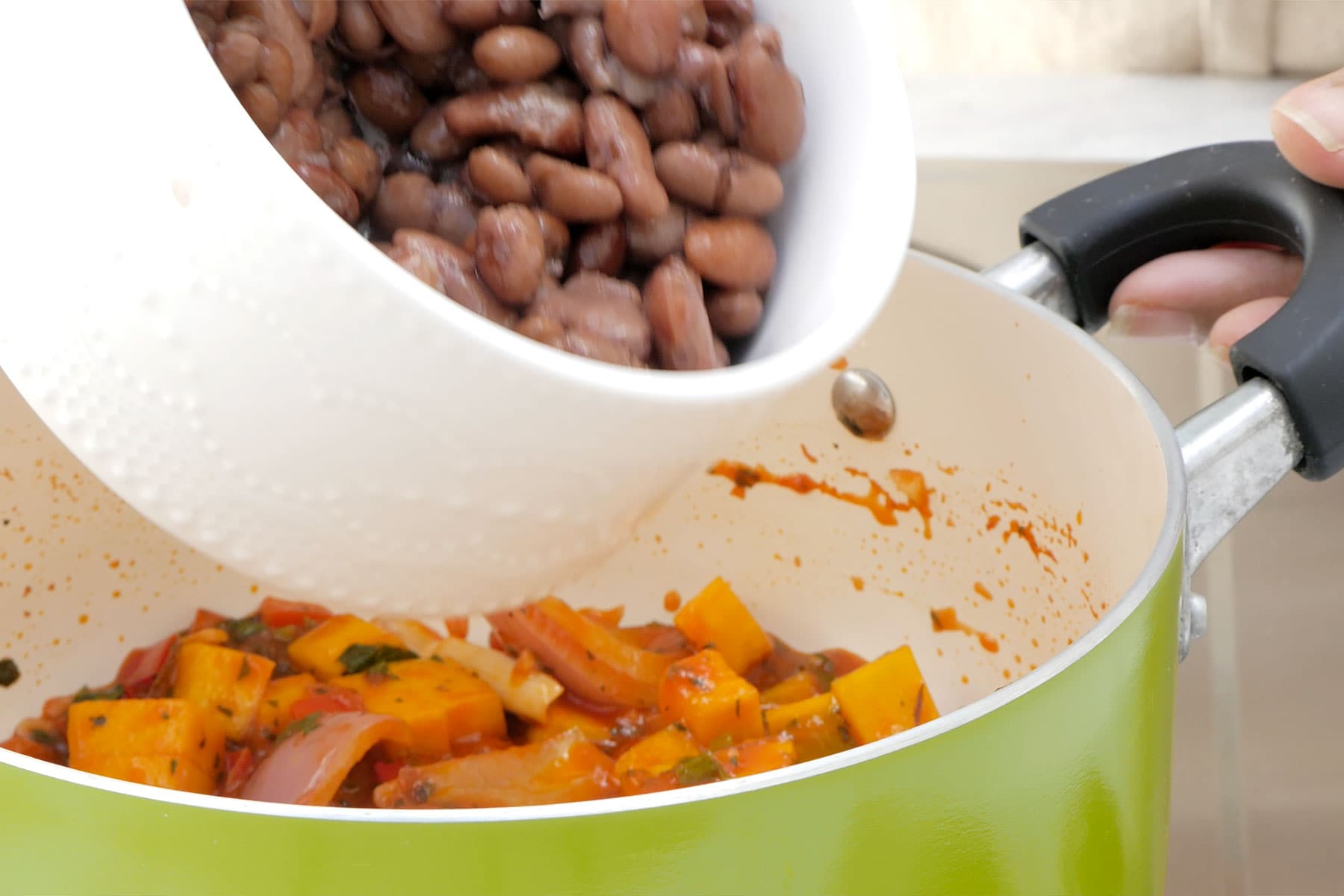
3. Simmer
- Pour in 4 cups of the water in which the beans boiled (complete with fresh water if necessary). Once it reaches a rolling boil, lightly mashed the beans with a potato masher to break them out of the skin and making creamier habichuelas. Lower temperature to medium heat and cook until it reaches a creamy consistency. Season with salt to taste.
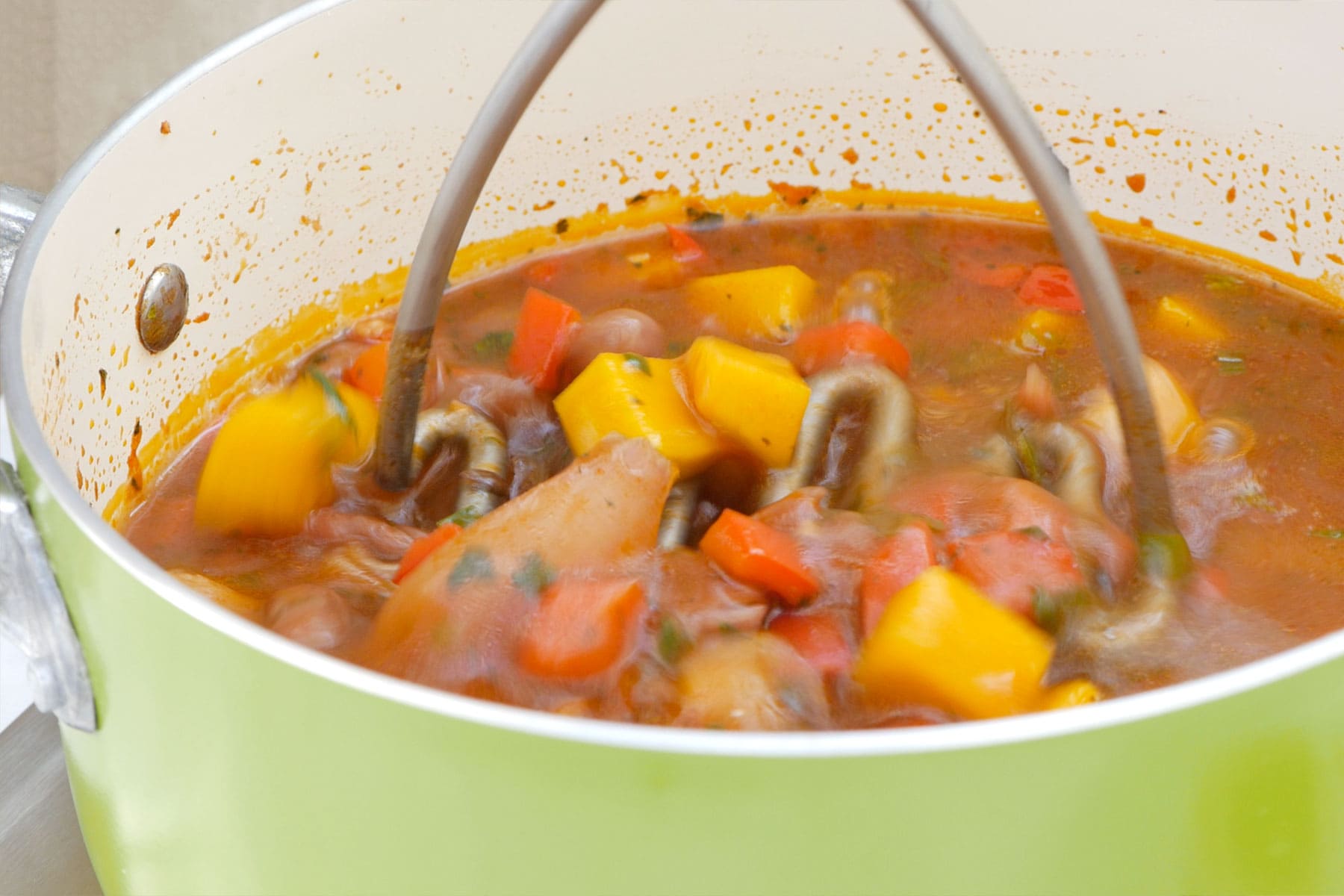
4. Remove
- Remove the chunks of onion, as well as any stray twigs or large bits of herbs if you used fresh herbs.
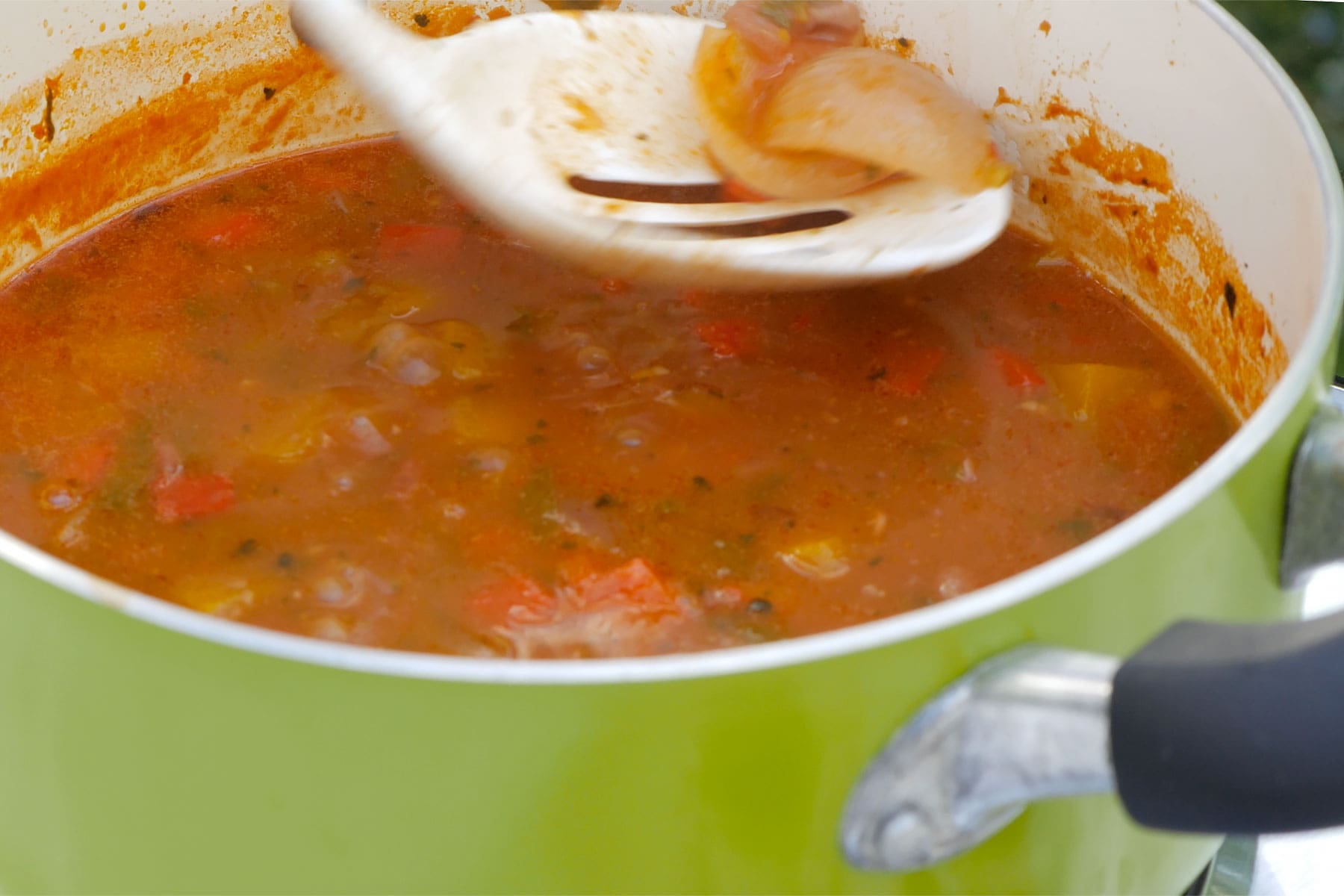
5. Serve
- Remove from the heat and serve per suggestions above the recipe.
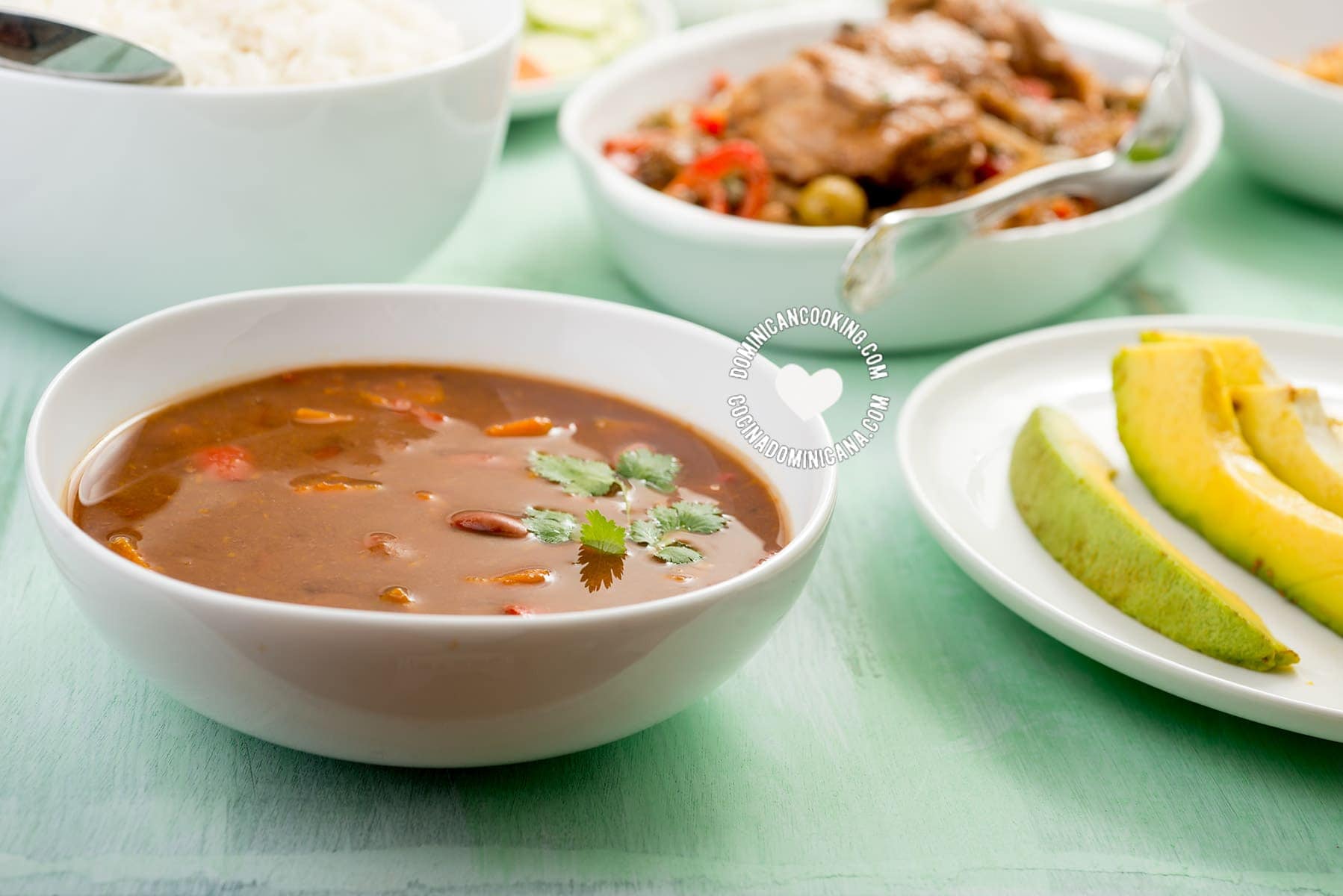
Cook's Notes
Nutrition
Nutritional information is calculated automatically based on ingredients listed. Please consult your doctor if you need precise nutrition information.
Want to save this recipe?
Enter your email & I'll send it to your inbox. ❤️ Plus, get great weekly recipes from me!
FAQs
Habichuelas Guisadas is somewhere between soup and sauce. The beans should have some "salsa" meaning liquid, but still be very creamy, because it is used to "wet" the rice --or the concón, if you are lucky enough to get some. The beans should never resemble Mexican refried beans, for example, nor should they be so watery that they look like broth.
Yes, absolutely. You can either after you've boiled them, or after you make them into habichuelas guisadas. It's a great way to save time and energy. Separate them into day's portions and freeze for up to a month in an airtight container.
Pink beans and red kidney beans are similar but not the same. Pink beans have a lighter color, and are shorter and rounder. Red kidney beans are a very intense red-brown color, and are longer in shape. Their taste are similar.
Pink and pinto beans are not the same. They are both very similar in taste, size and shape, but pink beans have a lighter color, whereas pinto beans have a darker color and light spots.

- Learn more about me and the humans behind this blog.
- Share your questions and comments about this post.
- Subscribe to receive our recipes and articles by email.
- Please stay in touch! Follow us on: