
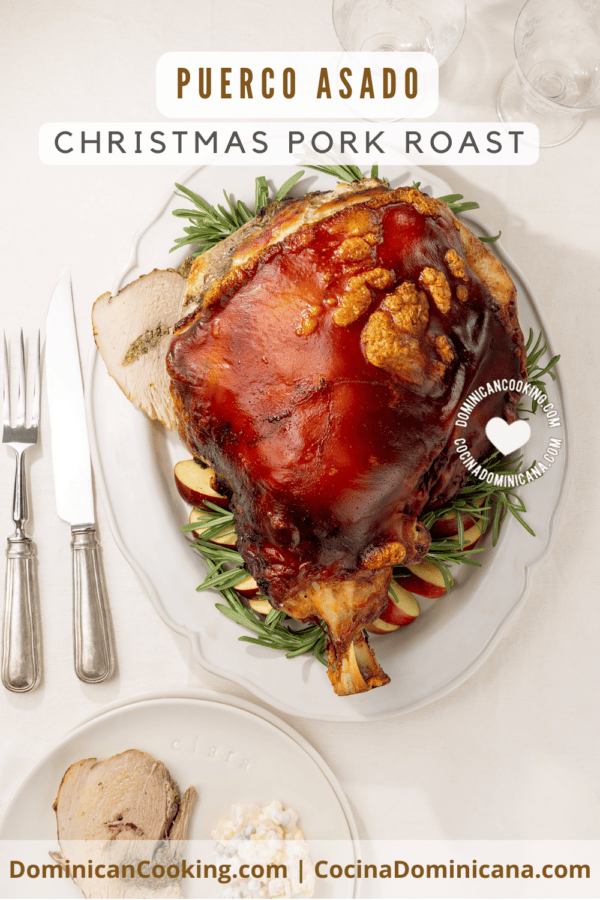
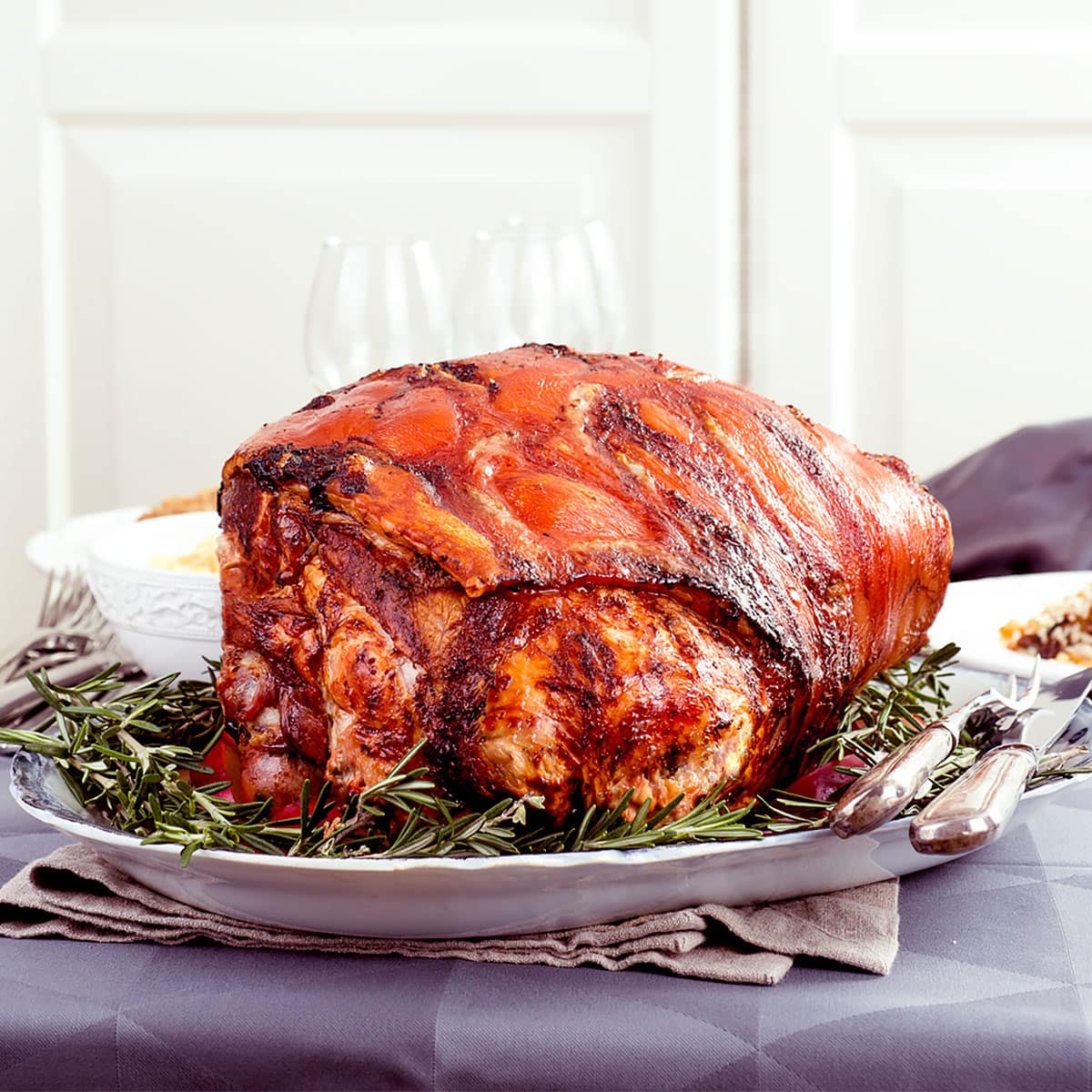
Puerco asado, lechon asado, o pernil asado, these are all names for the classic Dominican Christmas pork roast, the star dish of the holidays, dating back centuries. Learn how to make the best lechon asado with our easy guide with step-by-step photos and indispensable video.
By - Reviewed: . Original: Dec 23, 2003
Why we ❤️ it
"Yo traigo la salsa, para tu lechón, y vengo contento negrita, ¡ay, que sabrosón!" *
- Johnny Ventura
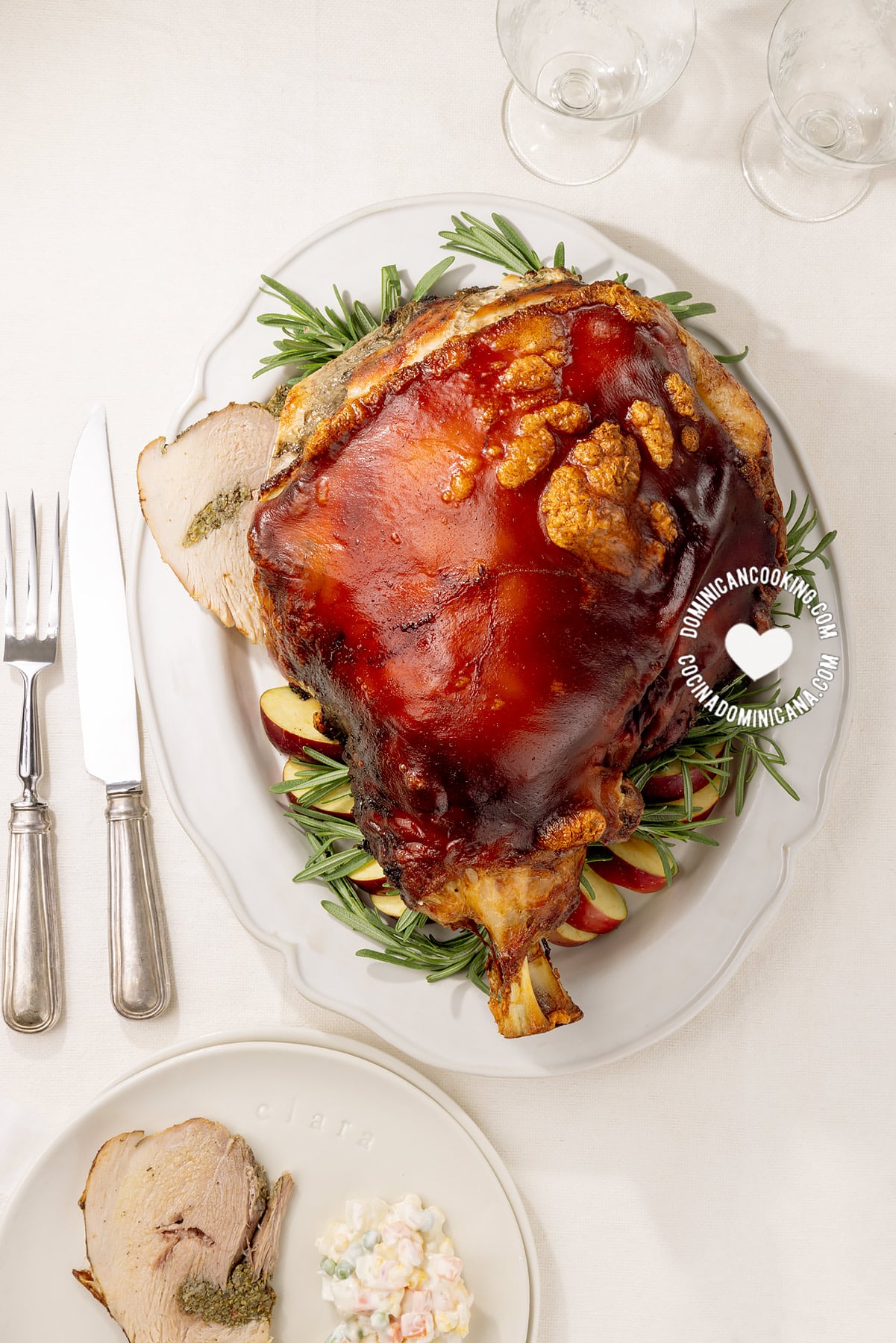
Lechón asado or puerco asado, a flavorful pork roast with tender, juicy meat and crispy golden skin is the centerpiece of the Dominican Christmas feast and a dish that every Dominican household aspires to have on their dinner table. There are many carols that sing its praises.
What's lechón asado?
Puerco asado or lechón asado is a pork roast made with either a whole pig, pierna, or pernil, marinated and stuffed with our signature seasoning, and roasted slowly until the meat is very tender and the skin crispy and golden brown.
Lechón is the name for pig, or suckling pig (lechoncito) in Spanish. Lechón asado is pork roast, or suckling pig roast in English.
Pierna is the pork hind leg, and it's called leg of ham or fresh ham in English.
Pernil is called pork shoulder in English. It is a cut from the front leg.Pernil vs pierna.
The difference between pernil and pierna is not only the part of the animal where they come from, but also the amount of fat, and meat tenderness: pernil is a smaller cut, with more fat, more tender meat, and more flavorful, whereas pierna is less expensive, has less fat, are bigger, and require longer cooking times. Piernas are more common in the Dominican Republic.
This recipe works the same for both.
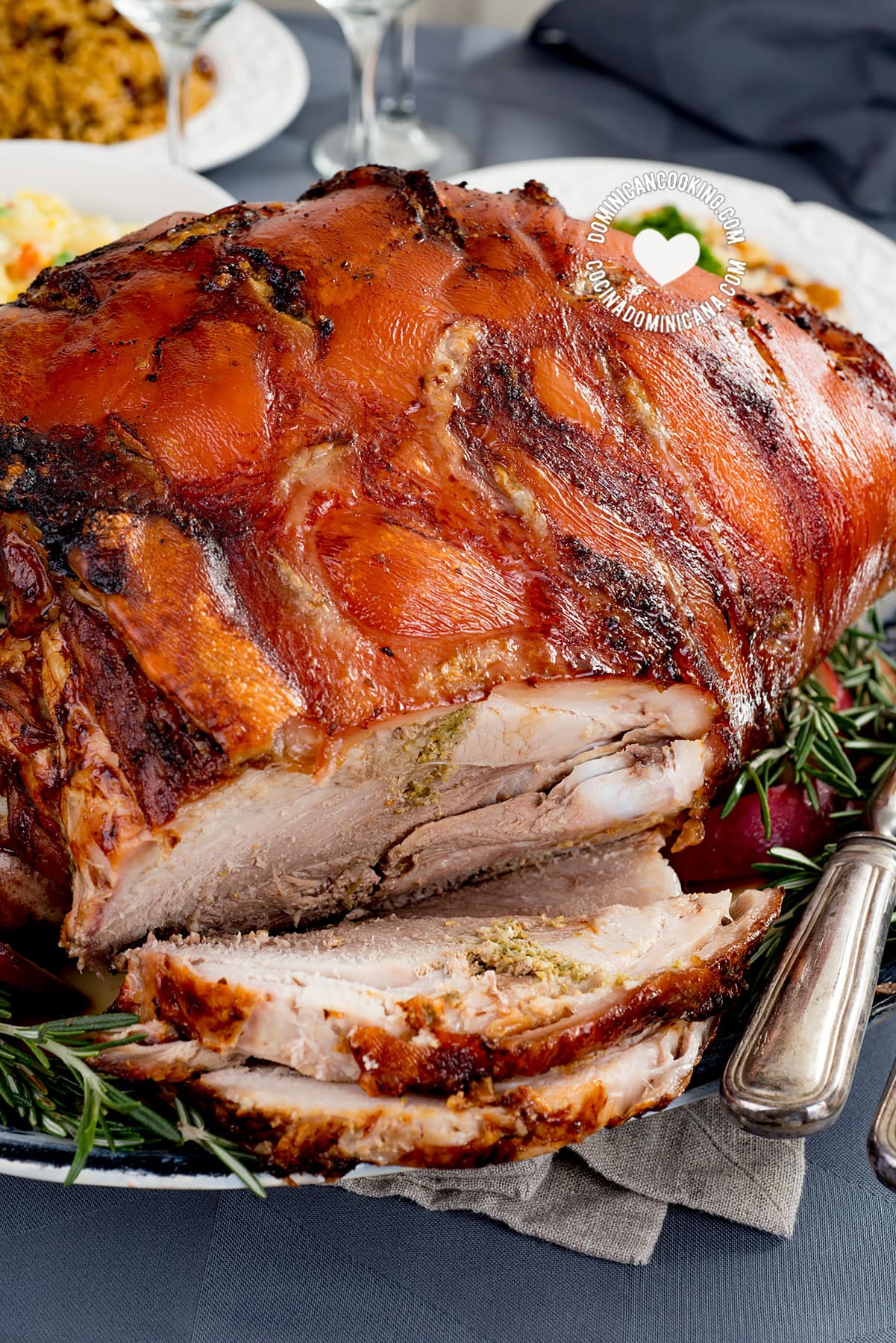
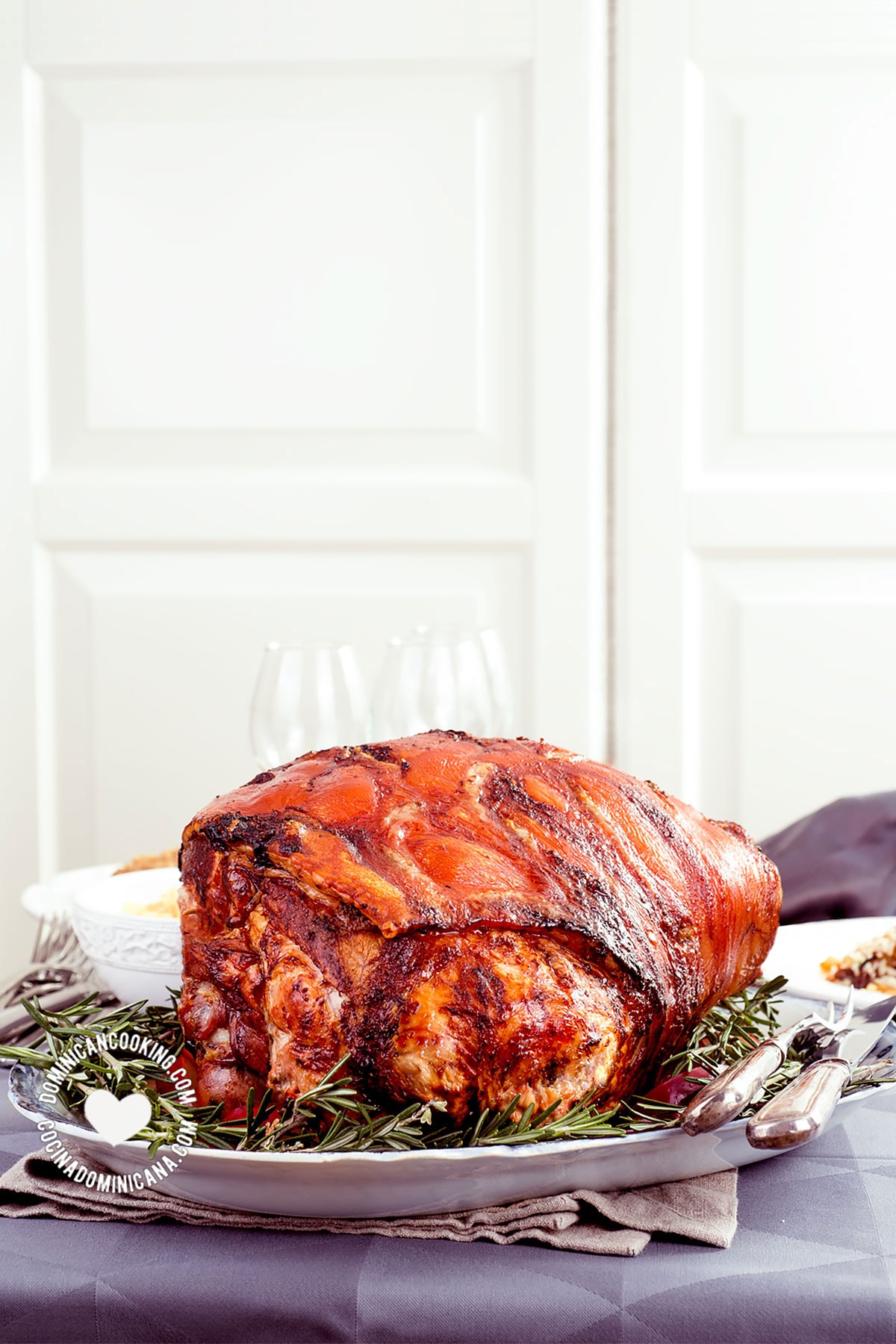
Puerco asado navideño dominicano.
Serving suggestions
Traditionally, moro de guandules (rice with pigeon peas) and ensalada rusa (potato salad) are served with lechón asado. Pastelones, like pastelón de plátano maduros (ripe plantain casserole), pastelón de yuca (cassava casserole), and pastelón de papa (potato casserole) can also make an appearance at the Christmas table. Telera (Christmas bread), is a must, along with several other dishes from the traditional Christmas menu.
It all depends on the family's tastes and budget.
Top tips
- Pernil vs pierna: The difference between pernil and pierna is not only the part of the animal where they come from, but also the amount of fat, and meat tenderness: pernil is a smaller cut, with more fat, more tender meat, and more flavorful, whereas pierna is less expensive, has less fat, are bigger, and require longer cooking times. Piernas are more common in the Dominican Republic.
This recipe works the same for both. - Thawing: If you bought the meat already frozen, or you have to freeze it until the day of preparation, thaw the pernil, leg, or whole pork by placing it in the refrigerator for 48 hours or one day for every 5 pounds of meat.
This is the safest and easiest method [1]. It is not recommended to force the thawing process by leaving it out of the refrigerator or heating it in any other way.I very strongly advise that you acquire a meat thermometer [Amazon affiliate link], as this will guarantee that your pork is cooked safely and to perfection.
If your oven has a probe (mine does), that is even better, as it will continuously monitor the internal temperature, but do confirm by measuring several spots before you consider it cooked. - Cooking time: Pernil should be cooked 20 minutes per pound of meat or until the meat reaches an internal temperature of 165 °F [75 °C] measured with a meat thermometer
If you do not have a meat thermometer, cook 20 minutes per pound of meat before uncovering and finishing cooking the skin. If you like your skin bubbly and crispier (I show both in the first picture), use the broiler to crisp the skin. - Lime or Seville oranges: Some people like fresh lime juice in their marinade, and some prefer bitter orange juice (naranja agria), if you cannot find either lime juice or bitter orange juice where you live, use lemon juice and add the juice of an extra lemon.
- Seasoning: If you are wondering about the secret of this juicy, plump, flavorful dish, look no further than the seasoning that this dish is made with, half dry rub, half marinade.
This works in the same manner as brining, only better, as the pockets of seasoning carved into the meat infuse the pork with all its flavors. - Oven: Please keep in mind the type of oven you have. Convection ovens cook foods 30% faster than regular ovens, so adjust your timing for it if you have one.
- Tray: A roast tray with rack (Amazon affiliate link) will prevent the meat from boiling in its juices.
- Leftovers: You can reuse the leftovers to make the classic Sandwich de pierna with Pan sobao, Telera, or Pan de agua bread.
About our recipe
Decades ago people would prepare their meat, season it, then send it to the town baker (panadero) for roasting, as it wasn't as common to have an oven at home. This is a custom that has almost completely disappeared nowadays, Dominican households prefer to buy their Dominican pernil, pierna, or lechón ready-made. from vendors, supermarkets, and road stands if they don't cook it at home.
To make lechón, it is carved with holes that are stuffed with seasoning and then rubbed with more seasoning, marinated, then slowly roasted. The cooking method may vary: en puya (spit-roasted over coal), or in an oven. Those are the basics, and this is how our recipe is made.
I have recreated here the traditional Dominican seasonings that we so love, where citrus juice, oregano, and garlic take center stage. Each cook has his/her preferred combination, but it will be similar to this.
This recipe is designed for an 8-12 pound leg of ham (pierna) or pork shoulder (pernil), but the seasoning may be enough for a leg of up to 16 pounds.
An 8-pound leg will yield approximately 12 servings.

Video
Recipe
This awesome free recipe contains Amazon affiliate links, we receive a small commission from any purchase you make at no extra cost to you. Thanks for your support!
Puerco Asado [Video+Recipe] Pernil or Lechón Asado (Pork Roast)
Equipment
- Meat thermometer or oven probe thermometer.
Ingredients
For the seasoning
- ½ cup pitted green olives
- ½ cup capers
- 1 large red onion
- 1 head garlic, large, peeled
- 4 tablespoons oregano (dry, ground)
- 2 tablespoons pepper (freshly-cracked, or ground)
- 2 cubanela (cubanelle pepper), or green bell pepper, diced
- ⅓ cup lime juice, or sour orange juice (AKA Seville orange, or bitter orange)
- 4 tablespoons kosher salt, (sea salt without iodine)
Pork
- 12 pound pork, [5.5 kg] (bone-in leg of ham, or shoulder)
- 3 tablespoons kosher salt, (crushed sea salt without iodine)
Instructions
1. Making seasoning
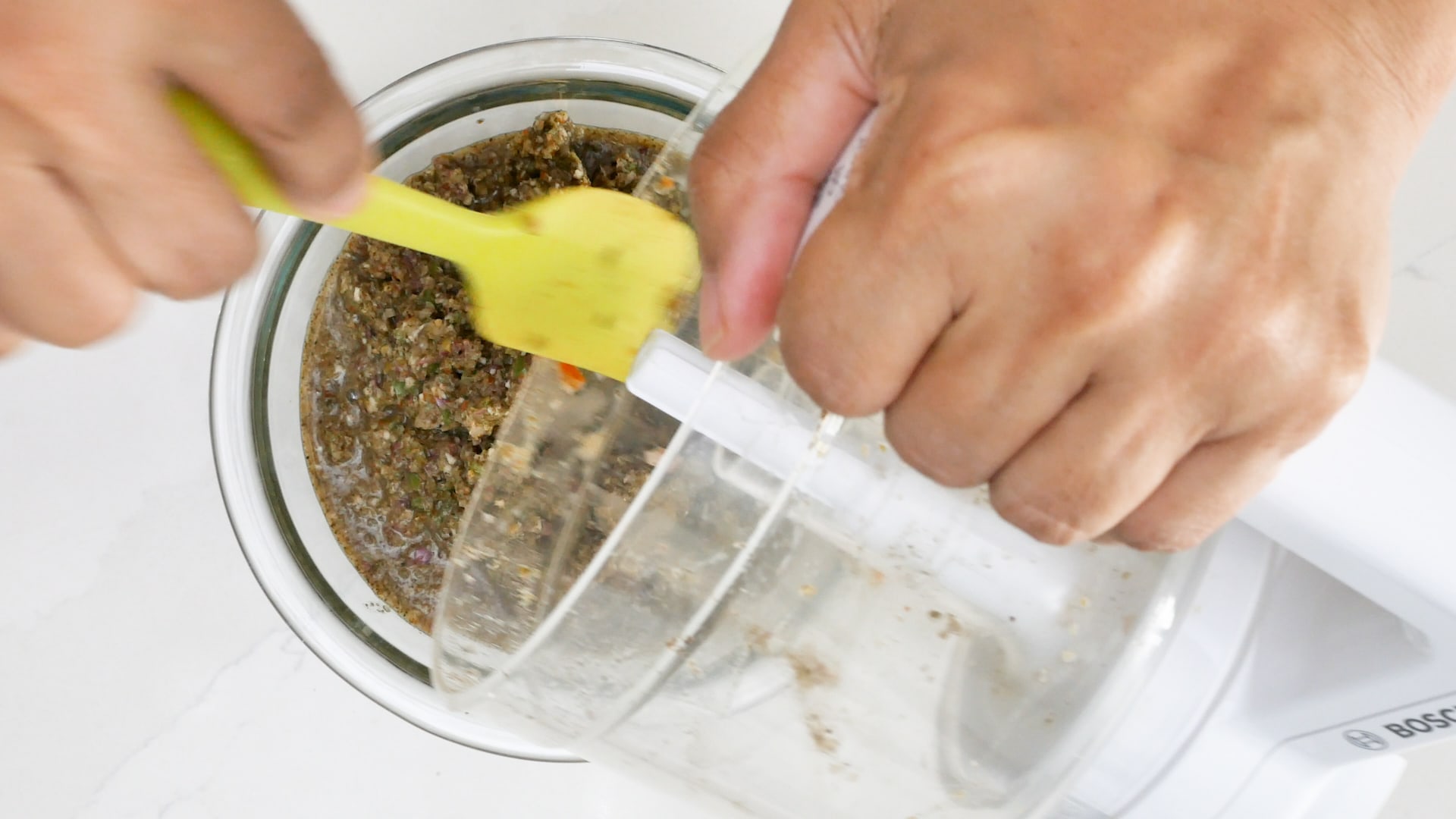
 In a blender, combine and blend together all the ingredients for the seasoning (green olives, capers, chopped onion, peeled garlic cloves, black pepper, cubanelle pepper, lime juice, and kosher salt) to obtain a coarse paste.
2. Seasoning meat
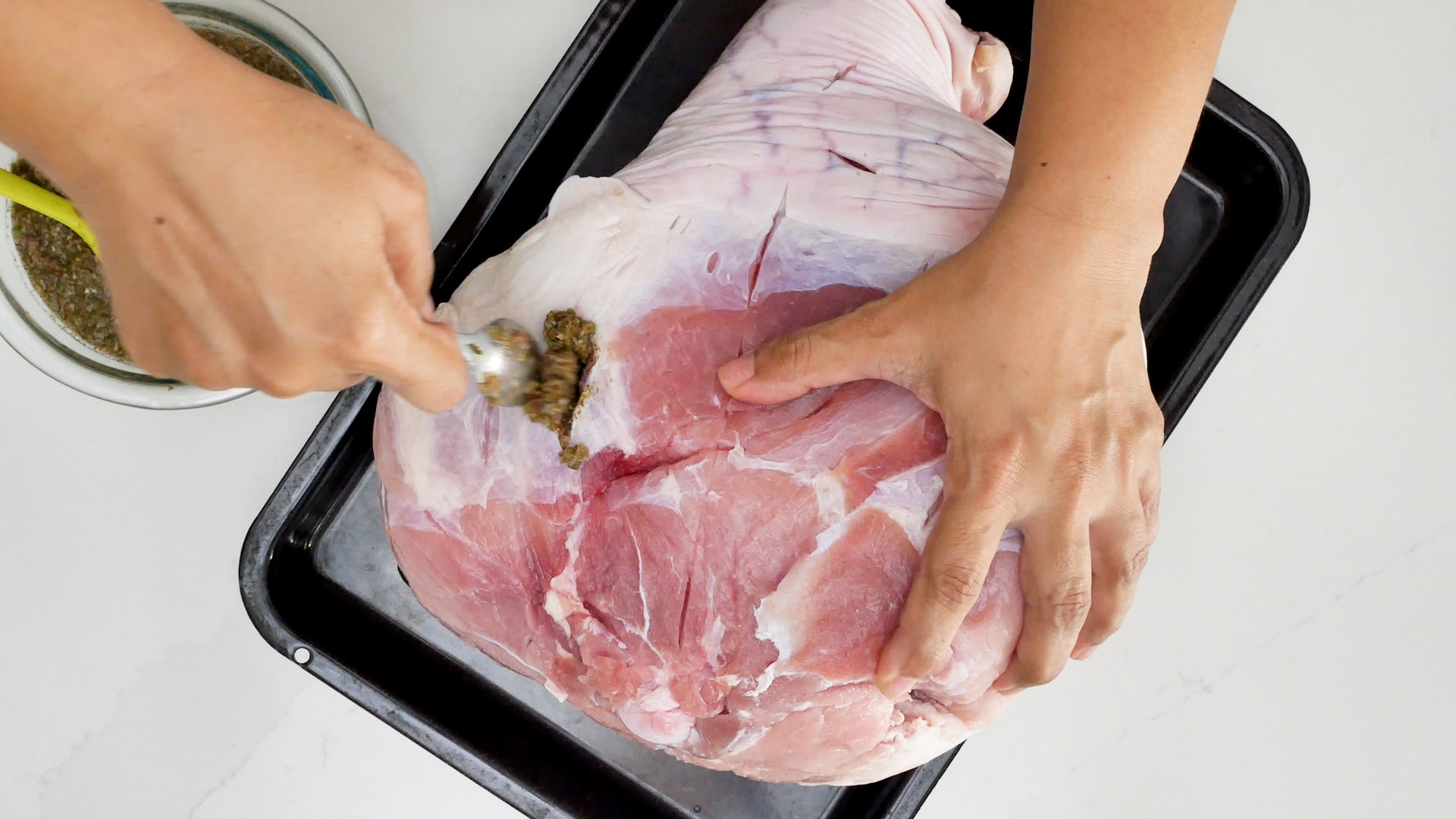
- Place the leg of ham on a baking tray skin side down. Carve deep holes in the meat on the opposite side of the skin. Keep a distance of about 3 inches between each hole. Don't perforate the skin.Using a teaspoon, stuff the holes with the seasoning mixture, pour on the leg, and spread over the remaining seasoning (the side opposite to the skin).
3. Resting
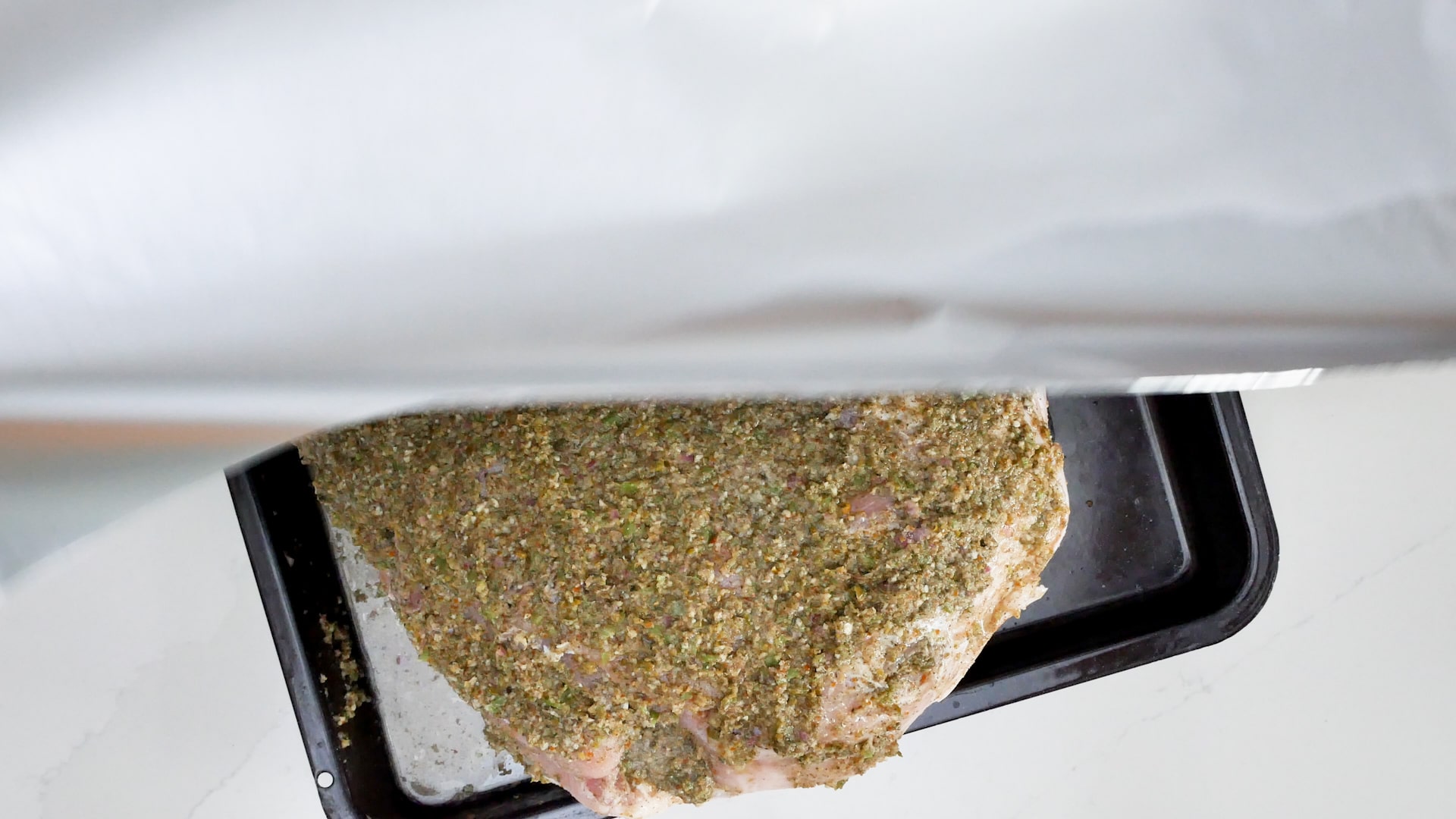
- Cover the leg tightly with aluminum foil and refrigerate for 24 hours.
4. Getting ready for oven
- Place skin-side-up on a roast tray lined with aluminum foil, and with a wire rack (see notes). Pat dry the skin with paper towels. Rub the skin with kosher salt. Cover the leg loosely with aluminum foil.Heat the oven to 350°F [175°C].

5. Roasting
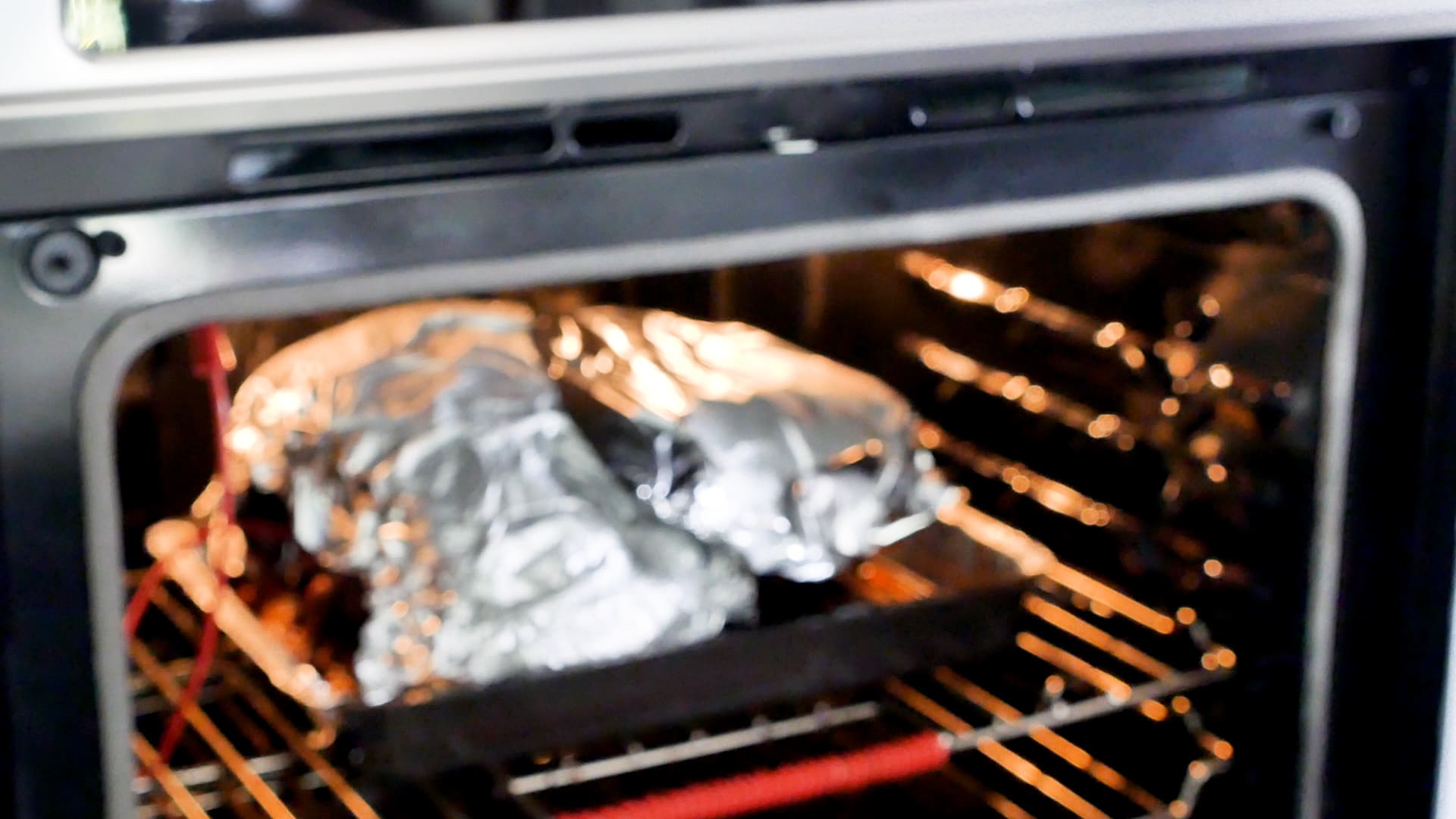
- Cook in the oven 20 minutes per lb of meat, or until the internal temperature reaches 75 °C [165 °F], start measuring at 4 hrs cooking time for a 12 lb leg, inserting the tip of the meat thermometer reaching the center of the leg.Once cooked per the instructions above, remove the aluminum foil and return to the oven to cook until the skin is golden brown. If you prefer the skin bubbly, and crackly, finish cooking in the broiler.
6. Serving
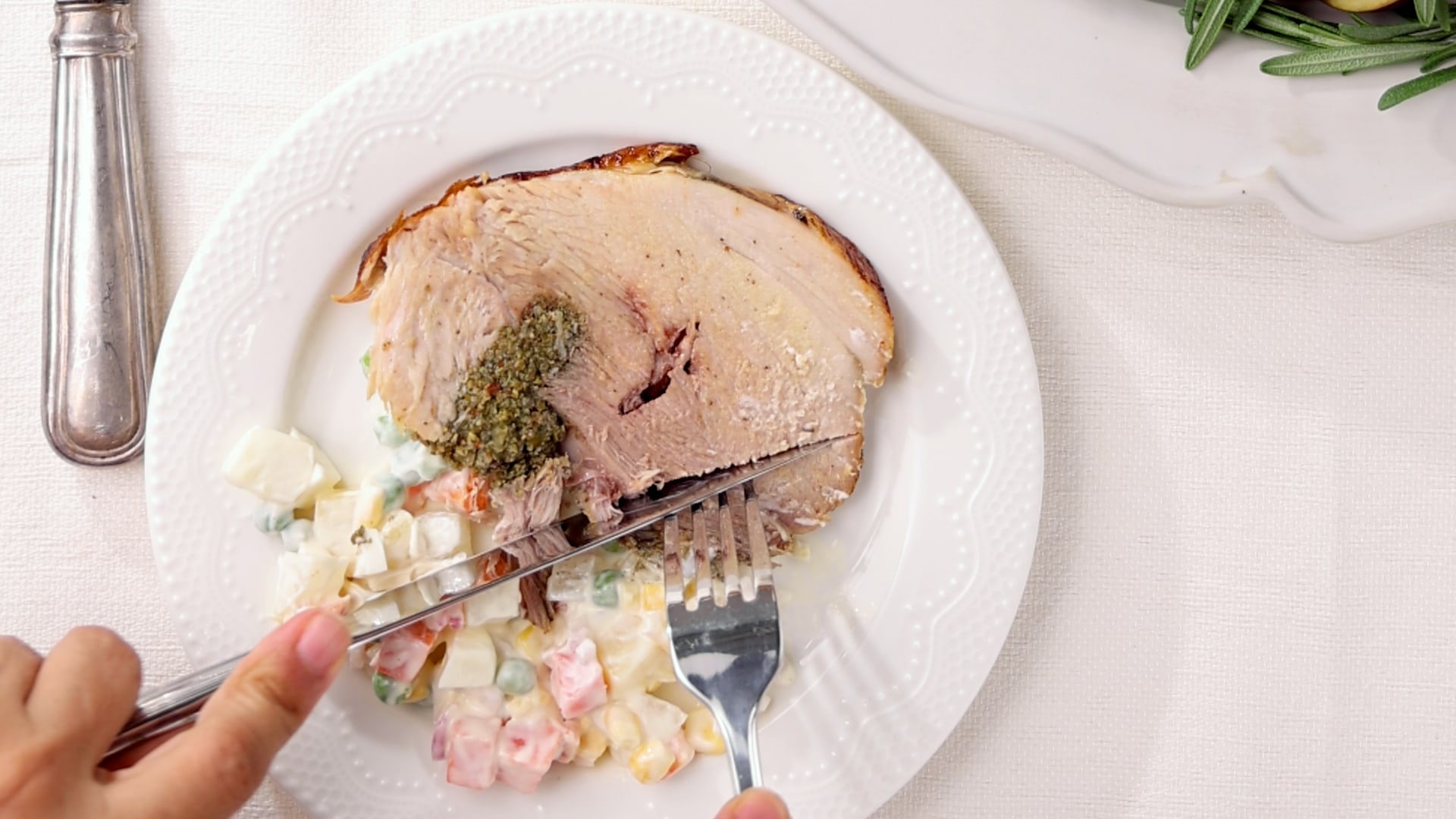
- Remove from the oven, cover with a clean tea towel, and let it rest for 20 to 30 minutes before serving. If you wish to keep it warm without it drying out, you can place it in an icebox after resting, and serve it up to two hours later.
Cook's Notes
Nutrition
Nutritional information is calculated automatically based on ingredients listed. Please consult your doctor if you need precise nutrition information.
Want to save this recipe?
Enter your email & I'll send it to your inbox. ❤️ Plus, get great weekly recipes from me!
History
This part was researched by Aunt Ilana
What you may not be aware of is that this dish has a connection to Tainos, the inhabitants of the Caribbean islands who were living here when Columbus and his fellow explorers first arrived from Europe in the late 15th century.
Many words in the Taino's language have since become household terms all over the world. Words like hammock, tobacco, and hurricane and their equivalents in many other languages around the world are derived from Arawak, the language spoken by the Tainos.
And every Dominican schoolchild knows that the Tainos prepared casabe, a thin unleavened cassava flatbread that is still made in the traditional way in the region and eaten to this day. The other main image of Taino cuisine is the spit roast, or barabicu, the framework of sticks set upon posts over a fire pit for roasting/broiling/grilling fish and meat.
Although the word may have come from the Tainos, they did not invent the actual cooking method. Humans in many parts of the world have been cooking meat in similar ways since prehistoric times. Still, barabicu caught on as an almost universal term, first adopted by the Spanish colonizers as barbacoa. The English transformed it into barbecue, which oddly enough sounds closer to the original Arawak word.
As a verb, it means the cooking method ("to barbecue"), while the noun "barbecue" is both the device used for the process and the social event itself. As an adjective, it describes the end product ("barbecued meat"). It's often abbreviated as "BBQ", which has given rise to the alternative but less common spelling of "barbeque".
The main animal that the Tainos hunted for meat was the hutía - a smaller species of which survives and is apparently still eaten in Cuba. The Tainos also ate reptiles including snakes, lizards, and iguanas [2], and hunted with a breed of dog called the aon. A curious feature of these dogs was that they did not bark.
As more Europeans and Africans settled the island, the menu changed with pigs, cows, sheep, and goats replacing much of the Taino repertoire.
Present-day inhabitants of the Dominican Republic no longer eat hutías, and the meat one sees being roasted on a spit (en puya) is usually pork or goat. Both can be seen along the roadsides throughout the country, and many more stands spring up in the run-up to Christmas when roast pork is traditionally eaten. Many Dominican families do not go to the trouble of roasting their own pig but will buy the meat from one of these stands, a very tangible legacy of the island's former inhabitants.
References
- USDA - Fresh Pork from Farm to Table
- Moya Pons, Frank (1980) Manual de Historia Dominicana. (Pag. 4) Santiago: UCMM
* Translation: "I bring the sauce for your pork roast, and I come happy negrita, oh how tasty!"

- Learn more about me and the humans behind this blog.
- Share your questions and comments about this post.
- Subscribe to receive our recipes and articles by email.
- Please stay in touch! Follow us on: