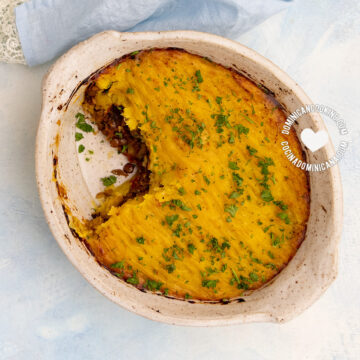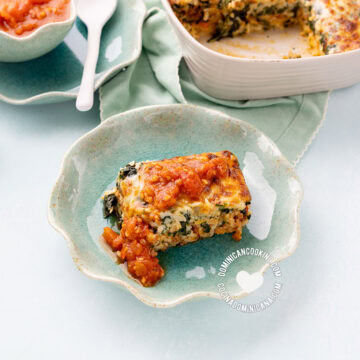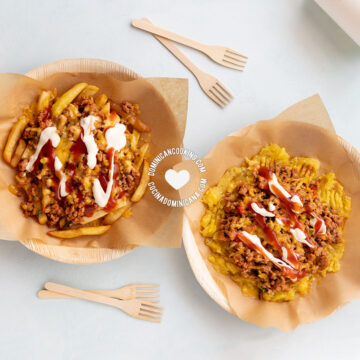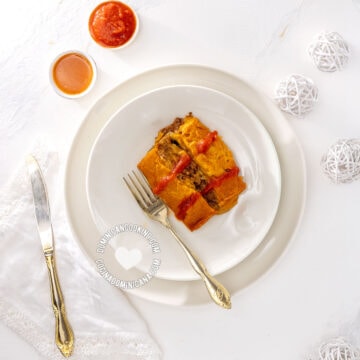

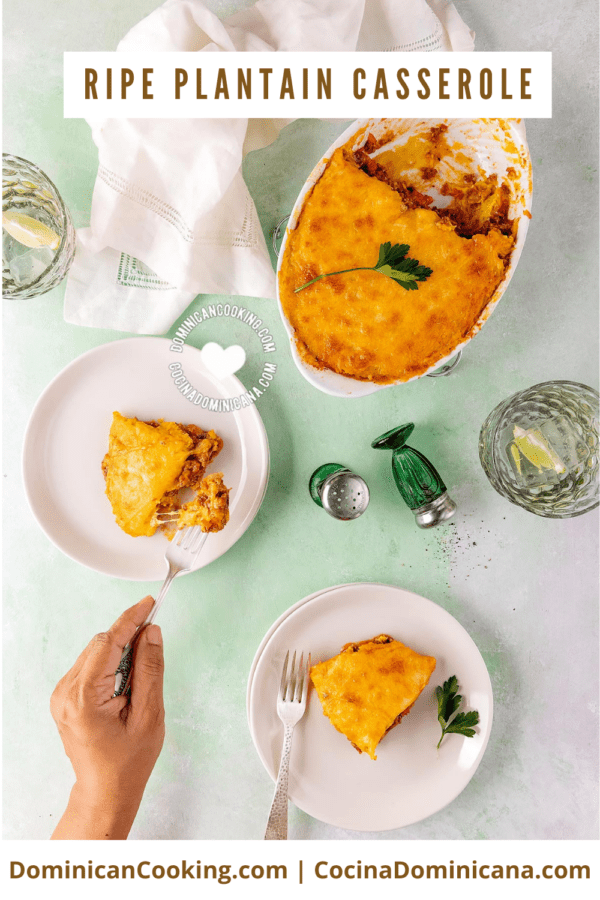
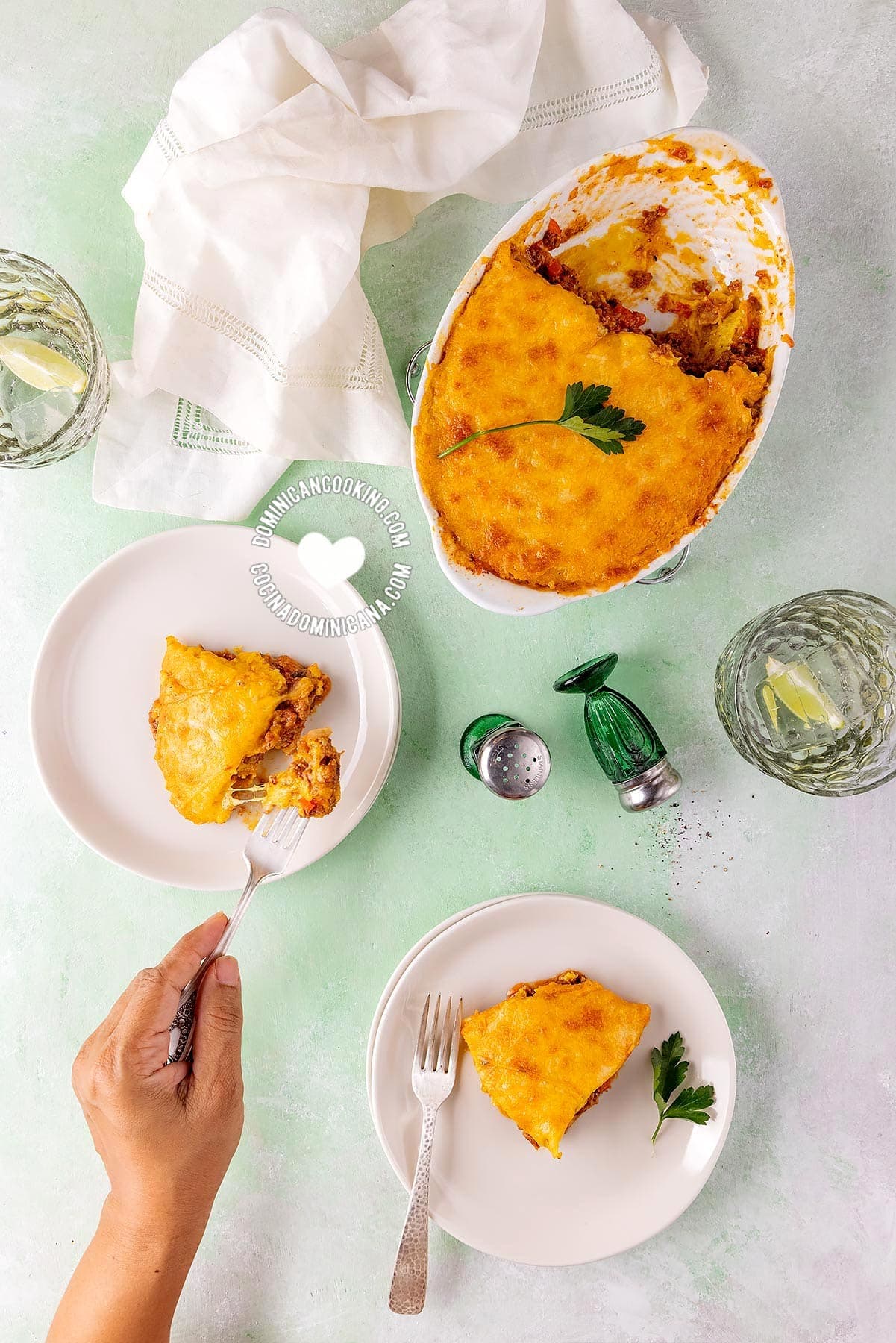
Pastelón de plátano maduro (ripe plantain casserole) combines the delicate sweetness of ripe plantains, flavorful, juicy beef filling, & melting cheese. It is our favorite casserole and one of our favorite dishes. We serve it for everyday meals and special occasions. It's just pure bliss.
By - Reviewed: . Original: Dec 21, 2002
Why we ❤️ it
A spectacular combination of every flavor we love, the Dominican pastelón de plátano maduro is a dish we could serve every day, given the chance. Unlike the Puerto Rican pastelón de maduros, which is like a sweet plantain lasagna made with slices of fried plantains, the Dominican version is made with mashed and boiled ripe plantains for a simple, lighter version all the Dominican sazon and flavor.
Great for your get-togethers, potlucks, and cookouts, this dish is also part of our traditional Christmas feast. This is possibly the second most popular plantain recipe in the Dominican Republic. A dish that nearly no one will turn down.
What's plantain?
The banana (Musa cavendish y M. Sapientum) and the plantain (Musa paradisiaca) are two varieties of the same fruit, a long-leaved plant of the Musaceae family. Each region has its own varieties and peculiar names: In some countries such as Mexico, Central America, and Spain, "plátano" is the word used for both banana and plantain, and the plantain is distinguished by the name "plátano macho". In the Spanish-speaking Caribbean, we call the banana "guineo", while the Venezuelans call it "cambur". Dominicans call fried plantain slices "fritos" or "tostones".
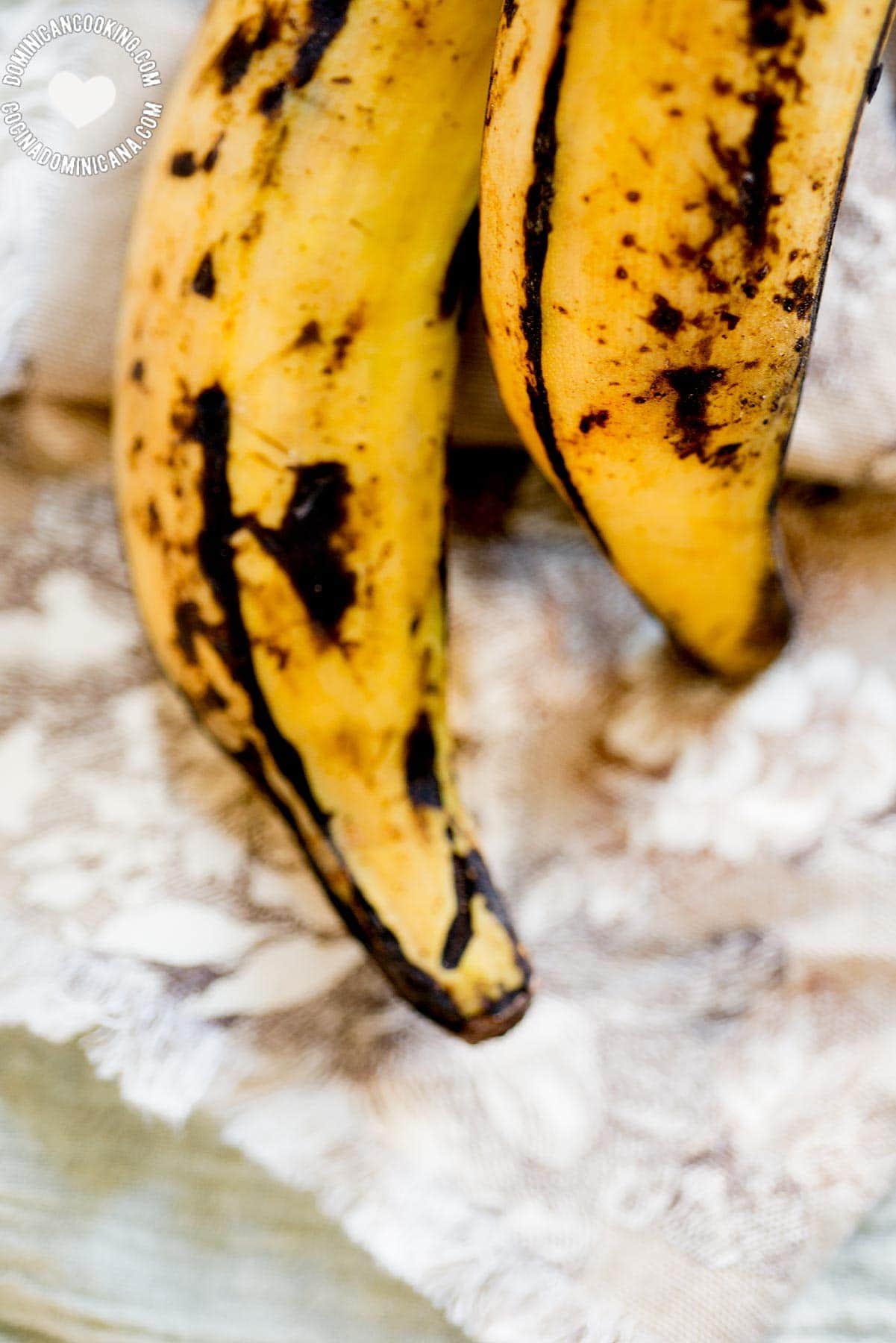
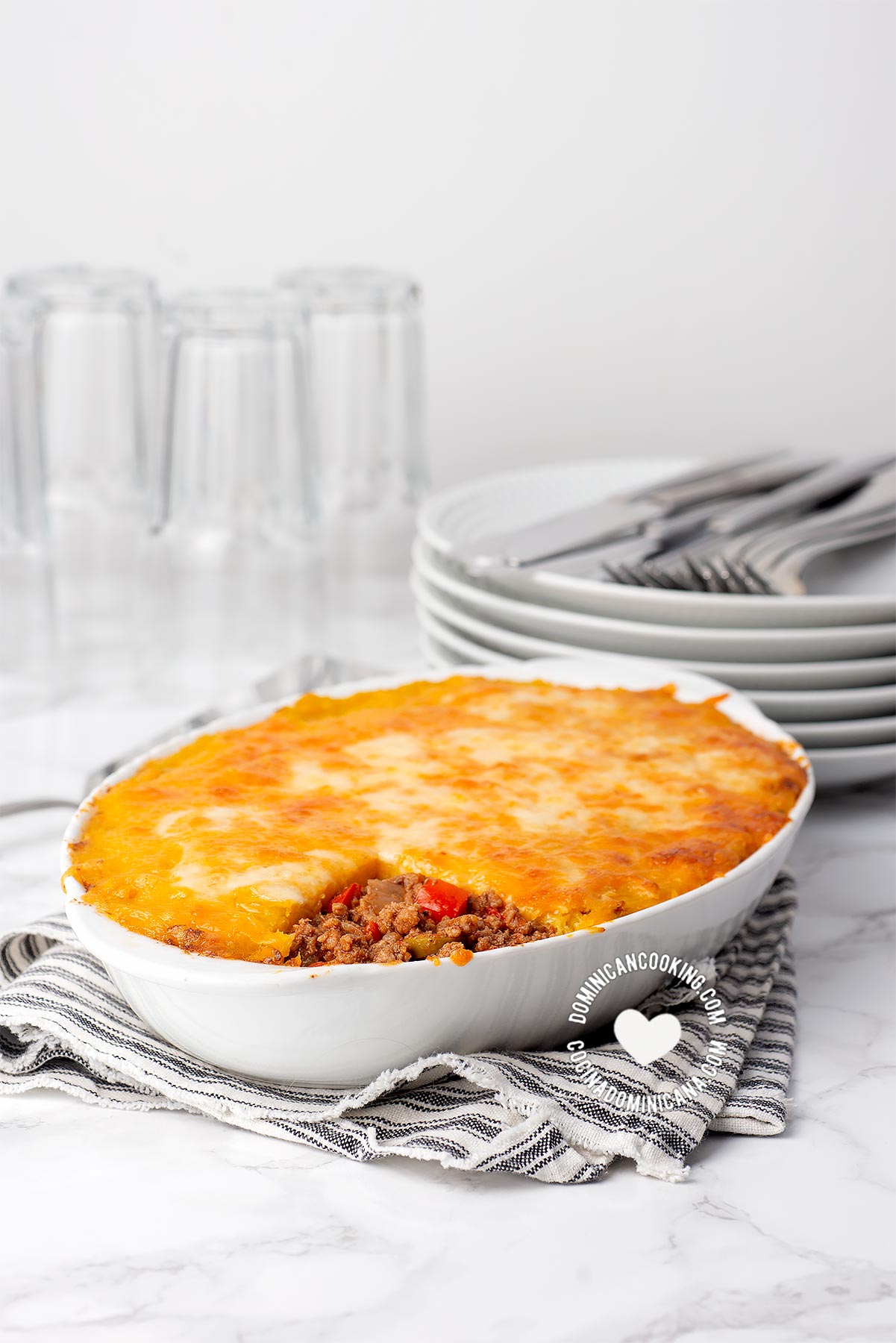
Plantains and ripe plantain casserole.
Serving suggestions
Pastelón de plátano maduro is a one-pan dish, and can be served on its own, or as part of a larger meal. I merely serve a simple salad to go along with it on a weekday meal or serve it as a side dish if we're having a feast.
For Christmas, we serve it alongside our Puerco asado (pork roast), Pavo asado (Turkey roast), or Pollo asado (chicken roast). Other dishes we can't leave out are Moro de Guandules (rice with pigeon peas), Ensalada rusa, or mixta (potato salad), and Pasteles en hoja (roots and beef pockets).
Top tip
- Your choice of cheese and the order in which the layers are distributed is a matter of taste. Any cheese that melts works; I like mixing cheddar and mozzarella, for example, while some people like placing the cheese right after the meat layer. Go ahead, experiment!
- For some non-traditional fillings (including vegetarian ones), check our whole collection of pastelones fillings. You can also use ground turkey, pork, or chicken for a non-traditional filling.
About this recipe
Except for ripe plantains, which may be a bit difficult to find in some countries, the ingredients for this pastelón are very accessible, so it's the cooking method. It makes it a great choice to serve something very Dominican and surprise your guests with this wonderful dish.
If you have any tips or secrets that make your pastelón special, please share them in the comments!

Video
Recipe
This awesome free recipe contains Amazon affiliate links, we receive a small commission from any purchase you make at no extra cost to you. Thanks for your support!
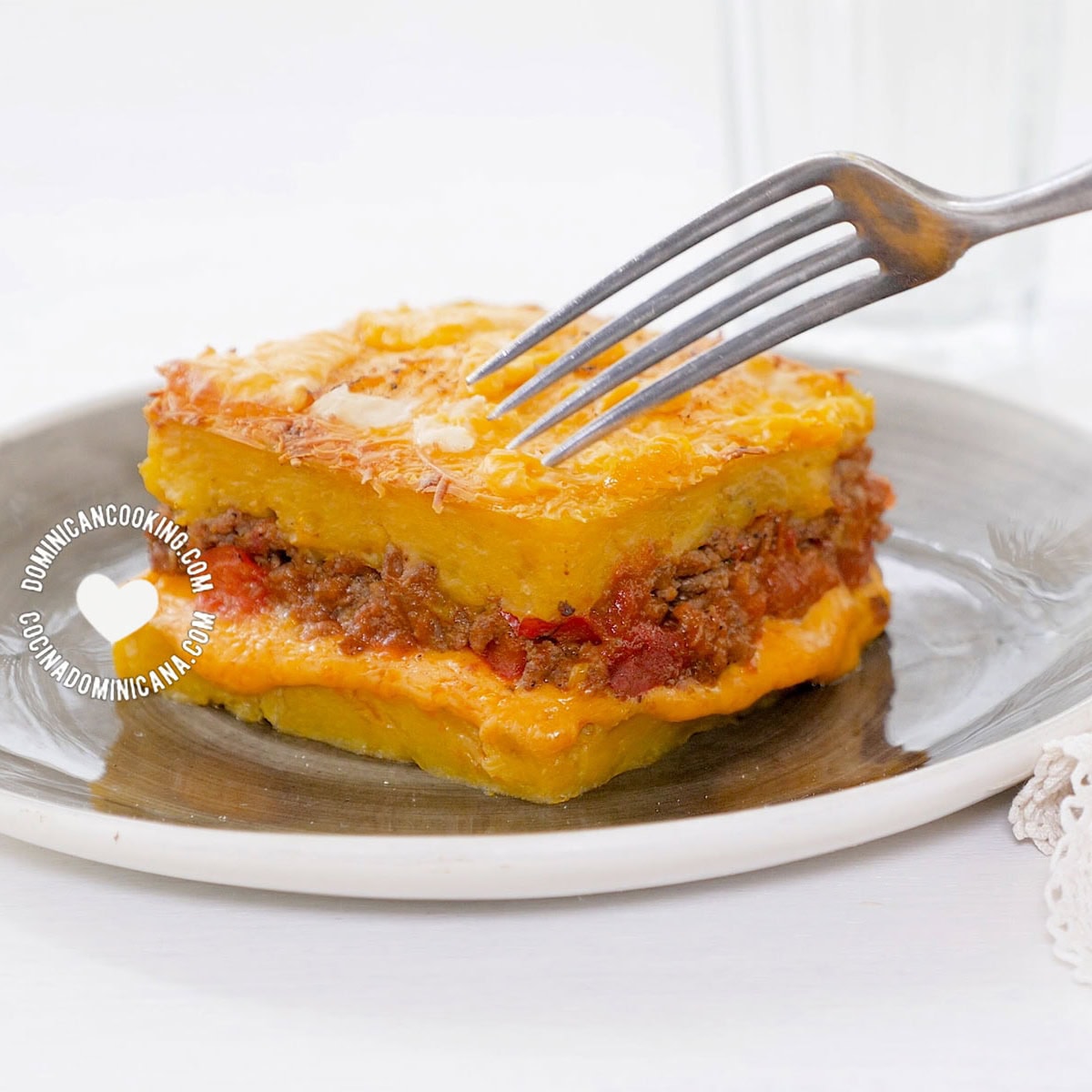
Pastelón de Plátano Maduro [Video+Recipe] Ripe Plantain Casserole
Ingredients
For the filling
- 2 tablespoon olive oil, (or vegetable oil)
- 1 red onion, [65g], minced
- 1 tablespoon mashed garlic, (3 large garlic cloves)
- 1 pound ground beef, [454g]
- 1 cup tomato sauce, [115g]
- 1 green bell pepper, or red, seeded and minced
- 1½ teaspoons salt, (or more, to taste)
- ½ teaspoons black pepper (freshly-cracked, or ground), (or more, to taste)
- 1 tablespoon chopped fresh cilantro, (or parsley)
To assemble
- 6 plantain (ripe, yellow)
- 1 teaspoon salt
- ¼ cup salted butter, plus extra to grease pan.
- 1 cup shredded cheddar cheese, (see notes)
Instructions
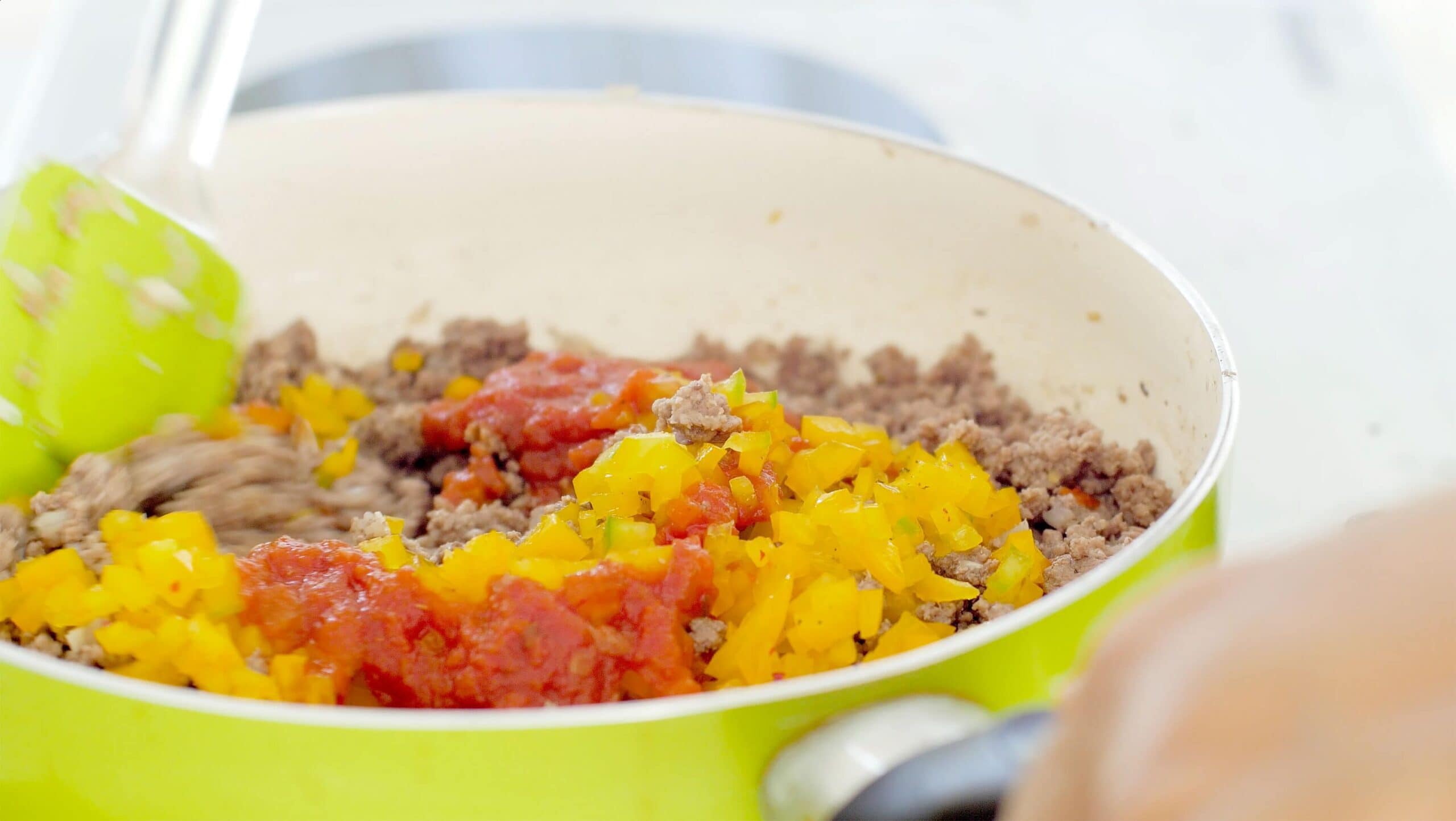
1. Making the filling
 Find the recipe and instructions with video for the filling here.
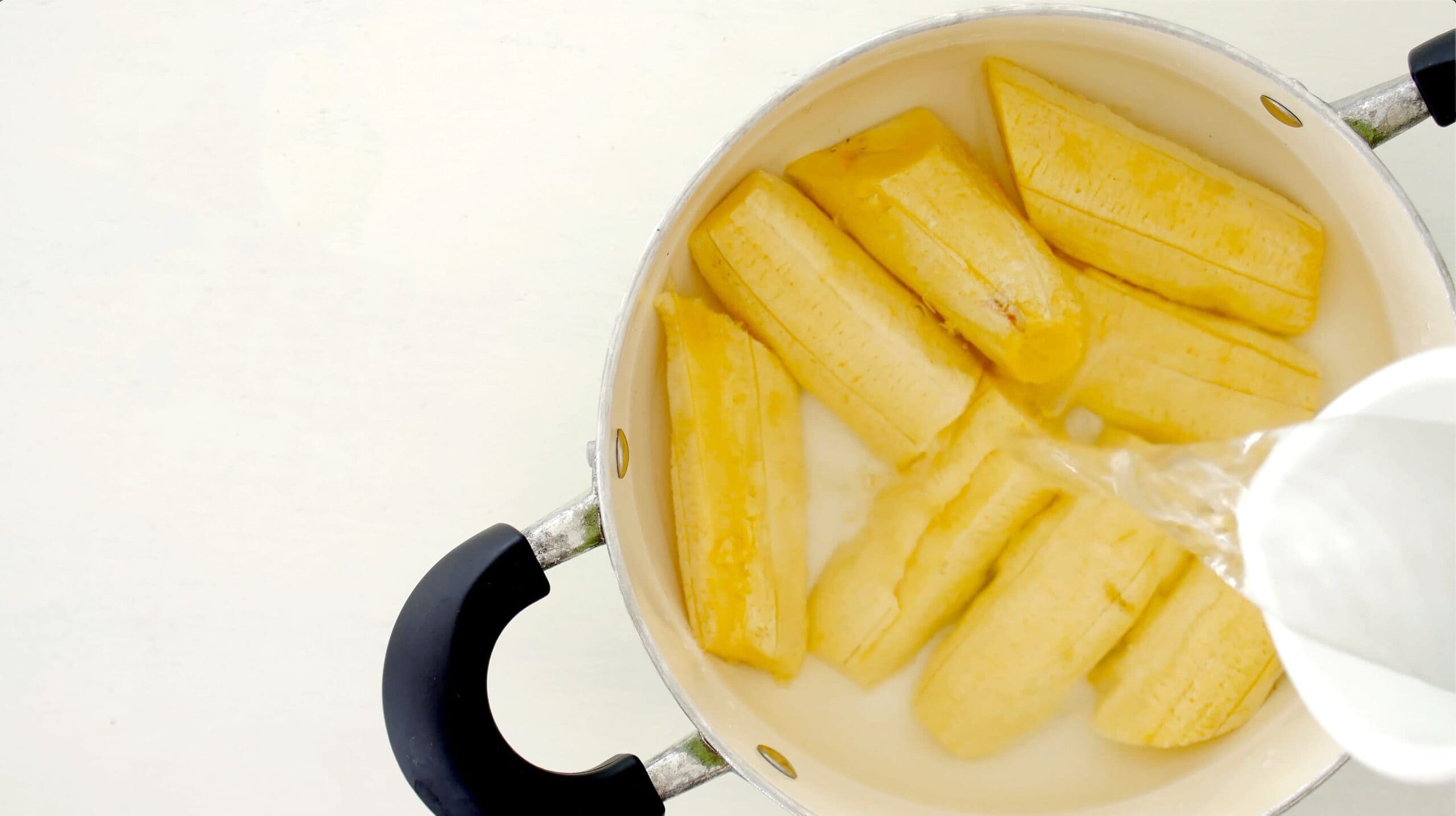
2. Peel the plantain
 Peel the plantains and boil adding 1 teaspoon of salt to the water. Once the plantains are fork tender (15 - 20 mins), remove them from the heat.
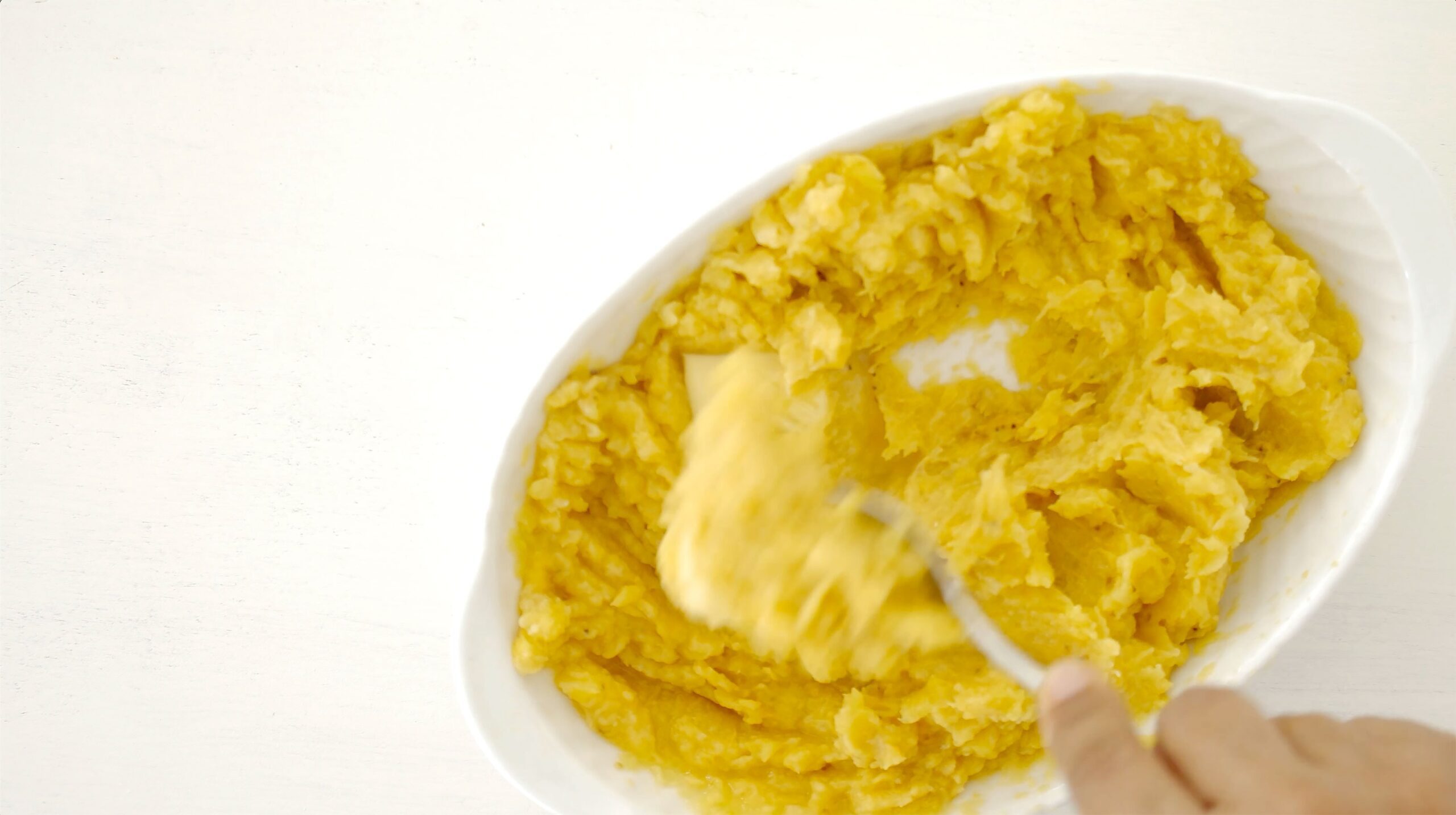
3. Mash the plantains
- Drain the water right away, and mash them with a fork. Add the butter and keep mashing until it is very smooth with no lumps.
4. Layer
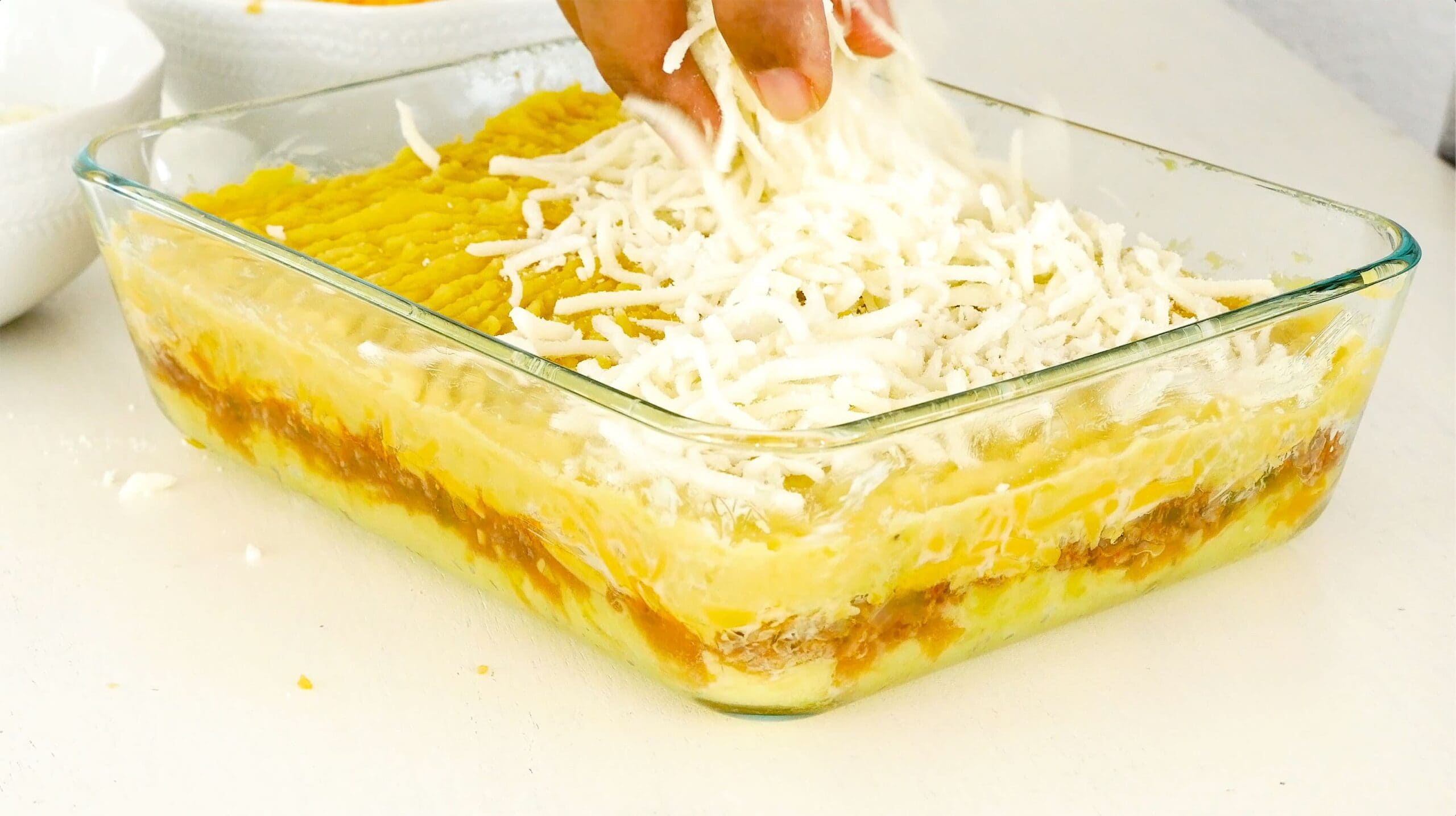
- Grease a 1-inch tall baking pan. Put half of the plantain mixture in the baking pan. Cover with half of the cheese. Cover the cheese with the meat. Cover with the remaining plantain mixture. Cover with the rest of the cheese.
5. Bake
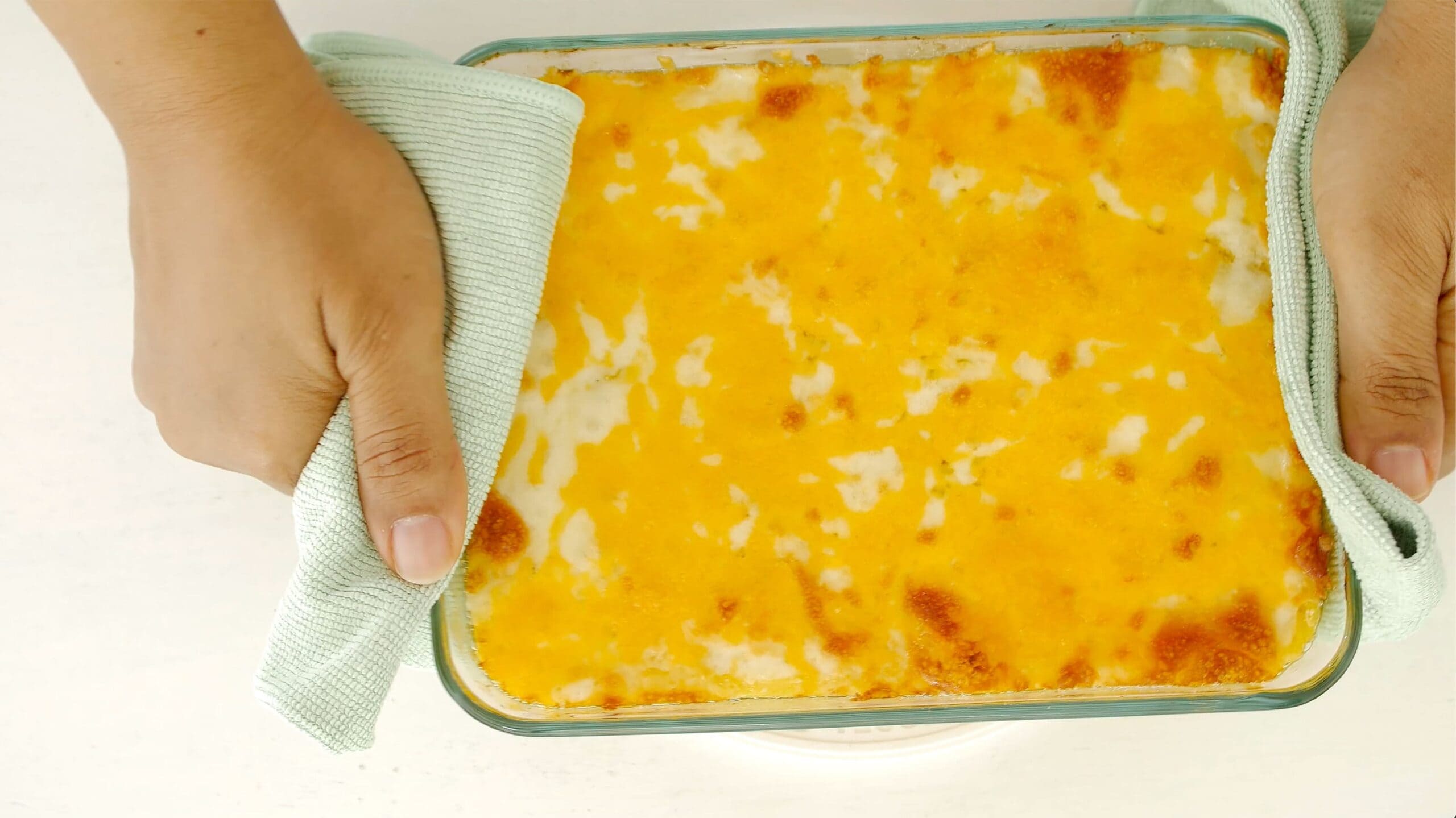
 Cook in preheated oven to 350 °F [175 °C] until the top is golden brown.
6. Serving
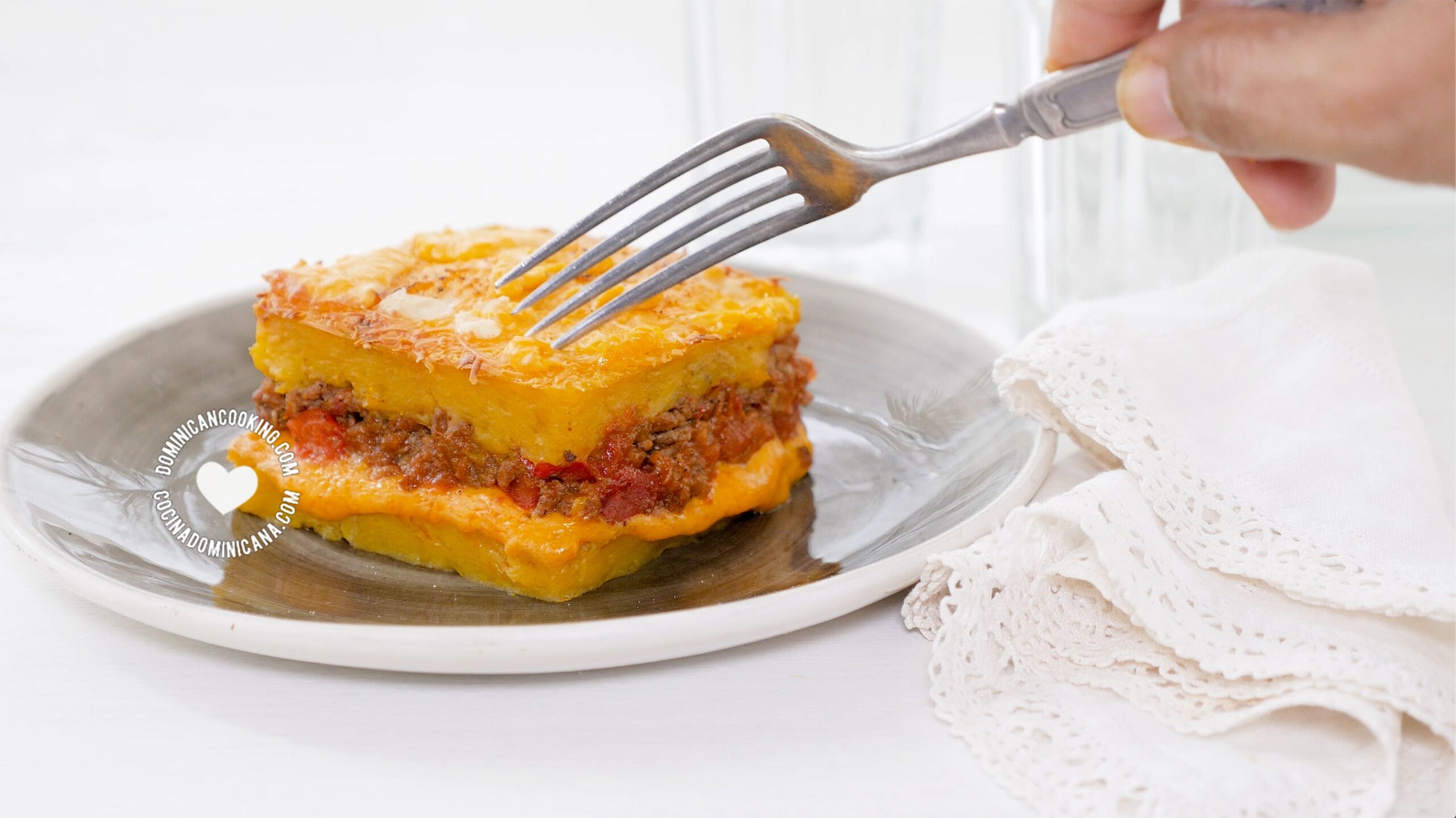
- It will be easier to serve if you wait five minutes after removing it from the oven.
Cook's Notes
Nutrition
Nutritional information is calculated automatically based on ingredients listed. Please consult your doctor if you need precise nutrition information.
Want to save this recipe?
Enter your email & I'll send it to your inbox. ❤️ Plus, get great weekly recipes from me!
More plantain recipe:
We love plantains, and our plantain recipes are some of our most popular. Aside from the very popular Mangú, Pasteles, and Mofongo, we also have some lesser-known dishes for you to try, like Tostones rellenos, Yaroa, Piononos, Arañitas de plátano, and Mofonguitos maduros.
FAQs
Pastelón de plátano maduro is a casserole that combines layers of ripe plantain, minced beef, and cheese. Puerto Rican pastelón is made with slices of fried plantains, similar to a lasagna. Dominican pastelón is made with mashed boiled plantains, similar to a shepherd's pie.
To make pastelon de platano maduro, the ripe plantain and minced beef are cooked separately, then arrange in layers along with cheese in a lasagna pan and baked until the cheese is bubbly and golden brown.
They should be completely ripe but still mostly firm, with some black spots. If they're too ripe, the mash will be too mushy. If they are unripe, it won't be as sweet.
Absolutely! We offer some vegan and vegetarian fillings; you can use vegan cheese or leave the cheese entirely out.
Cultural background
This part of the post was written in collaboration with our friend Himilce A. Tejada. She is a Dominican food writer for the newspaper Diario Libre as well as other popular local Dominican publications.
Dominicans love their Pastelón de Plátano Maduro (Ripe Plantain Casserole), which is ironic because, apart from politicians, in this country, there is nothing that is more maligned than the plantain.
Plantains are accused, no less, of being partly responsible for our island's rampant underdevelopment. According to some, it blocks the brain and stops intelligence from flowing; others say overindulgence leads to a dazed stupor. And some even go as far as to say that if American children speak English from a young age, it's thanks to the "conflé" that they eat for breakfast, as opposed to mangú.
Myths, dear readers, pure myths!
Whether fried, boiled, sliced or mashed into a Mangú (which a Dominican would never call 'purée'), Mofongo or as a side dish to almost anything, Dominicans remain faithful to their plantains and seek them out and taste them everywhere they go.
Long live plátanos, and we'll go on buying them even if they are rabizas (undersized runts).
As for those of you who still think that plantains make you stupid, this is for you: in India, when Alexander the Great arrived, bananas and plantains were known as "the fruit of the wise" because the Hindu Brahmins used to meditate under the shady leaves of banana or plantain trees. So there!
Plantain history
Plantains and bananas come from Asia. History tells us that when Alexander the Great arrived in India, he was surprised by their delicious taste and brought them to Greece. This was in around 327 BC. They spread further across the world thanks to Arab sailors who planted banana and plantain seeds along the east coast of Africa. Although Portuguese explorers introduced the crop to the new world in 1516, enslaved Africans played a key role in making it a central feature of the continent's cuisine, mainly in the Caribbean, Central America, and the Pacific and Atlantic coastlines.
For better or for worse, bananas are one of the world's most popular fruits. Plantains and bananas only grow in temperate climates and it's estimated that 12 million tons are cultivated every year. 10 million tons come from Latin America.
Plantain vs banana
The main difference between bananas and plantains is that the former has more sugar and less starch, while the latter has more starch than sugar and has to be cooked before eating. A plantain's taste depends on how ripe it is - the riper, the sweeter. Bananas are usually eaten raw, but can also be baked, fried or boiled in a variety of recipes. In India, for example, banana features in savory dishes.
Plantain nutrition
Bananas are a good food for growing children: nutritious, an excellent source of energy, rich in vitamins A, C and K, glucids and potassium, as well as other minerals. Green plantains are a better source of energy than bananas (about 285 kcals per 100g) and are an ideal snack for athletes.
Plantain storage
Most plantain and banana lovers know that they should be stored at room temperature. To slow down the ripening process, wrap them in a newspaper and keep them in the fridge. It's also possible to peel and slice plantains for 'tostones' and store them in the freezer. Some even fry them once and store them to save time.

- Learn more about me and the humans behind this blog.
- Share your questions and comments about this post.
- Subscribe to receive our recipes and articles by email.
- Please stay in touch! Follow us on: